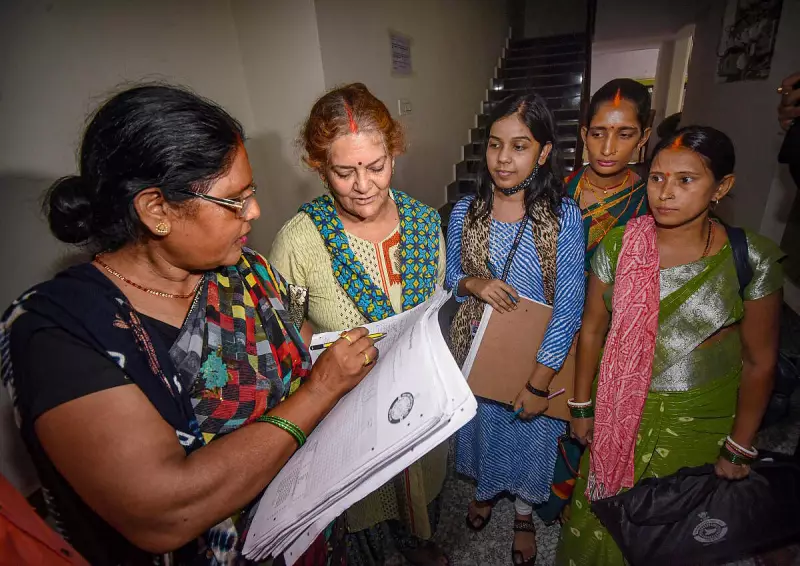
India's 2026-27 Census to Feature Comprehensive 33-Question Household Survey
In a significant development for India's demographic data collection, the Central government has issued a fresh notification under Section 8(1) of the Census Act, 1948, authorizing Census Officers to gather extensive household-level information across the country. This new directive supersedes the previous order from January 2020, marking an important update in the nation's statistical framework.
Expanded Data Collection Parameters
The upcoming census will feature a detailed questionnaire comprising 33 specific questions that officials will pose to households within their respective jurisdictions. This comprehensive approach represents a substantial expansion from previous census exercises, aiming to capture a more nuanced picture of India's evolving social and economic landscape.
Diverse Information Categories
The questions span multiple dimensions of household characteristics, including:

- Housing Infrastructure: Detailed inquiries about construction materials, particularly focusing on roof composition and quality
- Technology Access: Collection of mobile phone numbers to understand digital connectivity patterns
- Demographic Details: Comprehensive personal and family information for accurate population mapping
- Socio-economic Indicators: Data points that will help assess living standards and development metrics
Legal Framework and Implementation
The notification establishes the legal foundation for this extensive data collection exercise, empowering Census Officers with the authority to systematically gather information from every household. This represents a crucial step in preparing for what will be one of the world's largest administrative exercises, involving millions of enumerators and covering India's vast geographical expanse.
The 2026-27 census is expected to provide invaluable insights for policy formulation, resource allocation, and development planning across various sectors. By capturing detailed information about housing conditions, technological access, and demographic patterns, the data will help government agencies design more targeted interventions and monitor progress toward national development goals.
This updated census framework reflects India's commitment to maintaining accurate, contemporary demographic records that can inform evidence-based decision-making at all levels of governance. The inclusion of technology-related parameters like mobile numbers acknowledges the country's rapid digital transformation, while traditional indicators like housing materials ensure continuity with historical data series for comparative analysis.