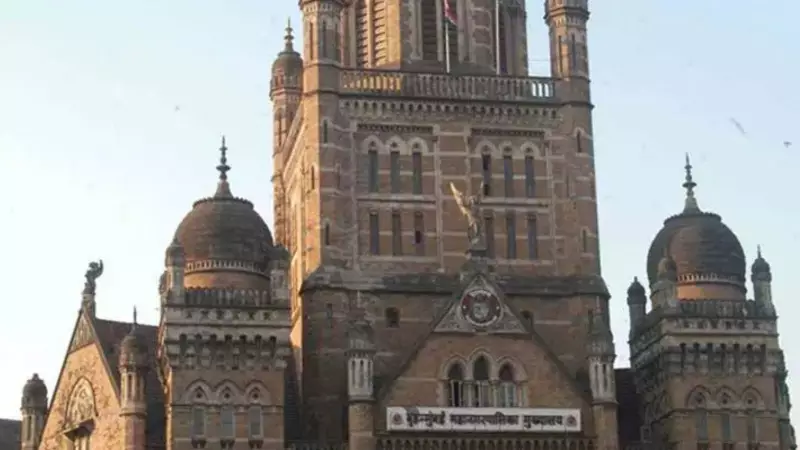
The Brihanmumbai Municipal Corporation (BMC) is embroiled in a major controversy for issuing property tax demands worth a staggering Rs 10,899.96 crore to hundreds of properties across Mumbai, using a calculation method that has been explicitly struck down by both the Bombay High Court and the Supreme Court.
Residents Hit with Shockingly Inflated Bills
The issue came to the fore when residents of Annavista Cooperative Housing Society in Bandra received a notice in January this year. The BMC's assessment department demanded pending property tax of Rs 35.23 lakh, a figure nearly 20 times their usual annual payment. The notice threatened severe coercive action, including attachment and auction of the property and disconnection of water and power supplies, if the amount was not paid within 21 days.
Shocked residents promptly replied, clarifying that their dues for the financial year were settled and their actual property tax stood at only Rs 1.73 lakh. They urged the civic body to revoke the erroneous notice. This case is not isolated. Civic records reveal that as of August 2025, a total of 481 properties in Mumbai have pending tax dues calculated under this contentious formula, with the outstanding amount ballooning to Rs 10,899.96 crore when penalties are included.

The Disputed Formula and Legal Defiance
The root of the conflict lies in a formula introduced by the BMC in 2010, known as the Capital Value System (CVS). This system proposed calculating tax based on the potential Floor Space Index (FSI)—the maximum buildable area on a plot—rather than its existing structure. This meant a six-storey building on a plot that could legally accommodate twelve floors would be taxed as if it had twelve floors.
This methodology was legally challenged. The Bombay High Court quashed it in 2019, a decision later upheld by the Supreme Court in 2022. The courts ruled that tax should be based on the existing physical state of the property, not its future potential.
Despite these clear rulings, the BMC has continued to calculate taxes using a hybrid formula: 100% of the old rateable value plus 50% of the proposed CVS value. Bills generated under this method carry a footnote stating they are issued on a "protective basis," reserving the BMC's right for retrospective evaluation once a revised policy is announced.
Commissioner's Stance and List of Major Defaulters
Interestingly, BMC Commissioner Bhushan Gagrani has expressed a view that aligns more with the courts than his own department's actions. He stated that property tax should be calculated on the base value of the land and confirmed that the Supreme Court's 2022 order is being implemented, with no review petition filed.
Gagrani estimated that if taxes were recalculated on the correct basis and penalties were quashed, the actual outstanding amount would plummet to only 25-30% of the current Rs 10,899-cr figure.
The BMC's list of major defaulters includes several government bodies and large infrastructure companies. Leading the list is the Mumbai Metropolitan Region Development Authority (MMRDA) with an outstanding of Rs 714.31 crore. Other notable names include J Kumar Infraprojects (Rs 564.76 crore), DBS Realty (Rs 419 crore), and the insolvent HDIL (Rs 410 crore).
Several contractors involved in Mumbai's Metro projects, such as Hindustan Construction Company (HCC) and consortiums like Dogus-Soma, also feature on the list, with demands running into hundreds of crores. Many have challenged the levy, arguing that railway and Metro works are exempt from such taxes under specific acts, and have obtained stays from the High Court.

Administrative Challenges and Future Implications
The BMC's aggressive recovery drive comes as it seeks to shore up finances for large-scale infrastructure projects. In November 2024, it attached 10 properties worth Rs 557 crore belonging to defaulters. However, officials cite challenges like staff shortages for enforcement duties and the fact that many cases are entangled in long-pending legal proceedings at courts and the National Company Law Tribunal (NCLT).
Former corporators like Asif Zakaria have called the BMC's current billing practice a "direct contempt of the court." The situation leaves hundreds of property owners in Mumbai in a precarious position, facing inflated demands for a tax that the nation's highest court has already deemed incorrectly calculated, highlighting a significant gap between judicial mandate and municipal action.