The much-anticipated Bhopal Metro, which began operations with significant fanfare, is facing a severe commuter crunch. A recent change in its timetable, which delayed the start of services and reduced the number of daily trips, has led to a dramatic fall in the number of people using the service.
Revised Schedule Leads to Sharp Decline
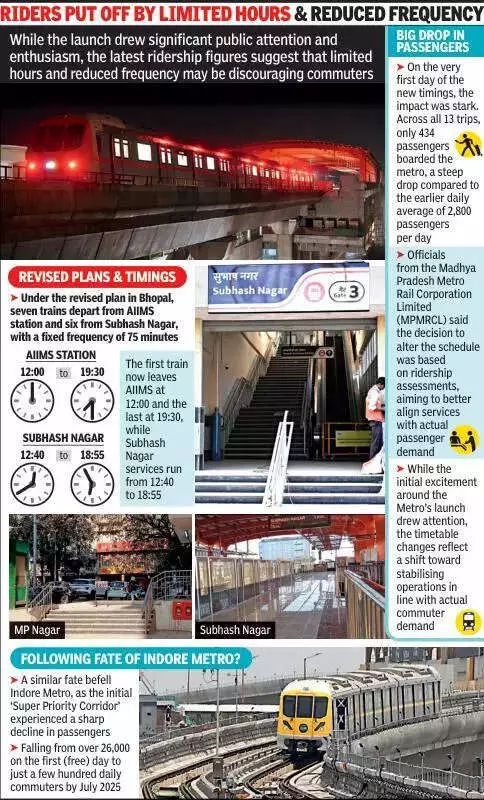
In its initial week after launch, the Orange Line's priority corridor was averaging a respectable around 2,800 passengers per day. However, this figure took a nosedive following the introduction of a revised timetable that became effective from a Tuesday. The new schedule pushed the start of services to noon—about three hours later than before. It also slashed the total number of daily trips from 17 to 13 on the corridor connecting AIIMS Bhopal and Subhash Nagar depot.
The impact was immediate and stark. On the very first day under the new timings, a mere 434 passengers boarded the metro across all 13 trips. This represents a drop of over 85% compared to the earlier daily average, highlighting a significant disconnect between the service offering and commuter patterns.

Official Rationale and New Service Details
Officials from the Madhya Pradesh Metro Rail Corporation Limited (MPMRCL) stated that the decision to alter the schedule was based on ridership assessments. The aim was to better align metro services with the actual passenger demand observed during its initial run.
Under the revised operational plan:
- Seven trains now depart from AIIMS station and six from Subhash Nagar.
- The trains run with a fixed frequency of 75 minutes.
- The first train from AIIMS leaves at 12:00 and the last at 19:30.
- Services from Subhash Nagar operate from 12:40 to 18:55.
Launch Enthusiasm Meets Operational Reality
The Orange Line, inaugurated on December 20, marked Bhopal's entry into India's expanding Metro network. Its priority corridor spans approximately seven kilometers and covers eight stations. While the launch generated considerable public attention and enthusiasm, the latest ridership numbers suggest a different story.
The combination of limited operating hours and a reduced frequency appears to be discouraging potential commuters. The drastic fall in numbers poses a challenge for the MPMRCL, which must now find a balance between operational efficiency and providing a convenient, reliable service that can attract and retain daily riders. The future growth of the metro system may depend on adapting schedules to match the city's actual commuting needs rather than curtailing them.