Bengaluru's Kasavanahalli Area Plunges Into Civic Chaos Following Delimitation Exercise
In the wake of Bengaluru's recent delimitation exercise, the Kasavanahalli area, along with Junnasandra and parts of Haralur, is rapidly transforming into a civic no-man's land. This region finds itself trapped in a perplexing limbo, caught between corporations, budgetary allocations, and an unsettling bureaucratic silence that has left residents in a state of confusion and frustration.
Administrative Fracturing and Ward Splintering
Until recently, this expansive 26-square-kilometer stretch functioned as a single, cohesive administrative and budgetary unit under the Bellandur ward in the Mahadevapura zone. However, the landscape has dramatically changed with the splintering of the old Bellandur ward into six new wards: Yamalur, Bellandur, Doddakannelli, Panathur, Gunjur, and Kasavanahalli. This fragmentation has left residents utterly uncertain about which ward or corporation they now belong to, creating a foundation for the current administrative breakdown.
Jurisdictional Confusion and Financial Deadlock
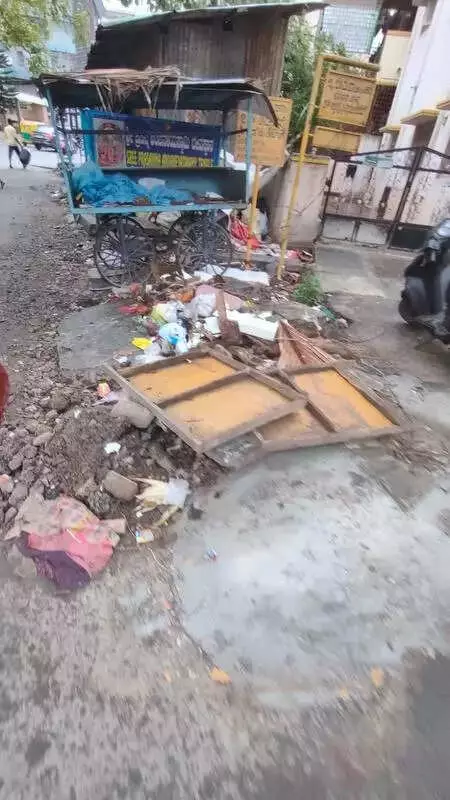
While Kasavanahalli, Junnasandra, and parts of Haralur have been officially shifted to the South city corporation, the critical projects and funds tied to this geography remain firmly with the East city corporation. This mismatch has resulted in a severe administrative paralysis characterized by a lack of officers on the ground, no available money to act, and a complete absence of clarity regarding responsibility. The situation has brought basic civic services to a grinding halt, including road cleaning, desilting of drains, encroachment clearance, and pothole repairs.

Vishnu Prasad, a member of the Kasavanahalli Development Forum, highlighted the severity of the issue, stating, "There is no engineer, no health inspector, no official accountable for this ward."
Stalled Infrastructure Projects and Funding Woes
One of the most glaring examples of this crisis is the long-pending Kasavanahalli Road widening project. Initiated back in 2021, the work remains incomplete to this day. Residents report that the project was on the verge of resuming when the formation of the Greater Bengaluru Authority (GBA) led to funds being diverted to the East city corporation. Fresh funds and tenders are yet to be finalized, effectively stalling the project indefinitely and leaving infrastructure in a state of neglect.
A senior GBA official from the South city corporation explained the financial impasse: "With budgets apportioned earlier to the East city corporation, South city corporation has no dedicated funds for the transferred areas. Even urgent works cannot be taken up without a money head, forcing officials to explore emergency funding merely to keep essential services running."
Resident Outcry and Allegations of Political Apathy
The frustration among residents is palpable and growing. Sudharshan Shashtry, also of the Kasavanahalli Development Forum, detailed the on-ground realities: "There are no officers in place, not even an AEE, and files are stuck with a single official. Drains are choked, sewage flowed back into apartments, and no one knows whether the GBA or BWSSB is responsible."
Residents are also voicing strong allegations of political apathy. John Shehan, a long-time resident, pointedly remarked, "This is not seen as a vote bank," highlighting the perceived lack of interest from elected representatives in addressing their plight.
For residents like Neetu Tandon of SJR Verity, the sense of abandonment is profound and complete. "Earlier, under BBMP, we were ignored. Now under GBA, we feel completely orphaned. There is nearly two inches of silt along the drains, and no one is addressing it. Why should we keep paying taxes when there is no accountability?" she questioned, encapsulating the widespread disillusionment.
While residents who recently met Ramesh, the commissioner of the South city corporation, indicated that officials have privately acknowledged the problem, public and tangible solutions remain elusive. The administrative void continues to deepen, leaving the future of essential services and infrastructure projects in these areas hanging in a precarious balance.