Bengaluru's Rs 1 Crore Power Dues Cripple Waste Management Facility, Garbage Operations Spill Onto Busy Road
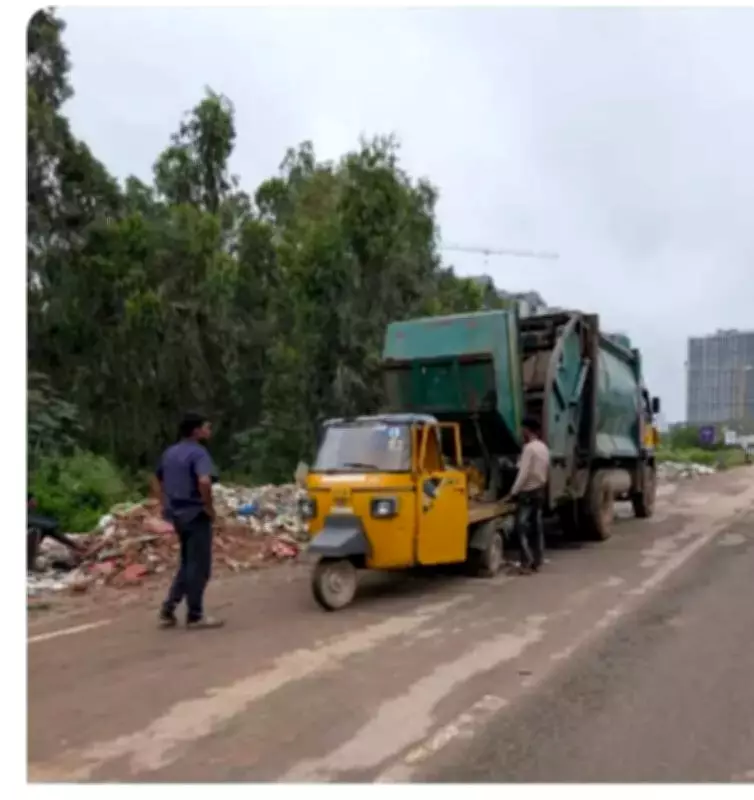
A fully constructed dry waste collection centre (DWCC) in Panathur, Bengaluru, has remained non-functional for approximately two years due to unresolved electricity dues amounting to nearly Rs 1 crore. This staggering financial impasse has left the facility inoperable, forcing garbage transfer operations to occur on a congested public road, resulting in severe public inconvenience, foul odours, and environmental hazards.
Power Supply Cut Over Unpaid Bills from Another Facility
The newly built DWCC, which includes an attached transfer station under the Bengaluru East city corporation, was designed to handle door-to-door collected waste in a scientific manner. However, it has never been inaugurated because of a power supply cut. A copy of the electricity bill issued by Bescom reveals arrears close to Rs 1 crore linked to another facility in the same Panathur area, leading to the disconnection that affects both sites.
An engineer from Bangalore Solid Waste Management Ltd (BSWML) confirmed that the facility's inauguration has been stalled due to these electricity-related issues. "There are pending electricity dues linked to another facility in the same area, with outstanding bills close to Rs 1 crore. With dues unpaid, the power supply was cut, affecting both facilities," the engineer stated.

Inter-Departmental Disputes and Administrative Lapses Blamed
Officials are currently investigating why such a substantial pending bill accumulated and why it was not cleared in a timely manner. They suspect that frequent transfers of engineers and officers over the years have contributed to the oversight and accumulation of dues. Discussions are ongoing to determine whether BSWML or the East corporation should be responsible for clearing the dues.
Meanwhile, residents have expressed frustration, arguing that inter-departmental disputes should not compromise public convenience. The Panathur facility was intended to serve as both a DWCC and a transfer station, a critical component in Bengaluru's solid waste management chain. Ideally, wet waste from households would be transferred from tippers to larger trucks within the facility and sent to landfills, while dry waste would be processed on-site.
Public Outcry Over Waste of Resources and Health Hazards
With the facility shut, residents report that these operations are now conducted in the open, leading to unsanitary conditions. Anjali, a Whitefield resident who has been tracking the issue, lamented, "This is nothing but a waste of citizens' money. BSWML can't even use a facility it built. It is sickening to see garbage being sorted on the road... Even if there are issues, how long does it take to fix them and start using the facility? Now the walls and paint will peel, and doors and locks will rust."
The facility is located on a busy road connecting Varthur, Gunjur, Panathur, Kadubeesanahalli, and the Outer Ring Road. Pavitra Holla, another resident, described the situation: "The place is stinking even if car windows are shut, and one can't pass through the road comfortably." This has created significant discomfort for commuters and raised concerns about public health and environmental degradation.
Broader Implications for Urban Governance and Infrastructure
The paralysis of the Panathur DWCC highlights broader challenges in Bengaluru's urban governance and infrastructure management. The inability to resolve a Rs 1 crore electricity bill over two years underscores administrative inefficiencies and the impact of bureaucratic delays on essential public services. As the city grapples with growing waste management needs, such failures exacerbate existing problems, including pollution and traffic congestion.
Residents and officials alike are calling for urgent action to clear the dues and operationalize the facility, emphasizing that continued neglect will only lead to further deterioration of the infrastructure and increased public suffering. The case serves as a stark reminder of the need for streamlined processes and accountability in municipal projects to ensure they serve their intended purpose without unnecessary delays.