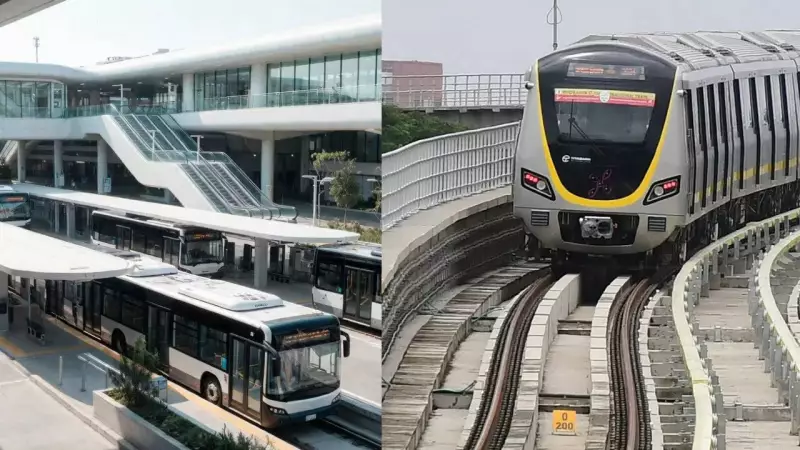
In a significant boost to public transport integration, Bengaluru has taken a concrete step to solve the perennial last-mile connectivity issue for its metro commuters. The city has constructed new bus shelters at key stations along the Namma Metro's Yellow Line, drastically reducing the walking distance between metro exits and bus stops.
Strategic Locations for Maximum Impact
The initiative, which aims to create a seamless multi-modal transit experience, focuses on high-footfall areas. New bus stops have been strategically placed at RV Road, Central Silk Board, Hongasandra, Singasandra, Beratena Agrahara, and Biocon Hebbagodi Metro stations. The selection of these locations was not arbitrary; it was based on a careful analysis of metro ridership patterns and the existing demand for feeder bus services in these corridors.
Previously, a commuter alighting from the metro often faced a substantial and inconvenient walk to reach the nearest bus stop, making the transfer between the two modes of transport cumbersome. The new infrastructure directly addresses this pain point by positioning bus shelters much closer to the station entry and exit points.

A Smoother, Faster Commute for Thousands
The primary benefit of this project is the drastic reduction in transfer time and physical effort. By bringing buses closer to metro stations, the authorities have made it significantly easier to switch from train to bus and vice versa. This consistency is a major relief for daily commuters, including students and office-goers, who rely on both modes for their complete journey.
This enhancement is particularly impactful for the Yellow Line, which serves major employment and industrial hubs like Bommasandra. Commuters on this line can now complete their trips more efficiently without resorting to private autos or taxis for the last leg, potentially saving time and money.
Broader Benefits: Crowd Management and Accessibility
The advantages extend beyond mere convenience. During peak hours, metro stations experience severe crowding. The new bus stops will act as dispersal points, helping to manage crowds and reduce congestion around station premises by offering immediate onward travel options.
Furthermore, the shorter walking distance is a boon for specific passenger groups. Senior citizens, women, and those carrying luggage or heavy bags will find the new arrangement much more accessible and less strenuous. This thoughtful move makes public transport more inclusive and user-friendly for all sections of society.
This development, reported on December 19, 2025, marks a positive step towards a unified transit system in Bengaluru. By physically and functionally integrating metro and bus services, the city is inching closer to a future where public transport is the most logical, comfortable, and efficient choice for its residents.