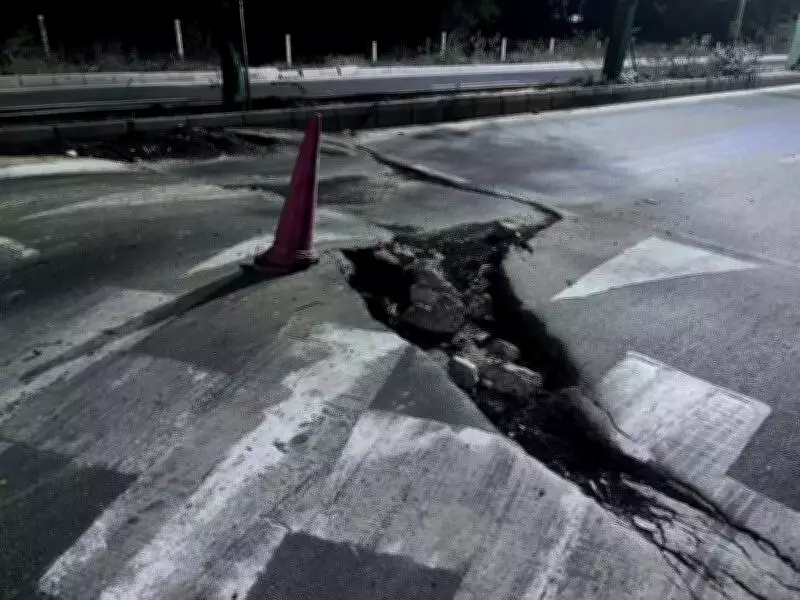
Ahmedabad Speed-Breaker Collapses Under Traffic Pressure, Reveals Infrastructure Lapses
In a striking example of infrastructure failure, a concrete speed-breaker installed at the Gheljipura crossroads in Ahmedabad's Jodhpur area has been completely flattened by passing traffic. What was designed as a traffic-calming measure has instead transformed into a hazardous pothole, compelling the Ahmedabad Municipal Corporation (AMC) to intervene and remove the debris to level the road surface.
From Safety Feature to Road Hazard
The irony of this situation is deeply embedded in the very asphalt it was meant to protect. Located on the stretch connecting Mahammadpura Road and LJ College, this speed-breaker became more of an obstacle trap than a safety enhancement. The primary culprits were the inadequate street lighting and the complete absence of warning signage, which left drivers unaware of the bump until they hit it, often at considerable speed.
This lack of visibility meant that vehicles, especially heavier ones, repeatedly struck the hump with full force. Over time, the cumulative impact proved too much for the concrete structure, causing it to crumble and create a gaping hole in the road. This not only defeated its purpose but also introduced a new danger for motorists and pedestrians alike.

AMC Norms Ignored in Installation
Officials have confirmed that the AMC has specific regulations mandating both proper signage and adequate street lighting whenever a speed-breaker is installed. Unfortunately, neither of these requirements was met at the Gheljipura crossroads. This oversight highlights a significant gap in the implementation of safety protocols, raising questions about the quality control and monitoring processes within the municipal corporation.
The incident sheds light on a broader pattern of infrastructure management. Between January 2024 and May 2025, the AMC approved a total of 339 applications for new speed-breakers across the city. Of these, over 250 were cleared, with nearly 75% concentrated in the western parts of Ahmedabad. This approval spree underscores the need for stricter adherence to installation norms to prevent similar failures in the future.
Broader Implications for Urban Infrastructure
This event serves as a critical reminder of the importance of holistic urban planning. Speed-breakers, while essential for controlling traffic speed, must be integrated with complementary safety measures to be effective. The collapse at Gheljipura crossroads points to several key issues:
- Inadequate Implementation: The failure to install required signage and lighting compromised the speed-breaker's functionality.
- Maintenance Neglect: The lack of timely inspections allowed the structure to deteriorate into a hazard.
- Public Safety Risks: Such oversights can lead to accidents, vehicle damage, and increased traffic congestion.
As Ahmedabad continues to expand and modernize, ensuring that infrastructure projects are executed with precision and maintained rigorously is paramount. The AMC's response to this incident—removing the remains and leveling the road—is a necessary step, but it must be followed by systemic improvements to avoid recurrence. Citizens rely on municipal authorities to uphold safety standards, and incidents like this underscore the urgent need for enhanced oversight and accountability in public works.