Lucknow has become the center of attention following the release of Uttar Pradesh's Special Intensive Revision draft electoral rolls. The state's electoral authorities published the draft list on January 6, 2026, revealing a troubling trend that has sparked widespread concern.
Significant Decline in Women Voter Numbers
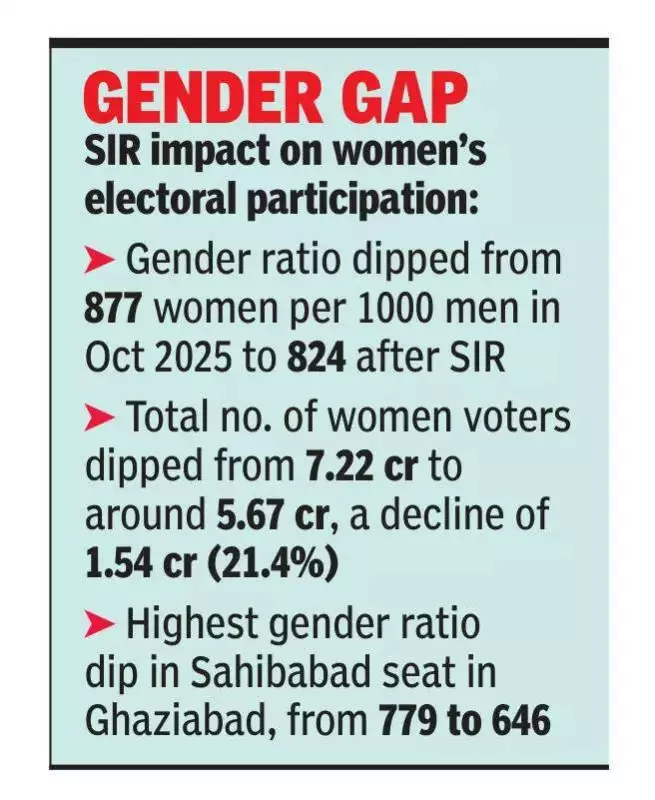
The statistics present a clear picture of disparity. Before the revision process began, Uttar Pradesh recorded 877 women for every 1,000 male registered voters as of October 27, 2025. The intensive verification and deletion procedures have dramatically altered this balance.
Post-revision figures show the gender ratio has fallen to 824 women per 1,000 men. This represents a substantial decrease that has raised serious questions about women's electoral participation across India's most populous state.

Absolute Numbers Tell a Stark Story
The reduction becomes even more apparent when examining absolute voter counts. Approximately 7.22 crore women voters appeared on the rolls before the Special Intensive Revision. The draft list now shows only about 5.67 crore women voters.
This translates to a loss of roughly 1.54 crore women voters, representing a 21.4% decrease. Male voters experienced a comparatively smaller reduction of 16.3%, dropping from around 8.23 crore to 6.88 crore voters.
Sahibabad Constituency Shows Extreme Case
One assembly constituency illustrates the severity of the situation particularly well. Sahibabad in Ghaziabad district recorded a gender ratio of 779 women per 1,000 men before the revision process.
The January 6 draft shows this number has plummeted to an exceptionally low 646, marking a drop of 133 points. This constituency now holds the unfortunate distinction of having the state's lowest gender ratio in the draft electoral rolls.
An official familiar with the process explained the possible reasons behind this dramatic shift. "Sahibabad constituency highlights how urban migration patterns, documentation challenges, or verification gaps may have disproportionately affected women's registration in high-density zones," the official stated.
Specific Categories Show Dramatic Changes
Another revealing indicator involves women aged 25 years and above whose electoral photo identity cards listed their father's name rather than their husband's name or other details. This category contained 71.18 lakh entries in July 2025.
Following the Special Intensive Revision, this number has reduced dramatically to just 29.04 lakh entries. This represents a decrease of 42.14 lakh entries, or approximately 59.2%.
"This substantial reduction suggests that many such entries, possibly stemming from traditional or rural naming conventions, faced stricter scrutiny during the verification process," the official added. "Some may have lacked sufficient proof during the door-to-door enumeration activities."
Urban Areas Experience Heavier Impact
The data reveals a clear geographical pattern in voter deletions. Urban areas across Uttar Pradesh experienced a 28% overall voter deletion rate. The number dropped from 4.16 crore voters on October 27, 2025, to 2.99 crore voters in the January 6 draft.
Rural areas showed a comparatively lower reduction of 15.23%, decreasing from 11.28 crore to 9.56 crore voters. This urban-rural disparity likely amplified the gender imbalance in constituencies like Sahibabad.
Analysts Point to Underlying Factors
Electoral analysts note that the Special Intensive Revision aimed to clean the voter rolls by removing deceased individuals, those who have shifted residences, duplicate entries, and untraceable names. However, the process appears to have disproportionately affected women voters.
Several factors may explain this imbalance. Name changes following marriage often create documentation challenges. Many women rely on family members for verification processes. Limited access to supporting documents further complicates registration for female voters.
"The significant drop underscores a widening gap in electoral representation," one analyst observed. "This situation prompts calls for targeted re-verification efforts, increased deployment of female booth-level officers, and awareness campaigns to safeguard women's voting rights before future elections."

Official Response and Next Steps
Uttar Pradesh's Chief Electoral Officer Navdeep Rinwa has addressed these concerns directly. He emphasized that the recently released draft does not represent the final electoral roll.
The claims and objections window remains open until February 6, 2026. This allows affected voters, including women whose names may have been incorrectly removed, to submit proof documents for reinstatement.
Rinwa expressed optimism about the final outcome. "We expect the final roll, scheduled for publication on March 6, 2026, will be cleaner while ensuring all genuine voters are properly included," he stated.
The situation continues to develop as citizens review the draft lists and prepare their responses. Electoral authorities face the dual challenge of maintaining accurate voter databases while ensuring equitable representation across gender lines.