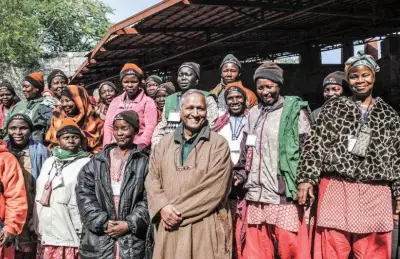
A future historian may look back at January 2026 and record a devastating paradox: at a time when women's political agency in India was growing, the nation witnessed its largest-ever disenfranchisement of female voters. This monumental setback is linked directly to the Election Commission's Special Intensive Revision (SIR) of electoral rolls, which new data reveals has systematically removed millions of women from voter lists.
The Triple Whammy Against Women Voters
Historically, women's electoral power in India faced a double disadvantage. First, the demographic crisis of the 'missing girl child', identified by Nobel laureate Amartya Sen. Second, the persistent issue of under-enfranchisement, where fewer eligible women than men are registered to vote. The SIR has now introduced a third, unprecedented blow: the mass removal of women who were already legitimate voters.
Data from the second phase of the SIR, covering all major states except Uttar Pradesh and Chhattisgarh, confirms a catastrophic trend. The revision has caused a sharp decline in the gender ratio of voter lists across the board.

State-by-State Data Reveals a National Crisis
Bihar served as the grim precursor. Before the SIR, the state's voter list gender ratio was 914 women per 1000 men, already lower than the population ratio of 932. Post-SIR, this ratio plummeted to 890. Consequently, the number of 'missing women voters' in Bihar skyrocketed from 7 lakh to a staggering 16 lakh, erasing a decade of progress in a single stroke.
The pattern repeated in six major states analyzed in the second phase—Gujarat, Rajasthan, West Bengal, Madhya Pradesh, Kerala, and Tamil Nadu. On average, these states had 979 women voters per 1000 men pre-SIR. The draft list post-SIR showed a drastic drop to 963. This decline translates to an additional 23 lakh women vanishing from the electoral rolls in just these states.
Even high-performing states were not immune. Kerala's gender ratio dropped by 14 points, and Tamil Nadu's by 2 points. The damage was more severe elsewhere:
- Gujarat: Lost nearly 6 lakh women voters.
- Rajasthan & West Bengal: Each lost over 5 lakh women voters.
- Madhya Pradesh: Lost almost 5 lakh women voters, reversing steady gains since 2009.
The exception that proves the rule is Assam, which did not use the SIR's stringent enumeration forms. There, a special revision actually improved the gender ratio from 1002 to 1004.
Design Flaws and Discrimination Against Married Women
The crisis is not accidental but stems from a fundamental design defect in the SIR process. The requirement to fill an enumeration form with a photograph under a strict deadline acts as a tool of administrative disenfranchisement. It disproportionately impacts women, especially married women.
A vast majority of those excluded were marked 'absent/shifted.' These are often married women whose names were deleted from their natal home's electoral roll but were never added to their marital home's list. The problem is compounded by a controversial 'mapping' requirement, where individuals must link their current registration to old rolls using parental details—a rule that discriminates against women who move after marriage, as in-laws' details are not accepted.
This outcome starkly contradicts the Election Commission's own manual, which mandates gender ratio monitoring, physical verification, and the appointment of female Booth Level Officers (BLOs) to correct imbalances. The SIR, intended as an intensive revision, has effectively become a 'special intensive deletion' of women voters.
As the nation awaits data from Uttar Pradesh, the scale of this disenfranchisement is likely to grow, marking a critical juncture for India's democratic integrity and its commitment to gender equality in political participation.