Maharashtra Poll Body Reverts to Traditional Ink After Marker Pen Uproar
The State Election Commission has decided to return to traditional bottled indelible ink for the upcoming zilla parishad and panchayat samiti elections scheduled for February 5. This move comes directly in response to the recent controversy surrounding marker pens used during municipal corporation polls.
State Election Commissioner Dinesh Waghmare made the announcement on Saturday, stating clearly that the commission prefers to adopt a cautious approach. "We will use indelible ink bottles instead of marker pens for the upcoming local body polls," Waghmare confirmed.
Procurement Plans and Political Reactions
The SEC will issue a fresh procurement order to ensure adequate stock before polling day. Officials estimate they will need approximately 1.5 lakh bottles of 5cc ink and 75,000 bottles of 10cc ink. Quotations have already been invited from manufacturers of indelible ink.

Political reactions to the marker pen issue have been swift and sharp. Soon after voting began on Thursday, multiple videos circulated on social media platforms showing ink marks being wiped off fingers. These videos prompted immediate concern among citizens and politicians alike.
Shiv Sena (UBT) chief Uddhav Thackeray demanded the suspension of State Election Commissioner Waghmare, accusing him of favoring the BJP-led alliance. MNS chief Raj Thackeray and Congress member Vijay Wadettiwar also raised serious doubts about the electoral process. They claimed the marker ink was sub-standard and could be removed too easily.
Voter Experiences and Testing Procedures
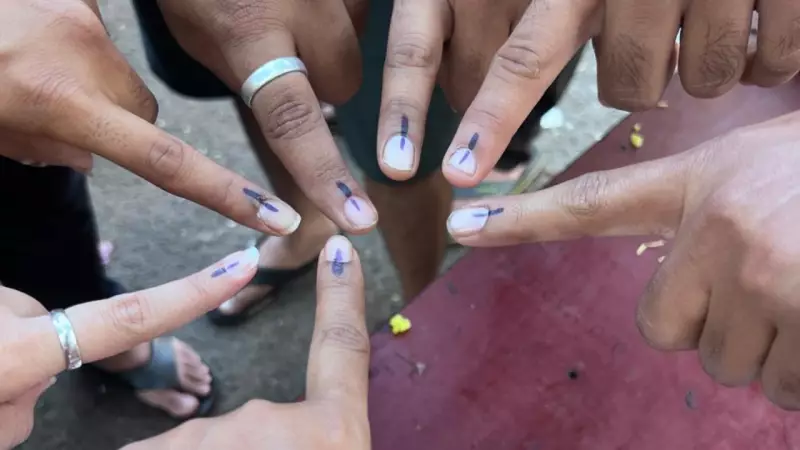
Several voters shared their personal experiences with the marker pens. One voter reported that the ink mark on his nail and skin faded significantly within just one day of polling. "It was applied very lightly and had almost vanished by the next day," he explained.
However, a first-time elector offered a slightly different perspective. She noted that while the ink appeared faint, it remained visible. "I haven't tried to remove it with anything, but the mark is quite light," she stated.
Maharashtra State Women's Commission chairperson Rupali Chakankar, who also serves as a senior NCP leader, objected strongly to the use of marker pens. She cited specific complaints that the ink could be removed using common nail polish remover. "It would be better to use bottled ink, as was done during the Lok Sabha and assembly elections," Chakankar told reporters.
On polling day itself, Maharashtra Congress general secretary Sachin Sawant posted a video demonstration. The footage showed the ink on his wife's finger being wiped off with nail polish remover. Ruling party members quickly pushed back against these allegations.
Chief Minister Devendra Fadnavis defended the election procedure. He suggested that critics were complaining primarily because they anticipated electoral defeat.
Commission Response and Investigation
The State Election Commission has taken formal cognizance of the allegations and the viral social media videos. SEC has directed all municipal corporations to submit samples for laboratory testing. Each corporation must provide five to six used and unused marker pens.
"The pens will undergo testing and the results will be available within a week," Commissioner Waghmare stated. He added that no similar complaints had emerged during recent municipal council elections, where the same type of marker pens were utilized.
Waghmare provided historical context about the use of indelible ink markers. These markers have been in use for local body elections since 2011. While the Election Commission of India procures indelible ink from Mysore Paints, the SEC sources its marker pens from a different manufacturer entirely.
"The ink typically takes 10-12 seconds to dry, after which it cannot be removed," Waghmare explained. He specifically dismissed claims that acetone or nail polish remover could erase properly applied marks.
Legal Warnings and Electoral Integrity
The SEC issued a strong clarification about attempts to remove ink marks. The commission stated clearly that trying to remove the ink constitutes a punishable offence. Importantly, such removal does not enable someone to vote a second time.

"Even if a voter removes the ink mark, he or she cannot cast another ballot," the SEC emphasized. "Polling officials maintain accurate records of individuals who have already voted. Voter participation is officially recorded."
The election panel also issued warnings about spreading misinformation. Efforts to remove ink or circulate misleading videos could lead to legal action. "A fake narrative is being circulated," Waghmare asserted. He confirmed that an inquiry into the complaints is currently underway.
The Significance of Indelible Ink in Indian Elections
Indelible ink has played a crucial role in Indian elections since 1962. Its primary purpose has always been to prevent multiple voting and ensure the integrity of the entire electoral process.
The special ink contains silver nitrate, which reacts chemically with skin and light. This reaction leaves a dark mark that fades only as the outer layer of skin naturally wears away. Typically, the mark remains visible for three to four days on skin. On fingernails, it can last between two to four weeks.
This return to bottled ink represents a significant shift in election administration. It underscores the continuing importance of maintaining public trust in democratic processes through reliable, time-tested methods.