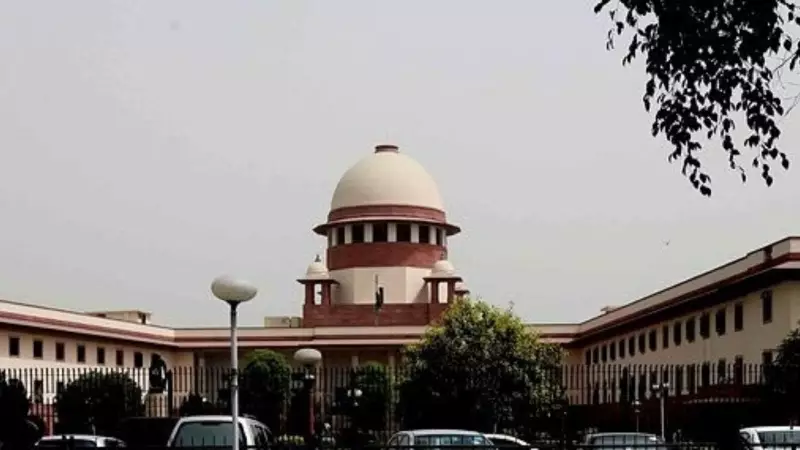
The Supreme Court of India, on Tuesday, December 16, 2025, addressed a serious allegation concerning the electoral process in Bihar but declined to direct the Election Commission of India (ECI) to respond directly to a newspaper report on the matter. The issue was raised during a hearing on petitions challenging the Special Intensive Revision (SIR) of voter rolls in the state.
Allegations of Centralised Notices in Violation of Law
Senior Advocate Prashant Bhushan, representing the NGO Association for Democratic Reforms (ADR), brought to the court's attention a report published by The Indian Express that very morning. Bhushan informed the bench, headed by Chief Justice of India Surya Kant and including Justice Joymalya Bagchi, that the report highlighted a major procedural breach.
He stated that lakhs of notices were sent to voters in Bihar in a centralised manner, which allegedly contravenes Section 23 of the Representation of the People Act. According to Bhushan, over ten lakh electors received standardised notices questioning their documentation, all generated from the ECI's central portal with the digital signatures of local Electoral Registration Officers (EROs), but without the EROs' actual involvement.

The Indian Express report indicated that EROs across Bihar discovered pre-filled notices on their official portals. These notices were addressed to voters who had already submitted forms and were listed in the draft rolls published in August 2025.
Supreme Court's Firm Stance on Procedure
The CJI, while acknowledging the gravity of the issue, expressed reluctance to act solely on a media report. "How to rely (on news reports)... Someone will have to verify…", CJI Kant remarked. When Bhushan urged the court to ask the ECI for a response, the suggestion was met with immediate opposition from the commission's counsel, Senior Advocate Rakesh Dwivedi, who asserted, "No, we will not respond to newspaper reports. What is this new procedure!"
The CJI supported this procedural caution, warning Bhushan that asking constitutional bodies to respond to news items would have "very serious implications." Instead, the court advised that the allegations be formally submitted in an affidavit. The CJI suggested that the "very responsible leader" of a Bihar political party, who had originally alerted Bhushan to the issue, could come forward and file such an affidavit.
Legal Tussle and the Call for Direct Affidavits
Bhushan persisted, arguing that the matter was too serious to ignore and required an explanation from the ECI, as it pointed to centralised actions that bypassed the statutory authority of local EROs. Dwivedi countered, claiming the allegations were "totally wrong" and that all notices are issued by District Election Officers.
Solicitor General Tushar Mehta, also present in the court, weighed in, suggesting that public-spirited individuals should advise informants to file petitions directly. "It's not proper to shoot from somebody's shoulders," he said, a sentiment with which the CJI agreed.
The bench concluded that while the newspaper in question is reputable, its reporting is still dependent on human sources which may not be fully verified. The court maintained its position that a proper affidavit from a person with direct knowledge is the correct legal channel to pursue the allegations further. The matter underscores the ongoing tensions between electoral integrity, legal procedure, and the role of media reports in judicial processes.