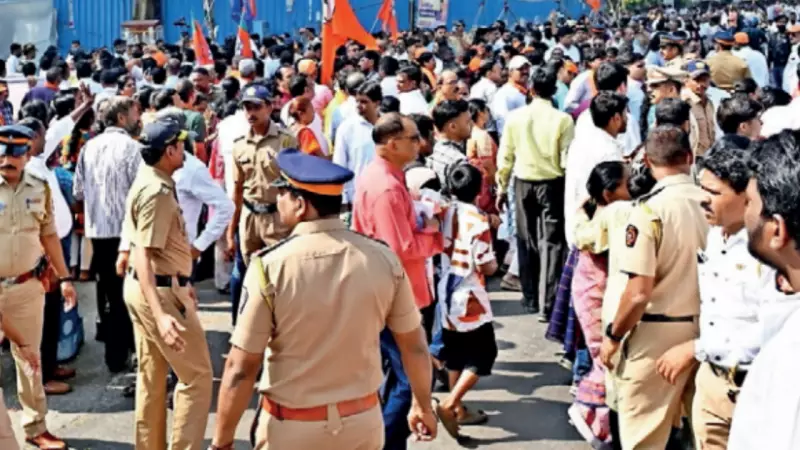
The race for tickets in the upcoming Brihanmumbai Municipal Corporation (BMC) elections reached a fever pitch as the nomination deadline closed, revealing an unprecedented level of political ambition and last-minute maneuvering. The scramble saw political heavyweights promoting family members, grassroots workers asserting their claims, and recent defectors seeking quick rehabilitation, putting immense pressure on all parties to accommodate aspirants.
The Numbers Behind the Nomination Frenzy
The sheer scale of the contest is captured in the numbers. For the 227 seats available, a total of 2,516 candidates submitted their nomination forms. In a clear indicator of high-stakes, last-minute negotiations, a whopping 2,122 aspirants—nearly 84% of the total—filed their papers on the final day, December 30. This deluge points to a complex electoral landscape defined by intense bargaining and strategic calculations.
Political and Economic Drivers of the Scramble
Experts point to a confluence of factors creating this unique scenario. Sanjay Patil, a research assistant in the Department of Civics and Politics at the University of Mumbai, authored a report on BMC elections and highlights key motivations. "Municipal elections in Mumbai are taking place after a gap of nine years," Patil notes, emphasizing that this long hiatus makes them a crucial entry point into formal politics for many new aspirants.

He further explains that splits within major political parties like the Shiv Sena and the NCP have dramatically expanded the arena for political ambition. With more factions and claimants emerging, the competition for space has intensified. Beyond pure politics, Mumbai's evolving political economy is a significant fuel. "Over the past two decades, redevelopment and cluster development have significantly altered the city's power structure," Patil states. Control over municipal decision-making grants access to policy, resources, and influence, making the civic body a highly attractive platform for advancing both political and personal agendas.
Family Legacies and Strategic Moves
Analysts observe a clear trend of political families consolidating power. Across party lines, heavyweight politicians have secured tickets for family members as a strategy to safeguard and extend their political legacy. Political analyst Surendra Jondhale states, "Across party lines, the message is clear: leaders want their homes to remain power centres." Fielding relatives is seen as a way to ensure continued representation and influence within the municipal corporation.
Jondhale adds that the position of a corporator brings informal layers of protection and access, connecting them to police, ward-level machinery, and city authorities, thereby strengthening their overall political leverage. Patil's research also uncovered a specific gender dynamic, revealing that some male politicians strategically marry women with Other Backward Class (OBC) certificates to enable their wives to contest from reserved wards. While reservation provides an entry point for women, Patil notes it also compels them to prove themselves at the same electoral level once elected.
The BJP Factor and the Winnability Test
The electoral environment has been further charged by the BJP's strong performance in recent years. A senior BJP leader revealed that the party's high strike rate in successive elections has encouraged not only party workers but also leaders from other parties to join, expecting to secure a ticket. However, the leader clarified that ticket distribution was not automatic. "The party conducted internal surveys and sought detailed feedback from core committee members at multiple levels before finalising candidates," the leader said, underscoring a focus on winnability. Those who failed to perform in previous elections were reportedly denied tickets this time.
The final-day nomination rush for the BMC polls, therefore, is not merely a statistic. It is a direct reflection of Mumbai's high-stakes political economy, the fragmentation of major parties, the enduring pull of family dynasties, and the calculated strategies of individuals seeking a foothold in the city's powerful civic administration.