Pune is set to witness a significant democratic exercise as the city prepares for its municipal corporation elections after a prolonged delay of nearly nine years. The State Election Commission (SEC) has finally announced the schedule, bringing an end to the administrative rule that followed the expiry of the elected body's term in 2022.
Election Schedule and Ward Structure
The much-anticipated civic polls for the Pune Municipal Corporation (PMC) and the Pimpri-Chinchwad Municipal Corporation (PCMC) are scheduled for January 15. The counting of votes will take place the very next day, on January 16. This election marks a crucial moment for Pune, as the last PMC election was held back in 2017.
The delay was primarily due to ongoing litigation in the Supreme Court concerning reservations for the Other Backward Classes (OBC). With the elected body's term concluding in 2022, the state government had appointed administrators to manage the civic affairs of PMC and other corporations.

State Election Commissioner Dinesh Waghmare announced the election program in Mumbai. The nomination process for candidates was open from December 23 to December 30. This election is part of a larger democratic process encompassing 29 municipal corporations across Maharashtra, all voting on the same day.
The new PMC will have a 165-member general body. In a push for gender equality, 83 seats are reserved for women, while the remaining 82 fall under the general category. The city is divided into 41 wards. Voters will elect corporators from each ward, with a unique structure: 40 wards will elect four corporators each, and one ward will elect five corporators.
As per the electoral roll dated July 1, there are 35,51,469 eligible voters in Pune. However, the PMC administration has identified a significant issue of approximately 3 lakh voters with double entries in the list. Political parties have raised concerns about this discrepancy, demanding corrections to ensure the integrity and fairness of the electoral process.
Political Landscape and Party Promises
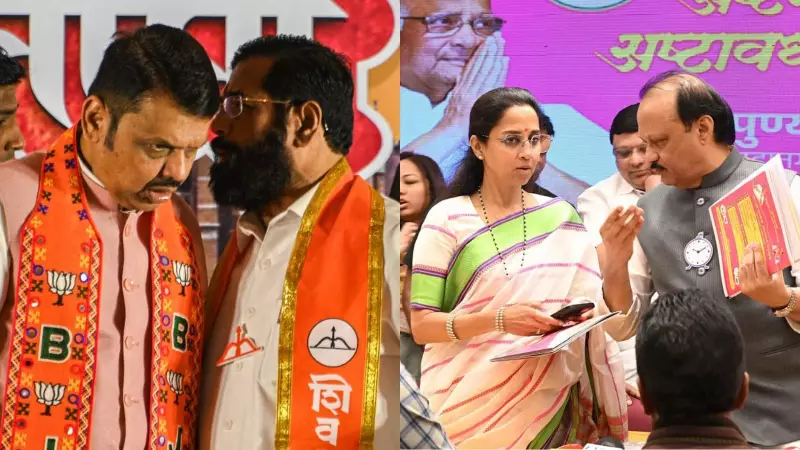
The political arena is heating up with major parties unveiling their manifestos and promises to woo the Pune electorate. The two factions of the Nationalist Congress Party—the one led by Sharad Pawar and the other by Ajit Pawar—jointly released their manifesto titled ‘Ashtasutri Pragati’ and ‘Ashtavadhani Netritva’.
Their key promise includes providing free public transport for city residents. The manifesto also outlines comprehensive measures to address perennial civic issues like road infrastructure, reliable water supply, and efficient waste management. The document was released by Ajit Pawar and NCP(SP) working president Supriya Sule.
On the other side, the Bharatiya Janata Party (BJP), continuing its 'Mahayuti' alliance strategy in the state, has made specific promises targeting women and middle-class residents. Their manifesto promises fare concessions for women in metro rail and city bus services. Additionally, they have pledged tax exemptions for residential properties measuring under 500 square feet.
The BJP's manifesto was unveiled by a team of prominent leaders including Union Minister and Pune MP Murlidhar Mohol, state ministers Chandrakant Patil and Madhuri Misal, along with legislators Hemant Rasane and Bhimrao Tapkir.
Looking Back: The 2017 Verdict and Current Context
Understanding the current political dynamics requires a glance at the 2017 PMC election results. In that poll, all major parties contested independently. The BJP emerged as the single largest party, winning 97 seats. With the support of independent candidates, their tally reached 100, which ended the decade-long control of the NCP over the civic body from 2007 to 2017.

The BJP had entered the 2017 civic polls with strong momentum, having won all eight Pune assembly seats and the Pune Lok Sabha seat in the 2014 general elections. While it faced a minor setback in the 2019 Assembly elections by losing two seats, it retained six. In the recent 2024 elections, the party again secured 6 assembly seats and the Pune Lok Sabha seat, indicating its continued stronghold in the region.
Administrative Preparations and Code of Conduct
The PMC administration is leaving no stone unturned to ensure a smooth and impartial election. Municipal Commissioner Naval Kishore Ram has issued a stern warning to civic staff against participating in election campaigns. He stated that the administration would take strict legal action against any staff member found campaigning for candidates or political parties, as election rules explicitly prohibit such political activity by government employees.
For the mammoth task of conducting the polls, the PMC has appointed a returning officer and is deploying approximately 23,500 personnel from other government offices and government-aided schools for polling and counting duties.
To simplify the process for candidates, the civic body has introduced a single-window system for obtaining the No-Objection Certificates (NOCs) required for filing nominations. Candidates need clearances from 22 different civic departments, including property tax and health. They can now apply for these NOCs online and download the certificates from home. Additionally, helpdesks have been set up at all 15 ward offices and the PMC headquarters to assist candidates.
As Pune stands on the cusp of this crucial election, the focus is on transparent administration, voter list accuracy, and the promises made by political parties that will shape the city's development trajectory for the coming years.