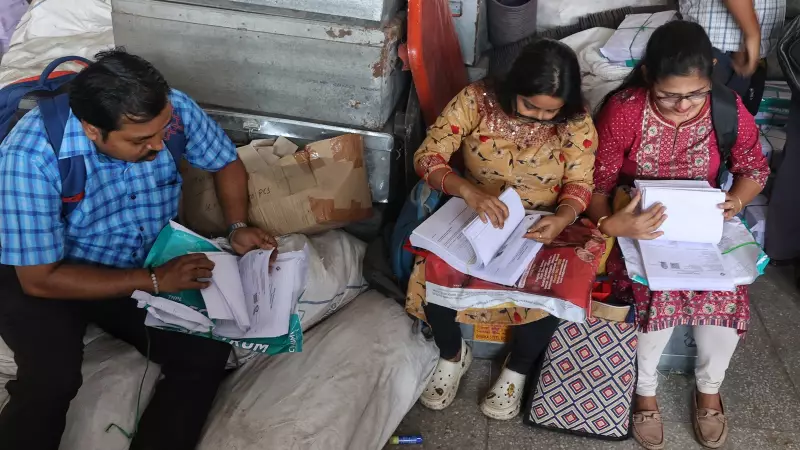
A significant political and legal debate has erupted over the Election Commission of India's (EC) move to conduct a Special Intensive Revision (SIR) of electoral rolls. Several major opposition parties, including the Congress, TMC, DMK, and RJD, have strongly opposed this exercise, even approaching the Supreme Court to halt it. However, legal experts emphasize that the EC is not only empowered but constitutionally mandated to ensure the purity of the voter list by removing ineligible names.
The Constitutional Mandate for Clean Rolls
The opposition to the SIR appears to overlook foundational constitutional provisions. Article 324 of the Constitution vests the superintendence, direction, and control of electoral roll preparation squarely with the Election Commission. Furthermore, Article 326 explicitly states that elections are based on adult suffrage for every citizen of India who is 18 or older and not otherwise disqualified.
This citizenship requirement is reinforced by parliamentary law. Section 16 of the Representation of the People Act, 1950, clearly states that a person who is not a citizen of India is not eligible to be registered as a voter. Section 21 of the same act empowers the EC to prepare and revise the rolls. Given this clear legal framework, questioning the EC's authority to verify citizenship and clean the rolls seems legally untenable.

Why the Special Intensive Revision is Crucial Now
The last such intensive revision was conducted over two decades ago, between 2002 and 2004, in states like Bihar, Delhi, West Bengal, Kerala, Tamil Nadu, Uttar Pradesh, and Rajasthan. Considering the span of 22 years, the current rolls likely contain a substantial number of names that should be removed.
The primary objectives of the SIR are to delete the names of:
- Individuals who have passed away.
- Voters who have relocated to a different residence or state.
- Persons who have illegally entered the voters' list, including non-citizens.
Failure to conduct this exercise periodically opens the floodgates for electoral malpractices, potentially allowing illegal immigrants and infiltrators to influence the democratic process. This poses a grave threat to the integrity of India's elections.
Political Resistance and Legal Precedent
Despite the constitutional imperative, leaders of several opposition parties have been vehement in their criticism. Some have even publicly challenged the EC's right to enquire into citizenship—a stance that legal scholars find contradictory to the Constitution.
This is not the first legal challenge. These parties had previously opposed the SIR in Bihar but did not receive a favourable response from the Supreme Court. Following that exercise, only a negligible number of voters came forward to complain about unlawful deletions, indicating the process was largely accurate and necessary.
The writer, A Surya Prakash, who is the former chairman of Prasar Bharati and currently vice-chairman of the Executive Council for the Prime Ministers Museum and Library, argues that the EC must remain loyal to the Constitution and not be deterred by political pressure. The commission's duty is to ensure that only citizens decide the nation's future, as every voter over 25 is eligible to become an MLA, MP, Chief Minister, or even the Prime Minister.