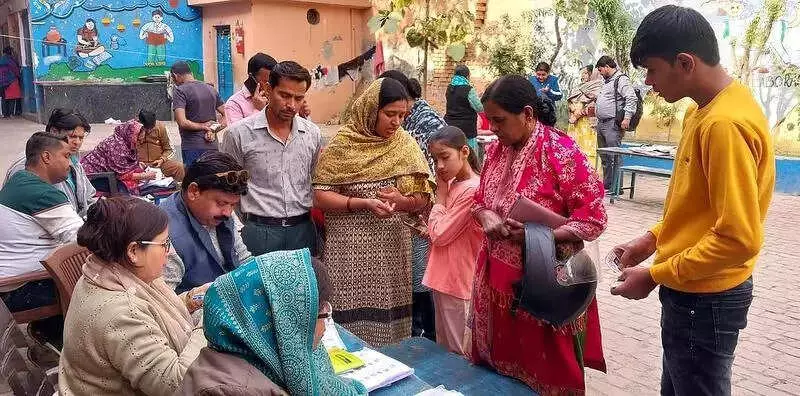
Election officials in Noida have made significant headway in refining the district's voter list, successfully tracing thousands of citizens who were earlier classified as untraceable. An extended voter verification campaign has identified approximately 1% of voters previously placed in the 'absent' category, trimming the list ahead of the crucial publication of the draft electoral roll later this month.
Sustained Efforts Yield Results
The breakthrough was achieved through a multi-pronged approach involving persistent ground work. Around 18,000 electors were successfully traced after booth-level officers (BLOs) conducted sustained door-to-door follow-ups. The initiative also included special weekend verification camps and accounted for late submissions from individuals who were missed during the initial enumeration period. These traced voters had their names duly corrected in the draft list published on December 10.
Prior to this drive, the situation presented a considerable challenge. Earlier estimates indicated that a substantial 7.2% of the district's electorate, translating to nearly 1.3 lakh voters across the Noida, Dadri, and Jewar assembly constituencies, had been placed in the 'Absent, Shifted or Dead' (ASD) category. The successful tracing of 18,000 individuals represents a meaningful reduction in this number.

Collaboration and Community Engagement
Authorities credit the involvement of political parties and community outreach for the drive's success. Additional District Election Officer Atul Kumar highlighted that sharing the ASD lists with block-level agents of political parties proved effective. "Several voters, earlier marked absent, have been brought forward by them," Kumar stated.
Furthermore, BLOs adopted a transparent approach by publicly announcing the lists of absent voters at booth-level camps. This strategy leveraged local networks and word-of-mouth, helping to locate people through community channels. However, officials were quick to add a note of caution. Tracing a voter does not automatically guarantee their inclusion in the final rolls. Each identified case will undergo re-verification in person by BLOs before being incorporated into the draft electoral roll.
Challenges of a Mobile Population
While the numerical change of 1% may seem modest, election officials emphasize its significance for a district like Gautam Budh Nagar (Noida). The area grapples with a highly mobile population driven by rapid urbanization, a large rental housing market, and frequent migration for work opportunities. This fluid demographic makes maintaining an accurate electoral roll a persistent challenge.
Officials noted that many voters who remain on the untraceable list are believed to have permanently moved out of the district, rather than being temporarily absent. This distinction is crucial for maintaining a clean and current voter database.
Final Stages of the SIR Exercise
The Special Intensive Revision (SIR) process is now nearing completion, with fieldwork almost entirely finished. Authorities report that about 76% of voter forms have been uploaded onto the dedicated BLO application and have been mapped or cross-checked against the 2003 electoral rolls for validation.
From this cross-verification, around 11% of records could not be matched with the older rolls, indicating potential discrepancies or new registrations. Meanwhile, the remaining 24% of voters continue to be categorized under the various ASD segments. To ensure thoroughness, the enumeration period for the SIR exercise in Uttar Pradesh, initially set to conclude on December 11, was extended to December 26. The much-anticipated draft electoral roll is scheduled for publication on December 31.