NCR Districts See Major Voter Roll Reductions After Special Revision
The final electoral rolls for all assembly constituencies in Gautam Budh Nagar and Ghaziabad were officially published on Friday, concluding a Special Intensive Revision (SIR) exercise. The two National Capital Region (NCR) districts now collectively account for 37.7 lakh registered voters, marking a significant downsizing of the electorate.
The revision drive resulted in a total of 9.3 lakh deletions across both districts, with Ghaziabad seeing 5.7 lakh removals and Gautam Budh Nagar experiencing 3.6 lakh deletions. This places the two districts among the top five in Uttar Pradesh in terms of percentage reduction in electorate size.
Statewide Comparison of Voter Roll Declines
In a statewide context, Lucknow recorded the steepest percentage decline in registered voters at 22.9%, equivalent to a reduction of 9.14 lakh voters. Ghaziabad followed with a 20.4% decrease, Kanpur at 19.4% (6.9 lakh reduction), Gautam Budh Nagar at 19.3%, and Meerut at 18.75% (5.06 lakh reduction).

Among assembly constituencies across Uttar Pradesh, two in the NCR region reported the highest deletions in absolute numbers. Sahibabad led with 3.2 lakh names removed, while Noida ranked second with 1.8 lakh deletions.
Detailed Breakdown for Gautam Budh Nagar
In Gautam Budh Nagar, the final roll recorded 15.1 lakh voters across its three assembly constituencies. This figure is up from the draft list's 14.2 lakh after approximately 86,000 new names were added during the revision process. However, it represents a notable decrease from the 18.7 lakh registered voters the district had last year, with around one in five voters removed from the rolls.
By assembly constituency, Dadri saw the second-highest deletions in Gautam Budh Nagar at 1.2 lakh, while Jewar experienced around 55,000 deletions. Interestingly, Dadri now boasts a higher voter count at 6.1 lakh compared to Noida's post-SIR tally of 5.9 lakh.
The district's final electorate comprises 8.2 lakh male voters, 6.8 lakh female voters, and 50 third-gender voters. The gender ratio stands at 828, and the Elector Population ratio is 54.59.
Revision Process and Methodology
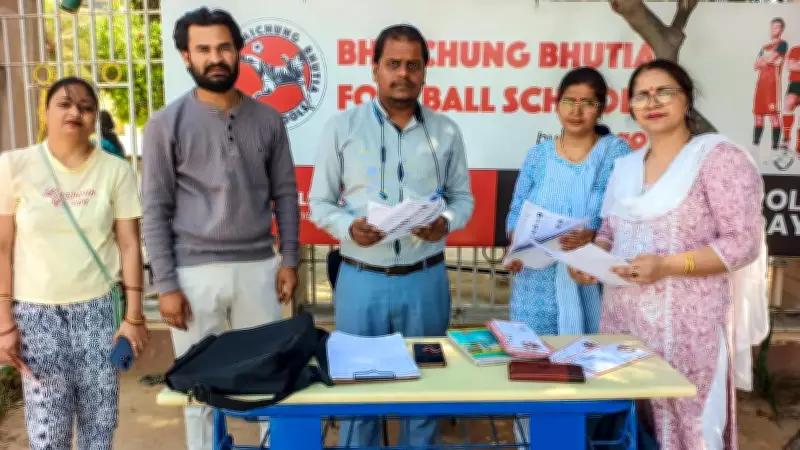
The revision process, which commenced on November 4, 2025, involved comprehensive door-to-door verification of voters. Field teams meticulously cross-referenced entries against the 2003 electoral rolls, flagging voters found to be absent, shifted, duplicated, or deceased for deletion.
District magistrate Medha Roopam emphasized that the electorate would continue to grow even after the formal publication of the roll. She noted that Form 6 applications for fresh enrolment would be accepted on a rolling basis, highlighting that the exercise aimed to improve accuracy while safeguarding the registration of genuine voters. The administration conducted notice-based verification of flagged and unmapped entries before confirming any deletions.
Ghaziabad's Electoral Roll Updates
In Ghaziabad, which had 28.4 lakh registered voters in October 2025 prior to the SIR, the final roll decreased to 22.6 lakh voters, excluding the Dhaulana segment. This includes 12.7 lakh male voters, 10 lakh female voters, and 130 third-gender voters.
Among Ghaziabad's five constituencies, Sahibabad recorded the highest deletions with 3.16 lakh removals, while Loni saw around 85,000 deletions. Sahibabad, the state's largest assembly constituency by population, now has 7.3 lakh voters. The other constituencies include Loni with 4.5 lakh voters, Muradnagar with 3.9 lakh (after 67,000 deletions), Ghaziabad with 3.9 lakh (after 77,000 deletions), and Modinagar with 3.1 lakh (after 26,000 deletions).
Public Engagement and Grievance Redressal
Officials from both districts confirmed that enrolment would remain open, allowing eligible citizens to register through the standard application process even after the final rolls were published. The rolls were reopened for public inspection at polling stations across both districts on Friday, with officials urging residents to verify their details over the coming week.

The revision was conducted with January 1, 2026, as the qualifying date, with claims and objections accepted between January 6 and March 6. District magistrate Ravindra Mander reported that the exercise involved 24 consultation meetings with recognised national and state political parties. Grievances were addressed across three platforms, resulting in 7,378 complaints logged through the voter helpline (1950), 31,832 through the BLO app, and 7,487 via the National Grievance Service Portal.