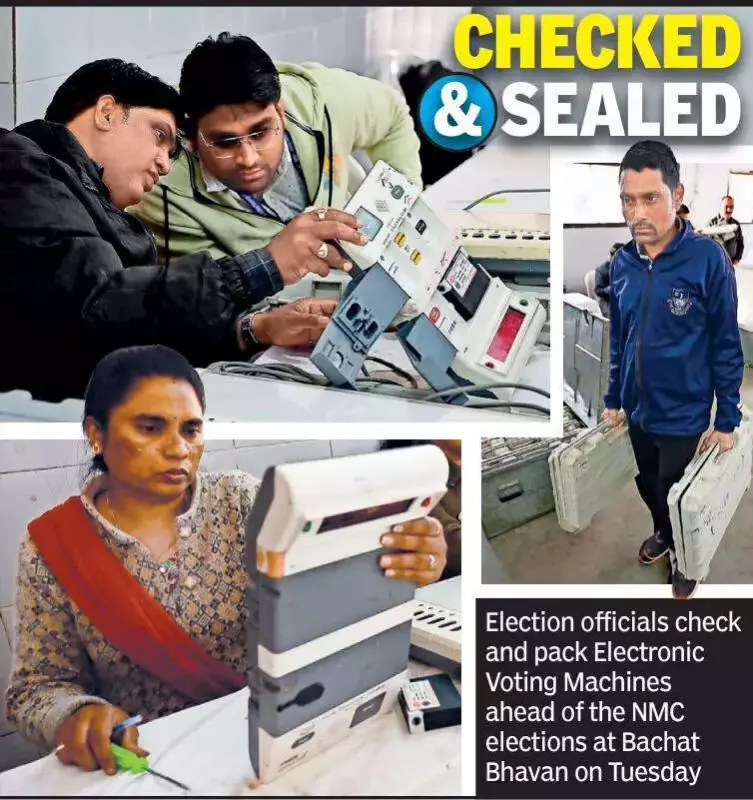
As Nagpur gears up for its crucial Municipal Corporation elections, the officers and staff tasked with conducting the polls are steeling themselves for a gruelling test, not just of duty but of endurance against the elements. The forecast of night temperatures plunging to a biting 8–9 degrees Celsius adds a severe layer of hardship to their long hours of service.
Biting Cold and Basic Amenities: A Dual Challenge
With duties stretching late into the night and resuming in the early morning, a small army of government officials, teachers, and police personnel will have to withstand the intense cold. This challenge is magnified at many polling centres, which are often set up in school buildings offering minimal shelter or heating arrangements. Beyond the weather, persistent concerns about the availability of basic amenities at polling stations have resurfaced ahead of the vote.
In previous elections, several women election officials and women police personnel had lodged complaints about unhygienic washrooms or a complete lack of usable toilet facilities at certain booths. As thousands of staff prepare for deployment across the city, serious questions are being raised about whether adequate sanitation, proper rest spaces, and women-friendly facilities have been ensured this time.

Voices from the Ground: A Gamble on Facilities
A government school teacher, speaking to TOI on condition of anonymity, revealed the uncertainty on the ground. While most polling centres theoretically have washrooms, their actual condition is always a gamble. "Sometimes the washrooms are usable, but many times they are unclean and unhygienic. We have no option but to manage somehow," the teacher said. Highlighting a critical gap, the teacher added, "As for sanitary pads, most women carry them because there is no guarantee of availability."
Another election staffer, Zafar Khan, pointed out the lack of formal provisions for food, warmth, or proper rest during night duty. "Food and basic arrangements are usually managed by the staff themselves, especially those on night shift. The cold becomes a serious issue after midnight," Khan explained. He further noted that in most school buildings used as polling centres, only the washrooms are kept open while the rest of the building remains locked, leaving little space to rest or keep warm.
Informal Measures and Urban Advantages
Sources within the election machinery indicated that internal arrangements are often made informally by senior officers to ensure female colleagues get short breaks and some degree of comfort during extended duty hours. However, these measures largely depend on the sensitivity and initiative of individual officers rather than any structured, official protocol.
Officials also acknowledged that polling in an urban area like Nagpur does offer some advantages compared to remote rural constituencies. A source noted that emergency services, medical help, and basic facilities are relatively more accessible in the city, a logistical benefit not always available during rural elections. Despite this silver lining, the combined challenge of harsh cold and inadequate on-site facilities promises to make this polling day a demanding ordeal for the dedicated personnel ensuring the democratic process runs smoothly.