As Nagpur gears up for the crucial Nagpur Municipal Corporation (NMC) elections on January 15, the city's campaign trails present a fascinating blend of the old and the new. While seasoned politicians swear by time-tested methods like door-to-door visits and rickshaw-mounted loudspeakers, a younger generation of aspirants is increasingly turning to digital platforms to amplify their message. This election season is witnessing a strategic fusion of street-level engagement and screen-based outreach.
The Unwavering Dominance of Traditional Campaigning
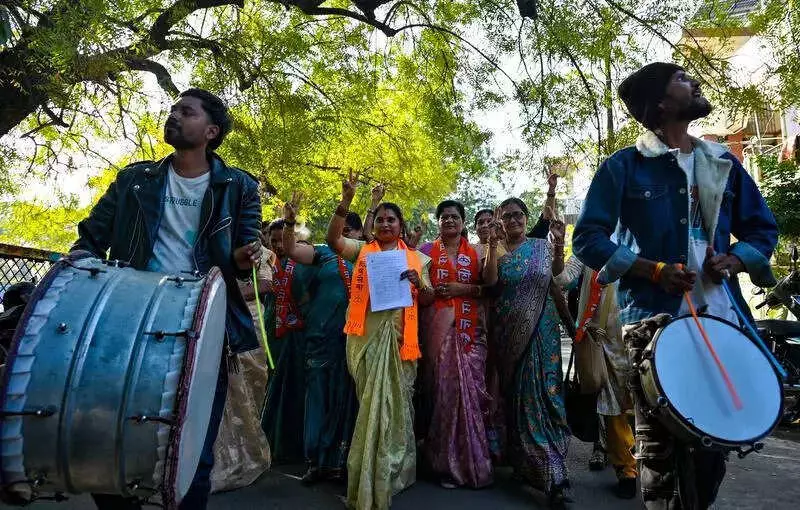
Across the city's wards, the sounds and sights of conventional electioneering remain dominant. Rickshaws fitted with loudspeakers weave through narrow lanes, repeatedly announcing candidate names and symbols. Volunteers conduct informal meetings and hammer small banners on busy roads. For veterans like five-time corporator Manoj Sangole, this physical presence is non-negotiable. "Door-to-door campaigning is essential. Hammering should happen — people should remember your face and your name," Sangole asserts. He believes that in municipal elections, voter recognition and accessibility, forged through direct interaction, often trump broader ideology.
This sentiment is echoed by professionals in the campaign ecosystem. Sound designer Charudutta Jichkar, who creates jingles for political parties, confirms that demand for loudspeaker-based content has not waned. "For civic polls, loudspeakers are still very prominent. The demand has increased," Jichkar notes. He explains the logic: candidates want their names and symbols to become familiar through constant auditory repetition within a highly localized ward boundary, a factor that continues to decisively shape outcomes.

Digital Outreach: A Complementary Tool for the New Guard
In parallel, a quieter digital campaign is unfolding on smartphones and social media feeds. Younger and first-time candidates are leveraging platforms like Facebook and Instagram to post introductory videos, issue-based messages, and targeted content. Yash Gourkhede, head of the Jan Badlaav Party and a young corporator aspirant, represents this hybrid approach. "Door-to-door campaigning is very important and cannot be avoided. Social media helps us introduce ourselves and highlight issues, especially among young and first-time voters," Gourkhede explains.
However, experts point out a key limitation of digital tools in hyper-local civic polls: their reach often spills beyond the strict geographical confines of a ward. While social media is excellent for building a candidate's image, its impact is diffused. Traditional methods, though smaller in scale, offer precise, targeted, and repeated exposure to the exact voter base that will decide the result.
A Generational Divide in Method, Not Intent
The current campaign landscape in Nagpur reflects a generational divide in approach rather than a fundamental difference in intent. Both old and new schools are ultimately chasing the same goal: voter attention and recall. Senior candidates rely on decades of proven strategy, prioritizing physical visibility and persistent neighbourhood interaction. The newer entrants, while experimenting with online platforms to reach specific demographics, are not abandoning traditional methods entirely. They view digital outreach as a vital supplement, not a replacement.
The result is a multi-layered campaign where the beat of the dhol from a street corner coexists with a carefully edited campaign video on a voter's feed. As campaigning intensifies, Nagpur's electoral battleground demonstrates that in India's deeply localized civic democracy, the human touch of a door-knock combined with the scalable reach of a social media post might just be the winning formula for January 15.