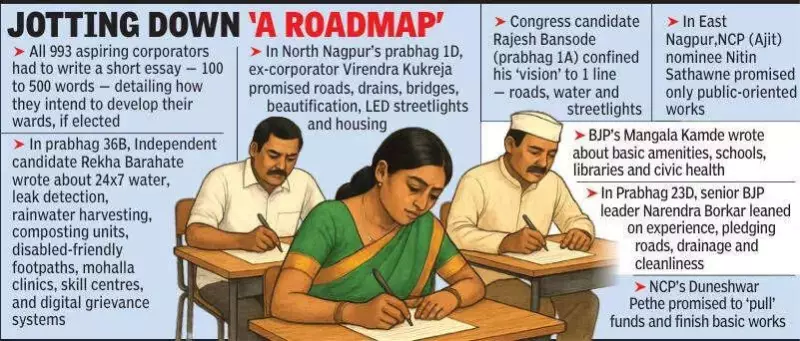
In an unprecedented move for the Nagpur Municipal Corporation (NMC) elections, the simple act of filing nomination papers was no longer enough for the 993 aspiring corporators. For the first time in the civic body's poll history, every single candidate was mandated to put their promises in writing, submitting a short essay outlining their vision for ward development.
The Mandatory Vision Statement: From Bypolls to City-Wide Rule
This unique clause, which technically existed on paper since 2018 and saw sporadic use in by-elections, was deployed across the entire city for the first time. Candidates were required to write an essay of 100 to 500 words, detailing how they intended to develop their respective wards if elected. What began as a bureaucratic formality quickly transformed into an revealing X-ray, exposing the depth of preparation—or lack thereof—among those seeking public office.
Election officials clarified that the exercise is not marks-based. No candidate is graded or disqualified for poor writing. The stated aim is accountability—creating a written, archived record of promises that voters can later reference to hold their representative responsible.

Blueprint vs. Buzzword: A Stark Contrast in Quality
A close examination of the submitted affidavits reveals a dramatic spectrum in the quality and seriousness of these mini-manifestos. Some candidates treated the essay as a genuine opportunity to present a actionable plan.
In Prabhag 36B, Independent candidate Rekha Barahate submitted what resembled a comprehensive ward blueprint. Her essay detailed specific pledges including 24x7 water supply, leak detection systems, rainwater harvesting, composting units, disabled-friendly footpaths, mohalla clinics, skill development centres, and a digital grievance redressal system. Her BJP rival in the ward, Usha Hade, struck a similarly detailed chord, promising citizen-centric governance focused on clean water, sewage management, recycling, stronger primary healthcare, scholarships, women's self-help networks, and better public transport.
In North Nagpur's Prabhag 1D, former corporator Virendra Kukreja wrote expansively not just about basic infrastructure like roads, drains, and LED streetlights, but also about creating cultural spaces, sports facilities, and helping eligible citizens with documentation.
The Worrying Trend: One-Liners and Copy-Paste Promises
At the opposite end of the spectrum were essays that revealed a worrying lack of thought or ward-specific planning. Some were barely longer than a social media status update.
Congress candidate Rajesh Bansode from Prabhag 1A confined his entire "vision" to a single line mentioning roads, water, and streetlights. Many others relied on generic catch-all phrases with no timelines, no indication of funding sources, and no ward-specific priorities. Repetition and copy-pasting became a dominant theme, especially in East Nagpur, where multiple affidavits contained strikingly similar language and vague promises.
For instance, NCP (Ajit Pawar group) nominee Nitin Sathawne promised only ‘public-oriented works’. His party colleague Abha Pande referred broadly to development and sewer issues, with portions of her essay left incomplete. BJP's Mangala Kamde wrote about basic amenities, schools, and libraries, but in the same broad language seen across many documents.
In Prabhag 23D, senior BJP leader Narendra Borkar leaned on his experience, pledging improvements in roads, drainage, and cleanliness. NCP's Duneshwar Pethe simply promised to ‘pull' funds and finish basic works.
Breaking the Mold: Unique Pledges Stand Out
Amidst the sea of generic promises, a few candidates broke the pattern with distinctive visions. Former mayor Maya Iwnate (Prabhag 12-B) focused on transparency, leadership, zero-garbage concepts, and women's welfare. Her Congress rival, Omprakash Wadwe, listed innovative ideas like mobile service vans, e-libraries, and securing rights for slum dwellers.

Elsewhere, BJP's Sudhir Raut championed green gyms, job creation, and sanitation, while rebel candidate Dheeraj Chavhan promised a ‘world-class Nagpur’ anchored on leveraging state and central government schemes.
The ultimate impact of this written exercise remains an open question. Whether citizens will actually read these essays and whether they will influence voting decisions is yet to be seen. However, this election cycle in Nagpur undeniably added a quiet, substantive twist to the usual din of rallies, banners, and loudspeakers. Before candidates could promise the moon from a stage, they first had to explain—in their own handwritten or typed words—exactly what they intended to do on the ground.