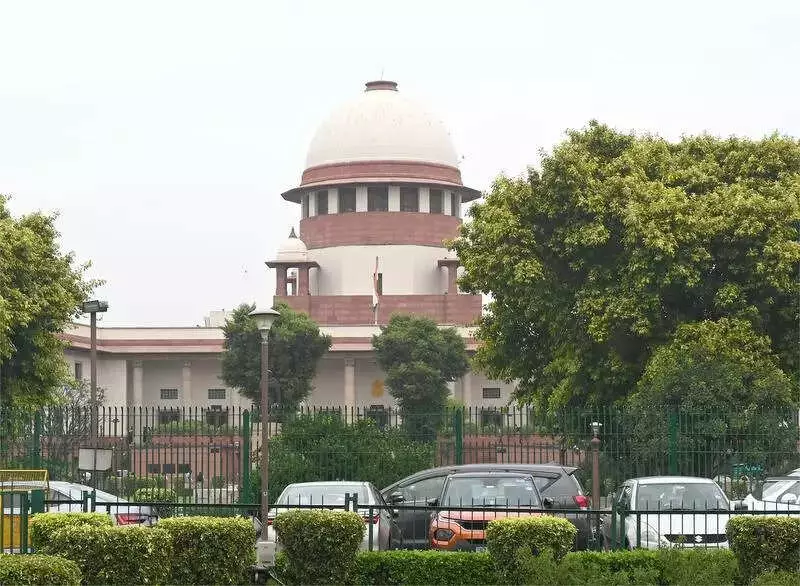
The political fate of 57 local governing bodies in Maharashtra now rests with the Supreme Court, which is set to deliver a crucial verdict on January 21. This comes even after the results for president posts in these 40 municipal councils and 17 nagar panchayats were officially declared on Sunday.
Court Order Puts Results on Hold
Acting on multiple petitions, the apex court had earlier ruled on November 29 that elections to these specific 57 seats would be subject to its final order. The court was addressing challenges related to the breach of the 50% reservation limit. An official from the State Election Commission (SEC) confirmed on Monday, "While the results were declared, those will depend on the final order."
These bodies are part of a larger group of 288 municipal councils and nagar panchayats where the combined reservation for Scheduled Castes (SC), Scheduled Tribes (ST), and Other Backward Classes (OBC) crosses the 50% mark. The Supreme Court's impending decision will not only affect the president posts but also the results for councillor positions within these civic bodies.

Mahayuti Leads But Victories Under Scrutiny
According to the data released by the SEC, the ruling Mahayuti alliance secured a commanding lead, winning 207 president posts across the state. The Bharatiya Janata Party (BJP) emerged as the single largest party with 117 seats, followed by its allies Shiv Sena with 53 and the Nationalist Congress Party (NCP) with 37.
The opposition Maharashtra Vikas Aghadi (MVA) was restricted to 44 wins. Within the MVA, the Congress party bagged 28 seats, while the Shiv Sena (UBT) won nine and the NCP (SP) secured seven. Independent candidates and others won 37 posts.
However, the clarity of this mandate is clouded for 39 of Mahayuti's victories and 17 of MVA's wins, which fall under the Supreme Court's scrutiny. This means 30 BJP wins, five for Shiv Sena, and four for NCP from the Mahayuti camp are in limbo. For the MVA, 11 Congress wins, two for Shiv Sena (UBT), and four for NCP (SP) face a similar uncertain future.
Political Stakes and Reactions
The political implications are significant. For Mahayuti, the 39 contested bodies represent nearly 18.8% of its total wins. For the MVA, the 17 bodies under scrutiny constitute a much larger 38.6% of its already modest tally, making the court's decision critically important for the opposition bloc.
Reacting to the situation, a senior BJP politician stated, "The mandate clearly favours Mahayuti, but we will respect the Supreme Court's decision." A Congress member expressed concern, saying, "Nearly two-fifths of our victories are under scrutiny. These reflect people's mandate at the grassroots, and we hope the court ensures stability and does not unsettle elected bodies."
Political analysts believe the January 21 verdict could reshape local power equations. One observer noted, "For Mahayuti, the impact may be limited but politically important. For MVA, the stakes are much higher, as a large share of its already modest gains is at risk."
Geographically, of the 40 municipal councils involved, data shows eight are in Nagpur district, followed by seven in Chandrapur and five in Nashik. The state now awaits the Supreme Court's ruling, which will finally determine who governs these local bodies.