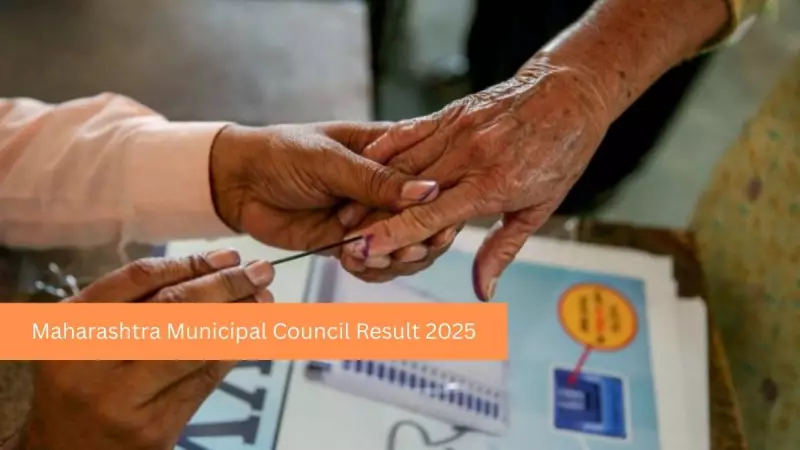
The political landscape of Maharashtra's Vidarbha region witnessed significant activity with the conclusion of the 2025 Municipal Council elections. The polls, held across several key councils, have provided fresh insights into the evolving voter sentiment and party dynamics, particularly in the districts of Amravati, Buldhana, and Akola. These local body elections are often seen as a crucial barometer for the larger political climate in the state.
Amravati Municipal Council: A Close Contest and Political Significance
The election for the Amravati Municipal Council, held on December 19, 2025, was a closely watched affair. This council is notably important as it falls within the assembly constituency of Leader of Opposition in Maharashtra Legislative Council, Ambadas Danve. The electoral battle here is a direct reflection of the ongoing tussle between major state-level alliances.
In the previous elections, the Bharatiya Janata Party (BJP) had managed to secure a victory in this council. However, the 2025 polls presented a renewed challenge. The political significance of Amravati is heightened by its connection to senior state leadership, making any shift in results a point of major political analysis and discussion among observers.

Buldhana and Akola: Testing Grounds for Party Strength
Simultaneously, elections were conducted for the Municipal Councils of Buldhana and Akola. The Buldhana council is situated in the assembly constituency represented by Leader of Opposition in Maharashtra Legislative Assembly, Vijay Namdevrao Wadettiwar. This adds another layer of high-stakes political competition to the outcome.
In Akola, the council election dynamics are equally compelling. The council is part of the assembly constituency of former state minister and senior Congress leader, Balasaheb Thorat. The performance of political parties in these councils is not just about local governance but is intricately linked to the prestige and ground-level strength of these prominent state leaders.
Historically, the Indian National Congress had demonstrated strong performance in these councils in earlier electoral cycles. The 2025 elections thus served as a critical test to see if the party could retain its influence or if other political forces had made substantial inroads into these traditional strongholds.
Implications and Analysis of the Verdict
The results from these three municipal councils in the Vidarbha region are more than just local outcomes. They offer a microcosm of the larger political trends within Maharashtra. A strong showing by a party in these areas, which are represented by top opposition leaders, can energize its cadre and influence strategies for upcoming larger elections.
Conversely, a loss or weakened performance can trigger internal assessments and strategic recalibrations. The voter turnout, the issues that dominated the campaign—such as local infrastructure, water supply, and development—and the final seat tally all contribute to a nuanced understanding of what the electorate in this crucial region prioritizes.
These council elections ultimately underscore the importance of grassroots-level politics in shaping the broader narrative of power in Maharashtra. The verdict from Amravati, Buldhana, and Akola will undoubtedly be dissected by political parties as they prepare for future electoral battles at the municipal corporation, assembly, and national levels.