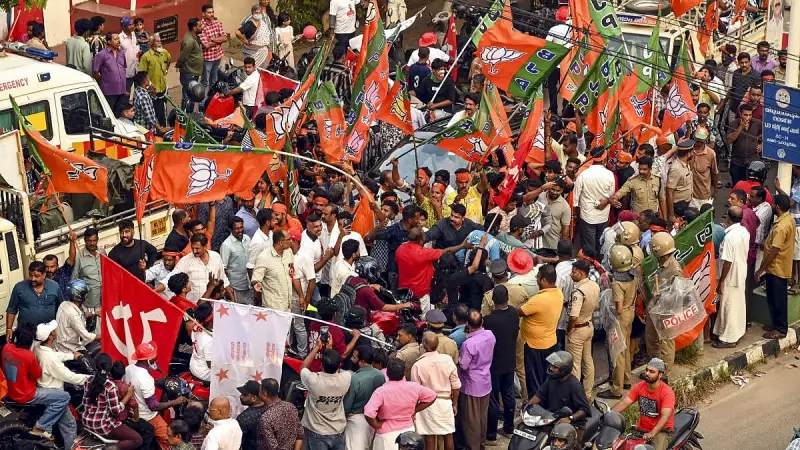
The high-decibel open campaign period for the crucial first phase of the local body elections in Kerala officially concluded on Sunday. This sets the stage for a tightly contested electoral battle across the state's grassroots democratic institutions.
A New Political Equation Emerges
Political observers note a significant shift in the traditional dynamics of Kerala politics this election season. For years, the contest was primarily a direct fight between the incumbent Left Democratic Front (LDF) and the opposition United Democratic Front (UDF). However, the Bharatiya Janata Party (BJP) has steadily improved its electoral influence in the state over recent years. This growth is poised to reshape the battlefield, transforming many contests into a three-cornered fight.
This evolving scenario means that in numerous wards and constituencies, votes are likely to be split three ways, making outcomes highly unpredictable and raising the stakes for all major players. The traditional bipolar polity of Kerala is witnessing a tangible challenge, adding a new layer of complexity to these local polls.

Thiruvananthapuram: The Prestigious Battleground
All eyes are particularly focused on the state capital, where the most high-profile contest is unfolding. The battle for control of the prestigious Thiruvananthapuram Corporation is expected to be a microcosm of the state's new political reality. Here, the triangular contest is anticipated to be at its most intense and consequential.
The corporation has long been a coveted prize for political parties, symbolizing administrative control and influence in the heart of Kerala. With the BJP making concerted efforts to expand its urban footprint, the fight for Thiruvananthapuram is no longer just between the LDF and UDF. The national party's improved organizational strength and campaigning resources are expected to make it a serious contender, potentially holding the key to a fractured mandate.
What Comes Next?
With the public campaigning now over, the focus shifts to the final leg of voter outreach, strategic maneuvering, and the actual polling process. The first phase of voting is scheduled for December 2025, as reported. The results of these local body elections are seen as a critical mid-term appraisal of the state's ruling front and a vital test for the opposition's relevance.
More importantly, the performance will be a crucial indicator of the BJP's ground-level penetration in Kerala, providing momentum and morale ahead of future state assembly and parliamentary elections. The outcomes could redefine alliance strategies and political narratives in the southern state for years to come.
As per the latest update, the campaign concluded on 07 December 2025. The electoral process is now in the hands of the voters, who will decide the shape of Kerala's local governance amidst this evolving political landscape.