

The recent zila parishad and panchayat samiti elections in Punjab's Patiala and Sangrur districts have highlighted a critical flaw in the grassroots democratic process: a surprisingly high rate of vote rejection. Official data reveals that approximately 3.75% of all votes cast were declared invalid, raising serious questions about voter awareness and election procedures when using traditional ballot papers.
Breaking Down the Numbers: A Significant Chunk of Votes Goes Uncounted
In Patiala district, the electorate for the zila parishad polls stood at 8,87,600. Out of the 4,09,822 votes that were cast, a significant 15,386 ballots (3.75%) were rejected. The scenario was similar for the panchayat samiti elections in the same district, where 14,757 out of 3,83,279 votes (3.85%) were deemed invalid. Neighbouring Sangrur district mirrored this trend, with around 13,000 votes rejected from a total of nearly 3.5 lakh votes polled. The overall voter turnout for the state was recorded at 48.3%, with Patiala itself seeing only about 46% participation.
Why Were So Many Ballots Rejected? Officials Explain Common Errors
Explaining the high incidence of invalid votes, the returning officer in Patiala district pointed to two primary reasons. Ballot papers left completely unmarked and those with multiple ink impressions were the main culprits. A deeper look into the process revealed more specific, avoidable mistakes.

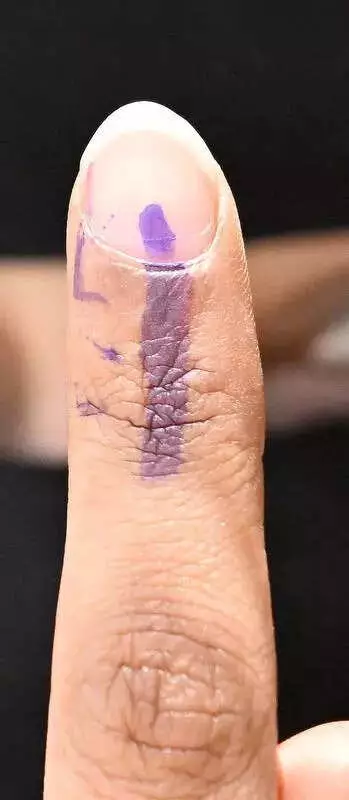
A presiding officer noted that many voters, after stamping the mark next to their chosen candidate's name, accidentally smudged ink on other parts of the paper while folding the ballot. In another common error, voters who used thumb impressions instead of signatures on the voter register failed to clean their inked thumbs before handling the ballot paper. This led to unintended marks that rendered their vote invalid.
Calls for Reform: Diluted Mandate and the Need for Better Education
The significant rejection rate has prompted strong reactions from civil society and calls for systemic change. Darshan Singh Dhanetha, a member of the Save Villages, Save Punjab Committee, argued that the Election Commission must take proactive steps to clearly educate voters on proper procedures like correct ballot folding and basic precautions such as cleaning inked thumbs.
He emphasized a crucial consequence: with a low voter turnout and a high rejection rate, the democratic mandate becomes diluted. A candidate can emerge as a representative of an entire zone with the support of only a small fraction of the total electorate. Dhanetha has called for comprehensive electoral reforms to address this issue.
When contacted, Rajdeep Kaur, Secretary of the Punjab State Election Commission, stated that consolidated state-level data on rejected votes was not immediately available and would need to be compiled from district-level officers.
The unusually high rejection rate in these elections has undeniably renewed the debate on the importance of voter education, ballot design, and procedural reforms to ensure that every valid vote truly counts and the will of the people is accurately reflected.






