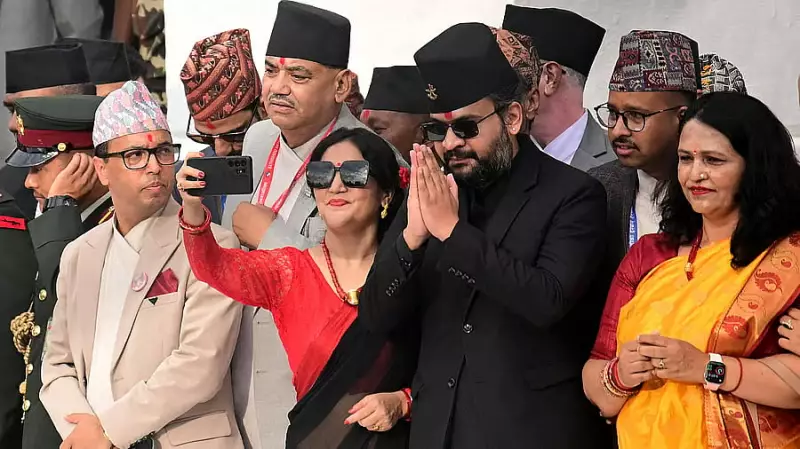
In a striking reflection of shifting political tides, Nepal is set for a pivotal parliamentary vote where a former rapper has emerged as a serious contender for the prime minister's post. This development follows significant youth-led protests that have dramatically reshaped the nation's electoral landscape.
The Rise of a New Political Force
The key figure at the centre of this political evolution is Balendra Shah, a former rapper whose entry into the high-stakes race for prime minister marks a departure from Nepal's traditional political leadership. His candidacy gains momentum against the backdrop of widespread demonstrations spearheaded by the country's Gen Z population. These protests, driven by demands for greater representation and systemic change, have had a direct and substantial impact on the voter registry.
Youth Power Reshapes the Electorate
The Nepal election commission has released updated figures that underscore the power of the recent protests. From a total population of approximately 30 million, nearly 19 million people are now eligible to cast their ballot. Crucially, the commission confirmed that close to one million new voters have been added to the rolls in the wake of the demonstrations. A significant majority of these newly enfranchised citizens are youths, indicating a decisive shift in the demographic balance of the electorate.

The protests, which captured national attention, were largely peaceful but potent, focusing on issues of governance, employment, and political accountability. Their most immediate victory is this substantial expansion of the voting base, which is expected to influence the policies and priorities of all candidates, including established figures like K P Sharma Oli.
Implications for Nepal's Political Future
The upcoming vote, scheduled for a key date following the protests, is now viewed as a referendum on the establishment's ability to connect with a younger, more dynamic Nepal. Analysts suggest that the traditional political parties will need to recalibrate their strategies to address the concerns of this newly activated bloc. The candidacy of Balendra Shah, symbolising an alternative voice, is a direct outcome of this charged atmosphere.
This election cycle highlights a broader global trend of youth engagement in politics, but with distinct Nepali characteristics. The integration of nearly a million new, mostly young voters is not just a statistical change; it represents a fundamental alteration of the political conversation. The results will be closely watched as an indicator of whether Nepal's political structures can successfully channel this energy into governance or face further pressure for transformation.