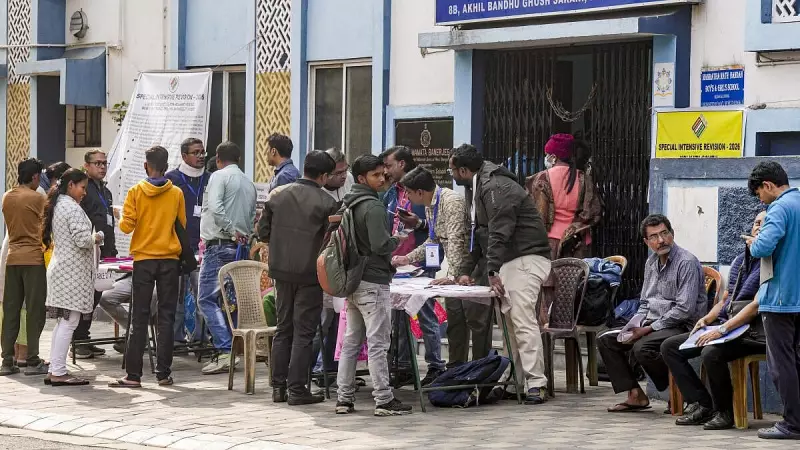
The Election Commission of India (ECI) has issued a significant set of instructions to officials in West Bengal, directing them not to summon voters listed in the 2002 electoral rolls who are currently 'unmapped' in the system. This directive comes amidst criticism the poll body has faced over the ongoing Special Intensive Revision (SIR) exercise in the state.
Background of the Controversy
The controversy stems from the ongoing Special Intensive Revision of the electoral rolls in West Bengal. The process, intended to clean up and update the voter list, has been under scrutiny from various political quarters and civil society groups. Critics have raised concerns about the methodology and the potential for eligible voters to be wrongly excluded during this verification drive.
The core issue involves voters whose names appear in the old 2002 electoral rolls but who are not currently mapped or traceable at their registered addresses. The initial process involved summoning these individuals for verification. However, this approach led to allegations of harassment and confusion, prompting the Election Commission to step in with a clarification.

The Election Commission's Directive
In its latest instruction, the ECI has explicitly told West Bengal election officials to halt the practice of issuing summons to these 'unmapped' voters from the 2002 list. The commission emphasized that the primary focus should be on the current electoral roll and the processes defined for ongoing revision.
The directive, issued on 29 December 2025, aims to streamline the SIR process and address the complaints. By asking officials not to pursue voters based solely on two-decade-old data without current location mapping, the ECI seeks to reduce public inconvenience and focus resources on more accurate, contemporary verification methods.
Implications and Next Steps
This move by the Election Commission is seen as a corrective measure to ensure the sanctity of the electoral revision process. It underscores the body's responsiveness to operational feedback during a critical pre-election activity. The Special Intensive Revision is a crucial exercise for maintaining an accurate voter database, which is the foundation of free and fair elections.
The decision likely means that the revision process will now rely more heavily on other forms of verification and field-level data rather than pursuing leads from very old records. The success of this revised approach will be closely watched, as West Bengal remains a key political state. Ensuring that no legitimate voter is disenfranchised while also cleaning the rolls of duplicate or bogus entries is a delicate balance that the ECI must maintain.
As the state moves closer to future electoral battles, the accuracy and perceived fairness of the voter list will be paramount. The Commission's latest order is a pivotal step in managing that complex challenge.