In a significant move to address a technical discrepancy, the Election Commission of India (EC) has issued a fresh set of instructions to district officials in West Bengal concerning a large group of voters whose details are not matching in the official election management application.
Directive to Halt Hearing Notices
The core directive, issued on Monday, is clear: District Election Officers (DEOs) and District Magistrates (DMs) must not issue any notice for a hearing to over 1.3 lakh voters identified in two specific categories. The first category includes voters whose names did not match during verification in the Booth Level Officer (BLO) application. The second comprises individuals who are marked as 'unmapped' within the app but are correctly mapped in the physical, hard copy of the 2002 electoral roll.
Root Cause: Technical Glitch in Data Conversion
The EC notification clarifies that this widespread issue stems from a technical problem. Sporadic errors crept in during the conversion process of the PDF version of the 2002 electoral roll into the digital system. This conversion glitch prevented the proper linkage for these voters from being established within the BLO application, even though their credentials are valid in the original record.

"These electors are marked unmapped, though they have either self or progeny linkage with the hard copy of the 2002 electoral roll as authenticated and provided by the DEOs and published on the website of the West Bengal CEO," the EC's official communication states, affirming the legitimacy of these voters' entries.
New Field Verification Protocol
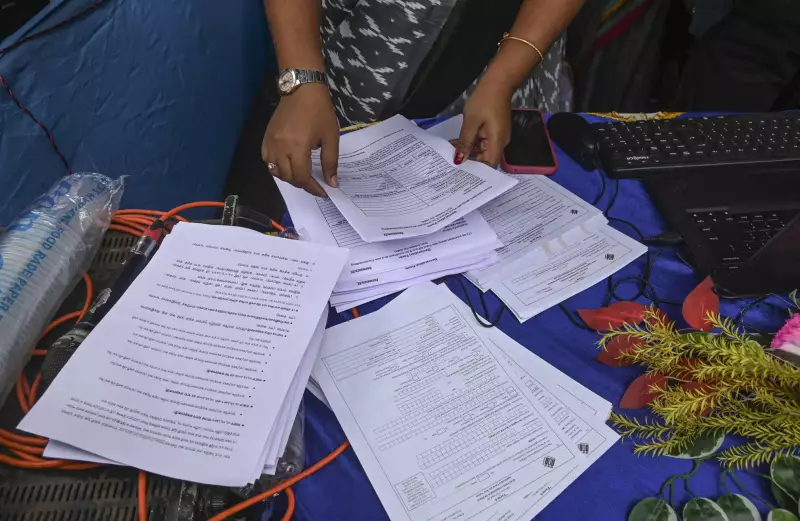
Instead of summoning voters for hearings, the Commission has prescribed an alternative, field-based verification method. The notification instructs that BLOs may be sent to the field to personally meet such electors. The BLO is to take a photograph with the voter, and this image is to be uploaded to the system along with the corresponding page from the hard copy of the electoral roll as proof of verification and existence.
This step is designed to be a practical solution that minimizes inconvenience for the electorate while ensuring the integrity of the roll. It bypasses the faulty digital linkage by relying on physical verification against the authenticated 2002 document, which remains the authoritative source in this case.
Implications for Electoral Preparedness
This directive underscores the challenges that can arise in large-scale digital migration of legacy data. By proactively instructing officials to avoid punitive notices, the EC aims to prevent the disenfranchisement of a substantial number of voters due to a system error. The focus is now on corrective field action by BLOs to reconcile the records before the upcoming electoral processes. The move is seen as crucial for maintaining public trust in the electoral machinery and ensuring a smooth voter experience in West Bengal.