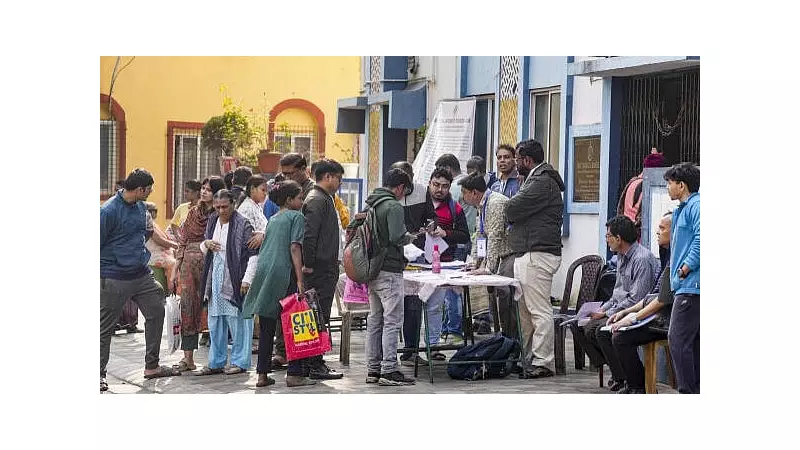
In a significant move aimed at facilitating the electoral process for citizens stationed overseas, the Election Commission of India (ECI) has announced a major exemption for specific categories of voters. The Commission has relieved government, paramilitary, and military employees temporarily residing abroad from the requirement of personal appearance during hearings for the Special Intensive Revision (SIR) of electoral rolls.
Who Benefits from the New Exemption?
The exemption, announced on January 8, 2026, covers a broad spectrum of individuals who are away from their home state. Alongside government and military personnel posted abroad, the relief also extends to students and other ordinary citizens who are temporarily living outside the state of West Bengal. This decision is particularly relevant for the ongoing SIR process in West Bengal, where these hearings are a crucial step for updating voter lists.
The EC's statement provided clear guidance on how these absent voters can proceed. It clarified that such electors are now permitted to authorize any family member to appear and represent them before the electoral registration officials during the hearing. This proxy provision ensures that their claims or objections regarding the electoral roll can be processed without necessitating their physical presence, which is often impractical and costly.

Simplifying the Electoral Roll Revision Process
The Special Intensive Revision is a detailed exercise undertaken by the Election Commission to clean up and update the voter list, ensuring its accuracy. Personal hearings are a part of this process to address discrepancies or inclusion requests. The latest exemption directly addresses a long-standing hurdle faced by service voters and the Indian diaspora on temporary assignments, who were previously at risk of missing out due to their inability to attend in person.
By allowing a family member to stand in, the EC has democratized access to the revision process. This step is seen as a voter-friendly reform that acknowledges the mobility of India's workforce and student population. It safeguards the fundamental voting rights of citizens who are serving the nation abroad or pursuing opportunities overseas.
Implications and Broader Impact
This procedural easing is expected to have a positive impact on the completeness and fairness of the electoral roll in West Bengal. It removes a significant logistical barrier for thousands of eligible voters. The move underscores the Election Commission's adaptive approach to managing elections in a globalized era where citizens frequently travel and work across borders.
The announcement, widely shared on social media platforms like X (formerly Twitter), has been welcomed as a pragmatic and inclusive decision. It sets a potential precedent for similar exemptions in other states undergoing intensive electoral revisions. Ultimately, this policy change reinforces the principle that every eligible citizen should have a feasible path to participate in the democratic process, regardless of their temporary geographical location.