The Election Commission of India has embarked on a monumental task in West Bengal, aiming to complete hearings for a staggering 31,68,424 unmapped voters by January 5-6, 2026. This massive exercise is part of the ongoing Special Summary Revision (SIR) of the electoral roll.
Phased Hearing Process for Electoral Cleanup
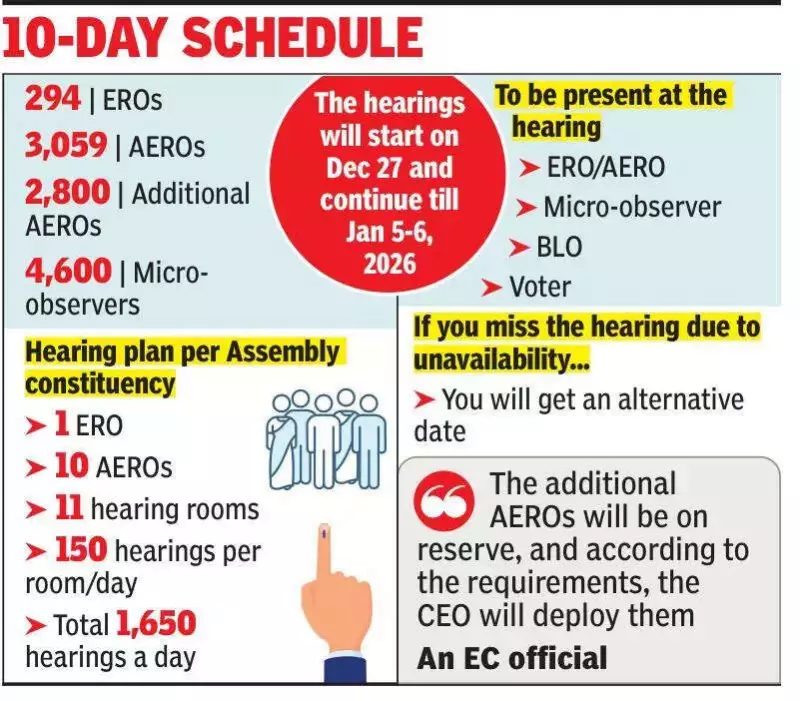
The hearing process for unmapped voters is set to commence on December 27, 2024, across numerous Assembly constituencies. Officials plan to scale it up to cover all 294 Assembly segments within a couple of days. The Commission has already generated close to 20 lakh hearing notices as of Tuesday evening.
A senior EC official stated that the first-phase target is to conclude hearings for all unmapped voters in 10-11 days. With a planned rate of nearly 3 lakh hearings per day, officials are confident the goal is achievable. In the second phase, the EC will issue notices to approximately 1.4 crore voters whose forms contain one of seven types of logical discrepancies.

Massive Manpower and Infrastructure Mobilised
To execute this plan, the Commission has deployed significant resources. In each Assembly constituency, one Electoral Registration Officer (ERO) and ten Assistant Electoral Registration Officers (AEROs) will conduct the hearings. The EC has the flexibility to deploy additional AEROs if required to meet the deadline.
"Primarily, we plan to arrange 11 rooms — one for the ERO and ten for AEROs on average in every constituency," elaborated a commission official. "In every room, hearings for 150 unmapped voters will be conducted, leading to an average of 1,650 hearings daily per constituency. We are open to increasing AEROs to expedite the process."
The state's election machinery is already robust, with 294 EROs and 3,059 AEROs deployed for the SIR exercise that began on November 4. Furthermore, the EC recently approved a proposal to appoint an additional 2,800 AEROs who will be kept on reserve and deployed as needed by the Chief Electoral Officer (CEO).
Strict Monitoring with Micro-Observers
To ensure transparency and monitor the proceedings, the CEO has appointed nearly 4,600 micro-observers. These officials will be present during the hearings to oversee the work of EROs and AEROs.
The plan is to deploy one micro-observer per hearing room, meaning an average of 11 per constituency. In constituencies with a significantly higher number of unmapped voters, the number of rooms, AEROs, and micro-observers could increase to 15 to manage the load efficiently.
Confidence in Meeting the Final Roll Publication Deadline
Addressing concerns about potential delays in publishing the final electoral roll, scheduled for February 14, 2026, a senior EC official expressed confidence. "We have enough manpower and other resources to complete all hearings in 20 days," the official said, noting only a four-day delay in starting the hearing process, which should not impact the overall timeline.
This extensive hearing drive underscores the Election Commission's commitment to cleaning up the electoral roll in West Bengal, ensuring a more accurate and inclusive voter list for future elections.