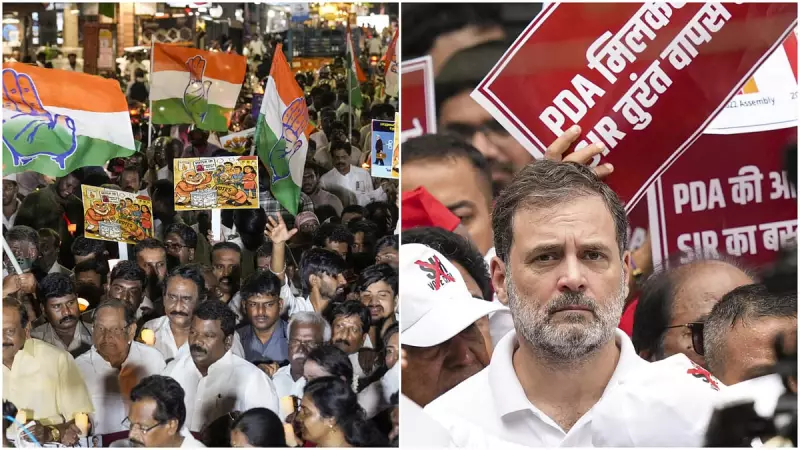
The political landscape of India in 2025 was dramatically shaped by a war of words, where common terms were weaponized to create powerful narratives. The year's intense political slugfest saw the birth and popularization of several controversial phrases that became central to public debate and electoral strategy.
The Genesis of 'Ghuspetiyan'
A pivotal moment in this linguistic shift occurred on June 24, 2025. On this date, the Election Commission of India announced a Special Intensive Revision of the electoral rolls. This administrative move triggered a massive political controversy. The opposition, led primarily by the Indian National Congress, alleged that the revision exercise was a facade to illegally enroll fraudulent voters into the system.
They coined the term 'Ghuspetiyan' to label these alleged illegitimate entries. Interestingly, the word is a colloquial derivative of 'Ghuspet', which normally refers to an uninvited intruder or a 'gatecrasher'. In political parlance, it was repurposed to vehemently accuse the ruling party of orchestrating a large-scale infiltration of bogus voters into the electoral database to sway future elections.

'Vote Chori' and the Escalating Rhetoric
'Ghuspetiyan' was not an isolated term. It joined an already charged lexicon that included the phrase 'Vote Chori' (vote theft). This accusation had been hurled by opposition parties throughout the year, claiming that the ruling establishment was systematically undermining democratic institutions to 'steal' the mandate of the people. The announcement of the Special Intensive Revision was framed as the operational mechanism for this alleged theft, directly linking the two terms in public discourse.
The political battle intensified as both sides dug in. The ruling Bharatiya Janata Party and its allies dismissed these allegations as baseless and a sign of desperation from an opposition with no substantive agenda. They countered by accusing the opposition of spreading misinformation and attempting to discredit constitutional bodies like the Election Commission for political gain.
Impact and Lasting Consequences
This war of words had significant real-world consequences. The controversy over 'Ghuspetiyan' and 'Vote Chori' dominated prime-time news debates, shaped social media trends for months, and became a rallying cry at political rallies across the country. It fundamentally altered the tone of political campaigning, moving focus sharply onto issues of electoral integrity and institutional trust.
The narrative put the Election Commission under unprecedented public scrutiny, testing its perceived neutrality. For the common voter, these terms simplified a complex administrative process into a potent slogan, influencing public perception about the fairness of the electoral process itself. The political slugfest of 2025, therefore, was as much about policy as it was about the power of language to define reality and mobilize public opinion.
As noted by political observers, the legacy of these terms extended beyond the year. They entered the permanent vocabulary of Indian political conflict, ready to be revived in any future debate concerning voter lists or electoral credibility. The events set in motion on June 24 with the revision announcement proved that in modern Indian politics, a single term, strategically deployed, can fuel a nationwide firestorm.