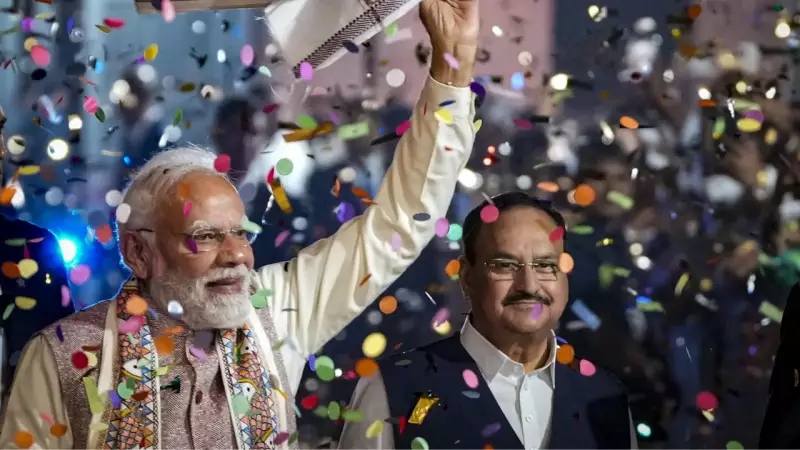
The Bharatiya Janata Party (BJP) concluded 2025 on a formidable note, bookending the year with decisive electoral victories. It commenced with a clean sweep in the Delhi assembly elections and sealed the year with an overwhelming mandate for the "double engine sarkaar" in Bihar. Internally, the party enjoyed remarkable cohesion, with leaders steadfastly adhering to their responsibilities, avoiding the public spats that frequently plague opposition camps.
The 2026 Electoral Gauntlet: A Consequential Year
However, the political landscape of 2026 presents a fresh and complex set of challenges for the saffron party. This year will serve as a rigorous stress test for the BJP's organisational depth, ideological adaptability, and its crucial ability to transition from sheer dominance to enduring durability. The outcomes will significantly shape the party's trajectory well ahead of the 2029 Lok Sabha contest.
The electoral calendar for 2026 is exceptionally crowded and consequential:

- Local body elections in major cities of Maharashtra kick off the year.
- Assembly elections in four states – West Bengal, Tamil Nadu, Assam, and Kerala – and the Union Territory of Puducherry.
- Elections for 75 seats in the Rajya Sabha, including 10 from Uttar Pradesh.
- Numerous by-polls for assembly and Lok Sabha seats across various states.
West Bengal: The Pivotal Battleground
Prime Minister Narendra Modi, after the Bihar victory, metaphorically stated, "The river Ganga flows to Bengal via Bihar. And the victory in Bihar, like the river, has paved the way for our victory in Bengal." This remark encapsulates the BJP's long-held ambition to govern West Bengal, a dream that now appears within reach. The party has made remarkable inroads in the state over the past decade, rising from just 2 Lok Sabha seats in 2014 to 18 in 2019 and securing 77 seats in the 2021 assembly polls, thereby emerging as the principal challenger to Chief Minister Mamata Banerjee.
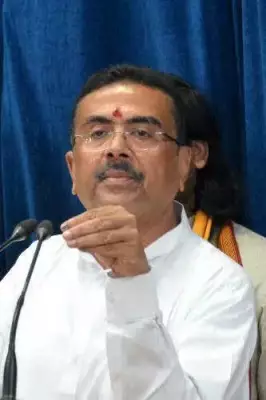
Home Minister Amit Shah has confidently projected a two-thirds majority in the 2026 polls, framing the election around the issue of stopping infiltration. However, the path is fraught with obstacles. A significant leadership question looms, with the party needing to harmonize its stalwarts like Dilip Ghosh, Suvendu Adhikari, and Sukanta Majumdar. Furthermore, with Muslims constituting nearly 27% of the population – a core voter base for the TMC – and recent electoral list revisions adding to the tension, the BJP faces a delicate balancing act. It must blend its Hindutva pitch with local economic issues without alienating its core base. Senior leaders have been tasked with long-term deployment, with Bhupender Yadav in charge of reviving booth-level machinery.
Assam: Navigating Fatigue and Fault Lines
In Assam, Chief Minister Himanta Biswa Sarma delivered a decisive mandate in 2021, with the BJP-led alliance winning 75 seats. Five years into governance, the state exhibits signs of anti-incumbency and simmering ethnic tensions in Bodoland. The party's over-reliance on one face leaves it exposed to local resentments. In response, the BJP's campaign is sharply focusing on the issue of "Bangladeshi infiltrators" and alleged land encroachment. The party has framed the upcoming election as a fundamental contest between the indigenous Assamese populace and the Miya Muslim community, a narrative CM Sarma has amplified with his pro-Hindutva remarks, questioning historical symbols of Assam's pluralist legacy.
The Southern Wall: Tamil Nadu and Kerala
If 2026 poses a single defining question for the BJP, it is whether the party can finally make a decisive breakthrough in South India. Tamil Nadu remains its toughest terrain, where the Dravidian duopoly has capped the BJP's vote share under 10%. The appointment of Nainar Nagendran as state chief signals a strategic shift towards alliance-building, with the party actively exploring renewed ties with the AIADMK and fostering connections with actor Vijay's TVK party.

In Kerala, while the Left Democratic Front showed vulnerability in recent local body polls, the BJP's base remains in single digits. Any growth strategy necessitates careful outreach to Christian communities without alienating its Hindu voters. The small but symbolically important union territory of Puducherry offers the BJP a chance to reinforce its southern narrative and aid its Rajya Sabha arithmetic.
Beyond States: Rajya Sabha and Leadership Dynamics
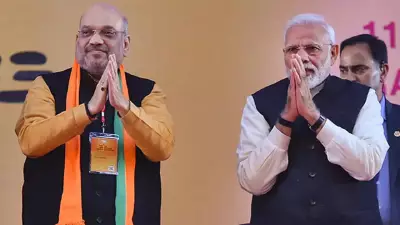
The election of 75 Rajya Sabha seats in 2026 is critical for the BJP to maintain its legislative momentum for economic and governance reforms. Concurrently, signs of a generational leadership churn are visible. The emergence of Nitin Nabin as the party's acting president is widely seen as part of a long-term reset, blending organisational roots with youth appeal under the guidance of PM Modi and Amit Shah.
While the opposition INDIA bloc appears weakened, formidable regional challengers like Mamata Banerjee in Bengal and the Left in Kerala remain. The BJP's "Mission 2026," orchestrated by Amit Shah, involves sustained deployments and organisational audits. Success would cement the BJP's claim as a truly pan-Indian party, while setbacks in Assam, Bengal, or the South could blunt its ambitions. For a party accustomed to momentum, 2026 is not merely another election year; it is a referendum on whether its current dominance can evolve into lasting longevity.