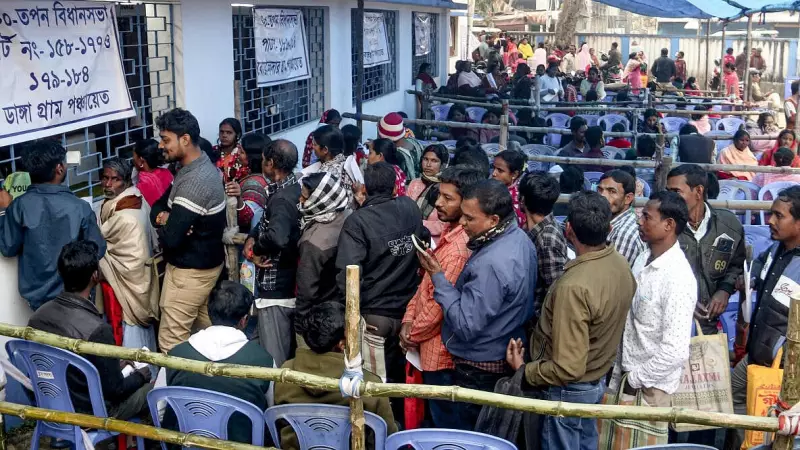
The Special Summary Revision (SSR) of electoral rolls in West Bengal, intended as a routine administrative update, has unfolded as a stark tale of endurance for the state's most vulnerable citizens. Across the rural and urban landscape, scenes of hardship at designated hearing centres have transformed a dry technical exercise into a deeply emotive public issue, highlighting significant gaps in accessibility and voter facilitation.
A Journey of Hardship for the Elderly and Infirm
Reports from various districts paint a distressing picture. Elderly individuals, some with severe mobility issues, and persons with disabilities have been compelled to undertake arduous journeys to reach hearing centres. Many have been seen crawling or limping for miles, relying on family members or makeshift supports, to have their names included or corrections made in the draft electoral roll. The physical toll of this travel, often under the sun, has raised serious questions about the inclusivity of the process. The SSR 2026 exercise, crucial for updating the voter list, has inadvertently placed the greatest burden on those least equipped to bear it.
From Technical Exercise to Public Outcry
What was designed to be a systematic verification process has erupted into visible public distress. The sight of frail citizens struggling to access these centres has sparked local outrage and brought the human cost of logistical planning into sharp focus. The emotional weight of these scenes underscores a critical failure in providing adequate on-ground support. Key issues observed include:

- Insufficient number of easily accessible hearing centres.
- Lack of transportation facilities or reimbursement for vulnerable applicants.
- Absence of dedicated help desks or volunteers to assist the elderly and disabled.
- Inadequate basic amenities like seating, shade, and water at many locations.
This public reaction underscores that the integrity of an electoral process is judged not just by its technical accuracy, but by its compassion and ease of access for every eligible citizen.
Implications for Democratic Participation
The ongoing situation poses a direct threat to the fundamental principle of universal adult suffrage. When the process to enroll itself becomes a prohibitive challenge, it effectively disenfranchises sections of the population. The events witnessed since the start of the revision period call for an immediate reassessment of outreach strategies. Election authorities face mounting pressure to implement corrective measures, such as mobile camps, door-to-door verification for the infirm, and better public awareness campaigns for alternative submission methods like online forms. The credibility of the updated voter list, and by extension the electoral process, hinges on ensuring that no voter is left behind due to physical or logistical barriers.
As the SSR 2026 continues, the ordeal of Bengal's vulnerable voters serves as a potent reminder that democracy's machinery must be lubricated with empathy and proactive facilitation to truly serve all its people.