Bengal's 2026 Election Phase 1 Kicks Off Amid Voter Roll Controversy
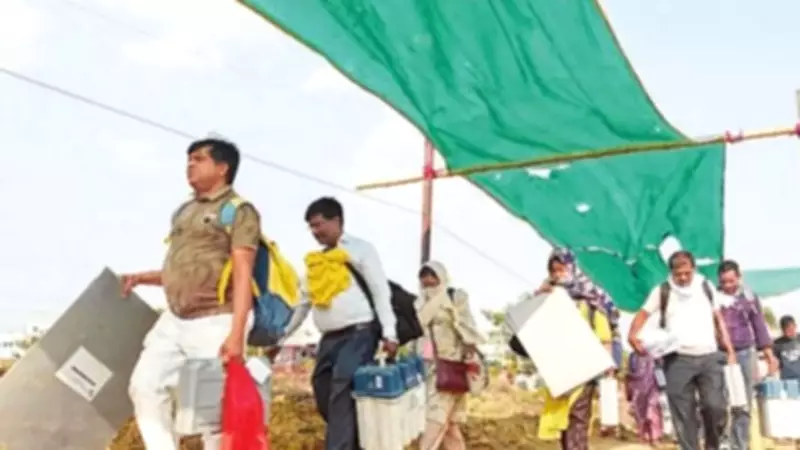
As polling begins at 7 am today for the first phase of West Bengal's 2026 state assembly elections, a shadow looms over the democratic process: the Special Intensive Revision (SIR) of the voters' roll. This initiative, intended to clean up electoral lists, has instead led to the mass disenfranchisement of approximately 27 lakh voters across 152 constituencies. These individuals, despite possessing valid proof of voting rights, are barred from casting their ballots due to logical discrepancies identified by the Election Commission.
Scale of Disenfranchisement and Regional Impact
More than 3.6 crore voters are eligible to participate in today's phase, with the remaining 6.82 crore voters in 142 constituencies set to vote next Wednesday. However, the SIR exercise has reduced the voting strength in the 16 districts going to polls today by 9.4%. A significant portion of these deletions—estimated at around half—are attributed to deceased, absent, or shifted voters, but many legitimate voters have been caught in the crossfire.
The districts of Murshidabad and Malda bear the brunt of this issue. Murshidabad has lost 7.4 lakh voters, while Malda has seen a reduction of 4.5 lakh. The controversy escalated on April 1 in Malda's Mothabari, where an agitated mob confined judicial officers assigned to SIR work inside a Block Development Office for over nine hours. Mothabari alone lost around 45,000 voters to the revision.

Ground Zero: Shamsherganj and Judicial Adjudication
Murshidabad exemplifies the flaws in SIR, which was originally designed to weed out non-voters but has inadvertently disenfranchised long-time participants. During the judicial adjudication phase, aimed at resolving logical discrepancies, more than 4.5 lakh of the 7.4 lakh total deletions in this district occurred. The Shamsherganj constituency is at the epicenter of this crisis, with 74,775 voters—a staggering 32% of the electorate—stripped of their voting rights. This has ignited intense legal and political battles that may persist beyond the formation of the new assembly.
Key Political Battles in Phase 1
Despite the overshadowing controversy, high-stakes electoral contests are underway. The political futures of several heavyweights hinge on today's outcomes:
- Suvendu Adhikari (BJP): Contesting from Nandigram, Adhikari faces a challenge from former acolyte Pabitra Kar, who played a crucial role in securing his narrow 1,956-vote margin in the 2021 election. Adhikari also has a second chance in the second phase from Bhowanipore against Chief Minister Mamata Banerjee.
- Adhir Chowdhury (Congress): A five-time MP, Chowdhury is fighting for political survival in Behrampore after losing the last Lok Sabha poll. This seat is expected to see a triangular contest with BJP and Trinamool Congress.
- Dilip Ghosh (BJP): Returning to his home seat of Kharagpur Sadar after a decade, Ghosh hopes to reclaim his ascendancy in a region he was forced to leave during the 2024 Lok Sabha elections.
Another notable contest involves Mausam Benazir Noor, niece of former Congress union minister ABA Ghani Khan Choudhury, who is seeking to restore her family's legacy in a likely tripolar fight after switching back to the Congress from Trinamool.
Electoral Dynamics and BJP Strongholds
The 16 districts voting today, ranging from Darjeeling in the Hills to East Midnapore on the Bay of Bengal, have traditionally been BJP strongholds. In the previous assembly, nine of these districts contributed 38 out of 66 seats to the BJP, helping it reach a total of 77 seats. The party may be banking on SIR deletions to maintain its dominance.
However, visible voter anger and anti-BJP consolidation outside polling booths could benefit the Trinamool Congress. The extent to which this sentiment translates into votes and limits BJP gains in these districts will significantly influence the configuration of the next Bengal assembly.
As the election unfolds, the focus remains on both the democratic exercise and the contentious SIR revisions that have cast a long shadow over Bengal's political landscape.