The year 2026 has arrived, and it promises to be anything but ordinary on India's electoral calendar. Packed with a series of crucial state assembly elections, this year will place the nation's most influential politicians under intense scrutiny. The outcomes will not only determine the fate of state governments but also reshape the national political landscape ahead of the 2029 Lok Sabha polls.
State-by-State: The Major Electoral Arenas
The electoral marathon begins with the long-pending civic polls in Mumbai-Pune. However, the primary focus will be on the high-stakes assembly elections in West Bengal, Tamil Nadu, Kerala, Assam, and the Union Territory of Puducherry. In these regions, strong regional parties will clash with national parties testing their expansion limits, making 2026 a definitive year for political realignments.
West Bengal: Mamata's Decade vs BJP's Ascent
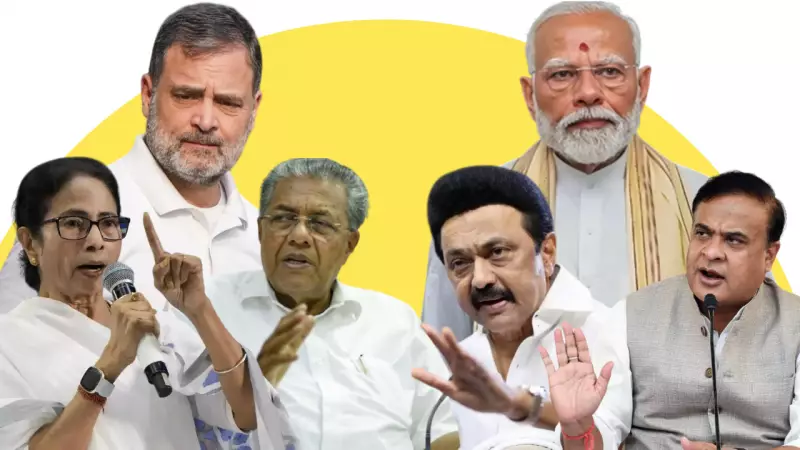
West Bengal remains one of the most politically charged battlegrounds. Chief Minister Mamata Banerjee, after a decade in power, faces her toughest test yet. Having successfully countered the BJP's surge in the 2021 assembly elections—where her TMC won 213 seats against the BJP's 77—she now seeks a fourth consecutive term. A victory would cement her status as a formidable regional leader capable of halting the BJP's advance. However, a slip below 200 seats or a BJP surge past the 100-seat mark would signal vulnerability.

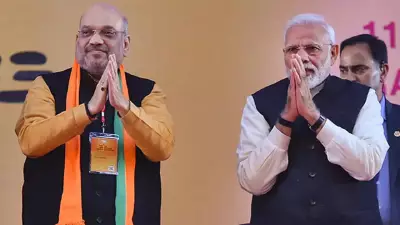
For the BJP, Union Home Minister Amit Shah has already outlined an action plan, projecting former state president Dilip Ghosh as a key face. For Ghosh, the stakes are existential; a strong BJP performance could establish him as the principal alternative, while failure would raise questions about the party's long-term strategy in the state.
Tamil Nadu: A Three-Cornered Fight
Tamil Nadu's contest is a three-cornered test. Chief Minister M.K. Stalin seeks a second term after the DMK's 2021 victory, where it won 133 seats. Retaining a tally above 130-140 seats is crucial to maintain the DMK's dominance. The main opposition, led by former AIADMK chief minister Edappadi K. Palaniswami, aims for a revival after winning 66 seats in 2021. A strong showing of 100-plus seats would restore the AIADMK's relevance.
Adding a disruptive element is actor-turned-politician Joseph Vijay and his Tamilaga Vettri Kazhagam. Even winning 10-20 seats could make him a kingmaker, challenging the established DMK-AIADMK duopoly.
Kerala: Battle for Legacy and Revival
Kerala's election carries high stakes for both the Left and the Congress. CPI(M) stalwart and Chief Minister Pinarayi Vijayan aims for a historic third consecutive term, a rare feat in the state's alternating political culture. After the LDF won 99 seats in 2021, retaining a clear majority would cement his legacy.
For Congress leader V.D. Satheesan and the UDF, which secured 41 seats last time, crossing the 80-seat mark is essential to flip the house and revive the party's credibility in the South. Another loss would reinforce the perception of the BJP as the more consequential long-term challenger.
Assam: Strongman Politics vs Generational Shift
Assam will test the durability of strongman politics. Chief Minister Himanta Biswa Sarma targets a third straight NDA victory, ambitiously aiming for over 104 of the state's 126 seats. Success would bolster his national ambitions. In 2021, the BJP-led alliance won 75 seats.
Facing him is Congress leader Gaurav Gogoi, for whom 2026 is about emergence. A credible fight, with around 40 seats for the INDIA bloc, would position him as a potential future chief minister, while a rout would risk Congress's irrelevance in the state.

Puducherry: A Symbolic Verdict
Small in size but large in symbolism, Puducherry could deliver a telling verdict. Incumbent CM N. Rangasamy leads a fragile AINRC-BJP coalition. Retaining power would validate his role as a political kingmaker. For Congress stalwart V. Vaithilingam, 2026 is a chance at revival. A UDF victory with 15 or more seats would mark a dramatic comeback for the party.
The National Picture and Key Strategists
Beyond state leaders, national figures will shape outcomes. For Prime Minister Narendra Modi, 2026 is about narrative control. Strong BJP showings in Bengal or gains in the South would reinforce his claim of leading a pan-Indian party. Stagnation would embolden the opposition's argument that BJP expansion has peaked.
For Rahul Gandhi, it is a make-or-break year. Strong UDF performances in Kerala or credible INDIA bloc gains elsewhere are crucial to validate his coalition politics. Continued erosion would deepen doubts about his leadership.
Other figures in focus include BJP strategist Nitin Nabin, whose effectiveness will be judged by booth-level performance in resistant states, and Congress's Priyanka Gandhi, whose campaign skills will be tested. The year will also be crucial for Shashi Tharoor, with his influence tied to the UDF's performance in Kerala.
In Maharashtra, reunions within the Pawar and Thackeray families for the BMC and PCMC polls could change the dynamics of mega alliances like MVA and Mahayuti.
In essence, 2026 is a year of back-to-back elections that matter profoundly. The results will not just choose state governments; they will quietly decide which leaders and parties will still matter when the long road to 2029 truly begins.