

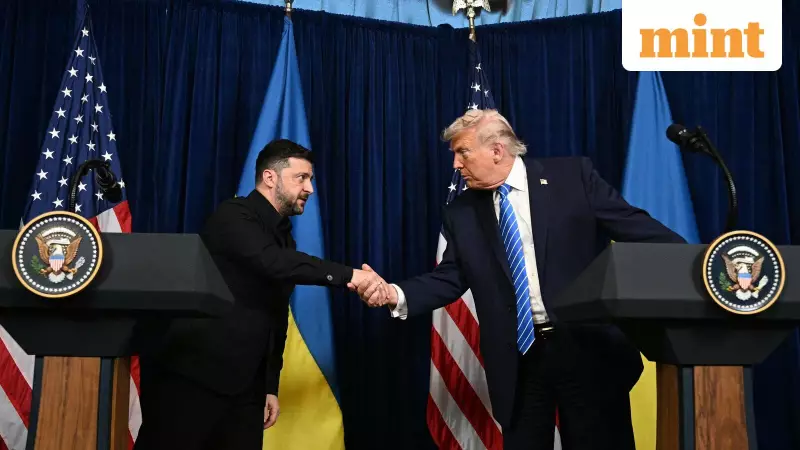
In a high-stakes diplomatic move, Ukrainian President Volodymyr Zelensky is meeting with US President Donald Trump at the Mar-a-Lago estate in Florida, aiming to secure stronger American backing for a proposed peace agreement to end the nearly four-year-long war with Russia. The meeting, set for Sunday, 29th December 2025, comes amid a fresh wave of Russian attacks on Ukrainian energy infrastructure.
Key Sticking Points in the 20-Point Draft
The leaders are reviewing a 20-point draft peace plan, revised in recent weeks by Ukrainian and American negotiators. This plan has evolved from an initial 28-point US proposal that faced criticism for being overly favourable to Moscow. The core of Zelensky's mission is to persuade Trump to apply greater pressure on Russian President Vladimir Putin to accept the terms.
Several critical hurdles remain unresolved. The future of approximately 20% of Ukraine's Donetsk region, which Russia demands, is a primary obstacle. Another is the status of the Zaporizhzhia nuclear power plant, Europe's largest, currently under Russian occupation. The specifics of security guarantees that Washington would provide to Ukraine are also yet to be finalised.

In a significant development ahead of the summit, Trump revealed on social media that he had a "good and very productive telephone call" with President Putin. This call underscores the complex diplomatic channels active around the conflict.
Zelensky's Push and Russian Resistance
Before the meeting, President Zelensky highlighted the severe impact of recent Russian missile and drone attacks, which have left large parts of Ukraine without power. He emphasised that his goal was not only to end the war but also to ensure sustained pressure on Russia through effective sanctions and enhanced air defence systems for Ukraine.
"These are some of the most active diplomatic days of the year right now, and a lot can be decided before the New Year," Zelensky stated on X. He added that while Ukraine is doing everything possible, final decisions depend on international partners who can help Ukraine and pressure Russia.
However, Moscow's stance remains firm. Russian Foreign Minister Sergei Lavrov asserted on Sunday that Zelensky and European nations are not ready for constructive talks, labelling European countries as "the main obstacles to peace." He reiterated Moscow's commitment to working with the US to address what the Kremlin calls the conflict's "root causes," a term often interpreted as demanding Ukrainian concessions viewed as capitulation in Kyiv.
The Path Forward and Electoral Considerations
The revised draft agreement proposes a referendum in Ukraine on any territorial concessions, alongside presidential elections. Ukrainian authorities have reportedly begun preparations for a vote that could be conducted both in person and online to include millions of displaced citizens abroad.
Kyiv has constitutional reservations about ceding territory. The current US proposal suggests creating a demilitarised "free economic zone" in the contested Donetsk area. Zelensky has expressed willingness to consider this idea, but only if Russia also withdraws its forces from the parts of Donetsk it controls—a condition Moscow has not accepted.
The 20-point plan originated from a proposal by Trump's envoys, Steve Witkoff and Jared Kushner, with input from Russian envoy Kirill Dmitriev. While Russian Deputy Foreign Minister Sergei Ryabkov noted that Moscow and Washington are closer to a resolution, he warned against setting deadlines and claimed the plan discussed between the two powers differs significantly from the version publicised by Ukraine.
As diplomacy intensifies, the threat of escalation looms. Just a day before the Mar-a-Lago talks, Russia launched a ballistic missile and drone attack on Kyiv. In a video message, President Putin accused Ukraine of blocking a peaceful resolution, threatening to achieve Russia's goals by military means if necessary.
Zelensky's visit to Florida followed a stop in Canada for talks with Prime Minister Mark Carney. He has also held calls with European leaders and plans further consultations after his meeting with President Trump, marking a crucial diplomatic push as the year draws to a close.






