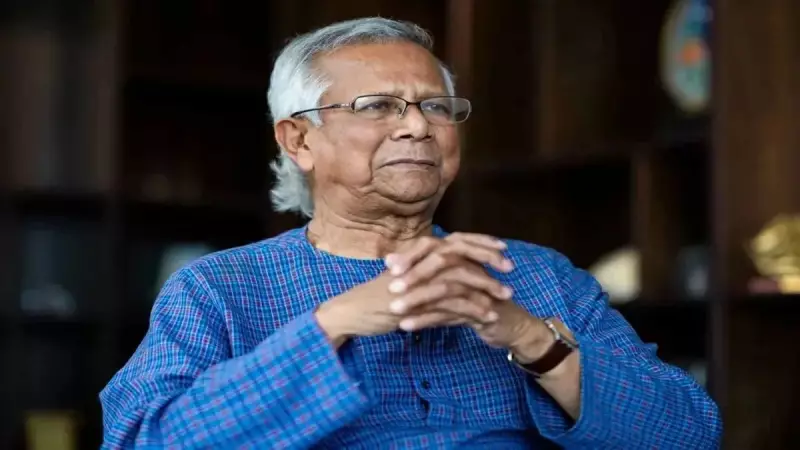
In a significant development aimed at thawing the current diplomatic chill, a top adviser to Bangladesh's government has revealed that Nobel laureate Muhammad Yunus is actively involved in efforts to improve the country's strained relations with India. The disclosure was made by Salman F Rahman, the Private Industry and Investment Adviser to Prime Minister Sheikh Hasina, who also holds the finance portfolio.
Yunus Takes a Diplomatic Role Amid Bilateral Strains
Salman F Rahman confirmed the initiative during an interview with India TV, stating that Muhammad Yunus is "working to improve relations with India." This statement, made on December 24, 2025, signals a potential backchannel diplomatic effort involving the internationally respected figure. The move comes at a time when the bilateral relationship between Dhaka and New Delhi has faced notable challenges and public scrutiny.
The involvement of Yunus, a globally recognized figure and founder of Grameen Bank, adds a unique dimension to the diplomatic outreach. While Yunus has historically been at odds with the current Awami League government, his engagement on this critical foreign policy issue suggests a convergence of national interest that transcends domestic politics. His international stature and networks are likely seen as valuable assets in facilitating dialogue and understanding.

Context of the Strained Ties
The revelation follows a period of increasing strain in Bangladesh-India relations, which have traditionally been close. Several friction points have emerged in recent times, contributing to the current complex phase. Key issues include disagreements over water-sharing of common rivers, trade imbalances, and border management concerns.
Furthermore, the political landscape within Bangladesh, where the Awami League government led by Sheikh Hasina has faced criticism from various quarters, has also indirectly influenced the bilateral dynamic. India's perceived stance on Bangladesh's internal affairs has occasionally become a topic of heated debate within the country, adding another layer of complexity to the relationship.
Salman F Rahman's acknowledgment of Yunus's role is a public admission of the existing tensions and a clear indication that the highest levels of the Bangladesh government are seeking pathways to reconciliation and a more stable partnership with its powerful neighbor.
Implications and the Road Ahead
The decision to leverage Muhammad Yunus's credibility indicates a strategic approach by Dhaka. It represents an attempt to build bridges using soft power and personal diplomacy, potentially paving the way for more formal governmental talks. For India, engaging with a representative like Yunus could offer a channel to address concerns while dealing with a familiar and respected intermediary.
The success of this initiative will depend on several factors, including the willingness of both governments to address core issues constructively. The primary areas requiring attention are likely to be:
- Economic Cooperation: Addressing trade deficits and enhancing investment flows.
- Resource Management: Finding mutually acceptable solutions on trans-boundary river waters.
- Security and Connectivity: Strengthening collaboration on security matters and improving regional connectivity projects.
As both nations navigate this delicate phase, the world will be watching. A stable and cooperative relationship between Bangladesh and India is crucial not only for the prosperity of their peoples but also for the broader peace and economic integration of South Asia. The involvement of a figure like Muhammad Yunus brings a glimmer of hope that dialogue and diplomacy will prevail.