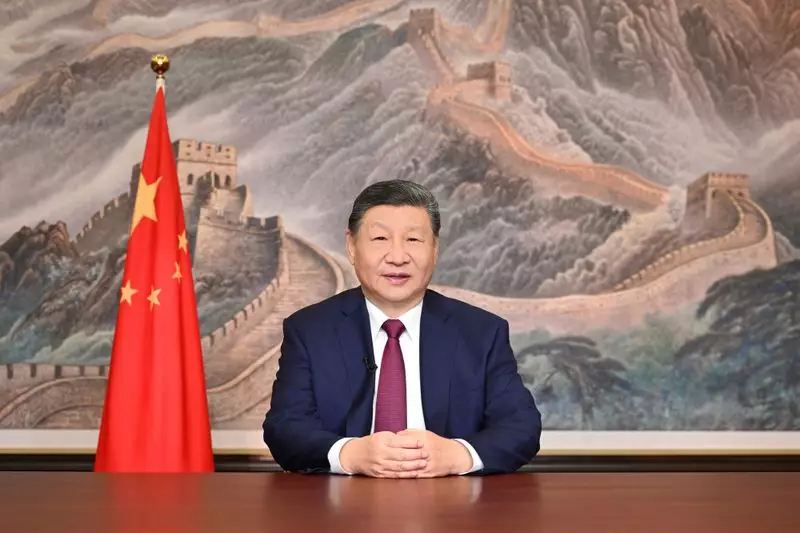
Chinese President Xi Jinping has officially confirmed that a colossal hydropower initiative on the Brahmaputra River, valued at a staggering $170 billion, is moving forward as planned. This announcement solidifies China's commitment to a project with profound implications for downstream nations, particularly India and Bangladesh.
A Mega Project on the Yarlung Tsangpo
The project is centered on the Yarlung Tsangpo, as the Brahmaputra is known in Tibet. It represents one of the most ambitious hydropower endeavors ever conceived. The confirmation came directly from President Xi during a significant meeting of the Chinese Communist Party's National Congress, underscoring the project's high strategic priority for Beijing.
While specific technical details and an exact timeline were not fully disclosed in the public announcement, the sheer scale of the $170 billion investment signals a project of unprecedented magnitude. It is expected to involve the construction of multiple dams and power generation facilities along the river's course in Tibet.

Strategic and Environmental Implications
This development is being watched with intense concern in New Delhi. The Brahmaputra is a vital lifeline for northeastern India and Bangladesh, supporting agriculture, ecosystems, and millions of people. India has long expressed apprehensions that large-scale upstream damming could alter water flow, potentially leading to water scarcity during dry seasons and increased flood risks during periods of water release.
Experts point out that the project sits in a geologically sensitive and seismically active zone, raising additional questions about environmental impact and long-term safety. The lack of a comprehensive water-sharing treaty or a transparent mechanism for data exchange on river flows between China and India has historically been a point of friction, which this project intensifies.
Regional Diplomacy and Water Security
China has consistently stated that its hydropower projects are run-of-the-river plans, which do not involve significant water diversion, and that it acts as a responsible upstream neighbor. However, the scale of this new initiative is likely to test that diplomatic stance. The move places water security firmly at the center of the complex relationship between the two Asian giants.
For India, the confirmation accelerates the need to diversify its water management strategies and potentially fast-track its own hydropower and water storage projects in the northeastern region. It also highlights the urgent necessity for sustained diplomatic engagement with Beijing to establish reliable protocols for emergency communication and water data sharing related to the Brahmaputra.
The advancement of the $170 billion project marks a critical juncture for transboundary water politics in South Asia. It underscores the growing challenges of balancing national development goals with the responsibilities of shared natural resources in one of the world's most populous regions.