

The First Weeks of 2026: A Period of Profound Global Transformation
As the world entered 2026, a series of extraordinary events unfolded with remarkable speed, challenging long-standing assumptions about international relations and economic stability. The opening weeks of this year have demonstrated how rapidly geopolitical and economic landscapes can shift, echoing the famous observation that there are moments when decades of change occur in mere weeks.
U.S.-Europe Relations Reach Critical Juncture
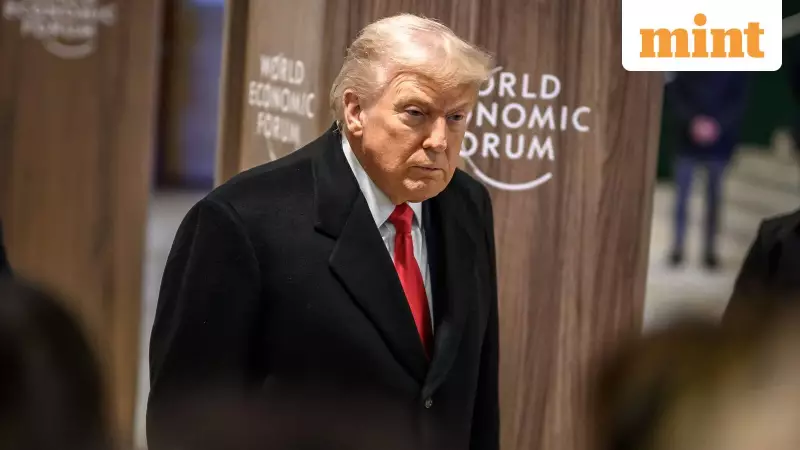
The World Economic Forum in Davos became the stage for a dramatic declaration that may redefine transatlantic relations for generations. President Trump's public demand for the United States to acquire Greenland, a territory of Denmark and fellow NATO member, sent shockwaves through international diplomatic circles. While the immediate threats of trade war and military action were subsequently withdrawn, the underlying ambition remained intact, fundamentally altering how global leaders perceive American intentions.
This episode represents more than a territorial dispute—it symbolizes a deepening ideological divide between the United States and Europe. Where European nations emphasize shared democratic values and human rights as their unifying principles, the current U.S. administration prioritizes historical and cultural connections while expressing different security concerns. The potential collapse of NATO, once unthinkable, now appears as a plausible outcome of this growing schism.

Resource Politics and the New Monroe Doctrine
In Latin America, another significant development unfolded as the Trump administration intervened in Venezuela, removing dictator Nicolás Maduro from power. Unlike previous U.S. interventions that focused on installing friendly governments or promoting democracy, this action prioritized securing control over Venezuela's substantial oil reserves. This represents a modern interpretation of the Monroe Doctrine, strategically depriving China of a crucial foothold in the Western Hemisphere while advancing American resource interests.
China's Evolving Global Position
The perception of China among Western nations continues to evolve dramatically. Once viewed as a benign economic partner, China is increasingly regarded as an adversary with fundamentally different values and ambitions. This shift initially suggested the possibility of a new global alignment where democratic nations would deepen their economic connections while reducing dependence on China.
However, recent developments have complicated this picture. Canada's decision to strike a deal with China—slashing tariffs on Chinese electric vehicles in exchange for reduced duties on Canadian canola—demonstrates how nations are navigating this complex landscape. As Prime Minister Mark Carney noted at Davos, "not every partner will share all of our values," highlighting the pragmatic calculations nations must make in an increasingly multipolar world.
Technological Autonomy and Semiconductor Independence
In the realm of technology, a landmark agreement between the United States and Taiwan represents a significant step toward technological sovereignty. The Commerce Department announced that Taiwan Semiconductor Manufacturing Company will invest substantially in new chip factories in Arizona as part of a broader $250 billion Taiwanese investment package. In exchange, the U.S. would reduce tariffs on Taiwan and provide exemptions for companies like TSMC that invest domestically.
These facilities will produce advanced semiconductors essential for artificial intelligence, communications, and mobile applications designed by industry leaders like Nvidia, Qualcomm, and Apple. This development addresses a critical vulnerability in the U.S. technological ecosystem while potentially reducing American strategic dependence on maintaining Taiwan's freedom, much as shale development reduced energy dependence on the Middle East.

Monetary Policy Under Unprecedented Pressure
The independence of the Federal Reserve faces its most serious challenge in modern history. After months of sustained criticism from the White House, the Justice Department initiated a criminal investigation against Fed Chair Jerome Powell, ostensibly regarding testimony about building renovations. Powell responded forcefully, characterizing the investigation as a pretext to undermine central bank autonomy.
This confrontation has global implications, as investors worldwide have long operated under the assumption that the Federal Reserve would prioritize long-term economic stability. While institutional guardrails remain—including Supreme Court skepticism about removing Fed governors without due process—the central bank's future independence appears increasingly uncertain as it approaches a leadership transition in just four months.
Japan's Monetary Policy Shift and Global Implications
Halfway around the world, Japan's economic policies are undergoing their own transformation with worldwide consequences. As the Bank of Japan gradually raises interest rates from historically low levels, bond yields have climbed steadily higher. Recent political developments, including Prime Minister Sanae Takaichi's call for a snap election with tax cut promises, have intensified concerns about Japan's massive debt sustainability.
Given Japan's position as one of the world's largest creditors—holding approximately $1.2 trillion in U.S. Treasury debt—these developments have global ramifications. As Japanese interest rates rise, debtor nations including the United States may face pressure to offer higher yields to maintain Japanese investment in their bonds, potentially reshaping global capital flows and borrowing costs.
Domestic Tensions and Federalism Under Strain
Within the United States, federalism faces unprecedented tests as aggressive immigration enforcement in Minnesota has sparked counterprotests and constitutional questions. The administration has already suspended some federal funds to the state and threatened to invoke the Insurrection Act to deploy active-duty military personnel. These domestic tensions intersect with and amplify the international challenges unfolding simultaneously.
Each of these developments alone would represent a significant shift in global affairs. Together, they constitute a comprehensive transformation of international political and economic patterns whose full consequences remain to be understood. As the world navigates these interconnected challenges, the events of January 2026 may well be remembered as the moment when decades of assumptions about global order were fundamentally reconsidered.





