West Asia Conflict Puts BRICS Unity to the Test as Iran Seeks Support
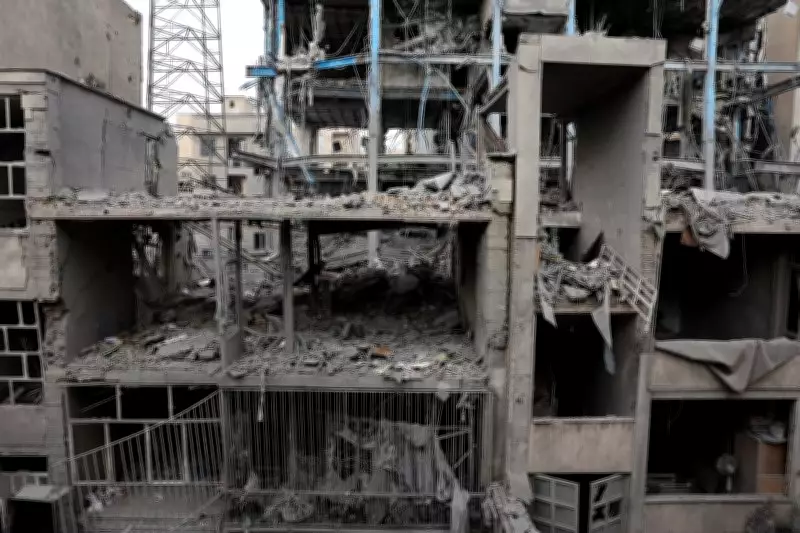
As the war involving Iran, Israel, and the United States intensifies across West Asia, global attention is increasingly focusing on the role of the BRICS grouping. Tehran has been actively urging New Delhi, which currently chairs the bloc, to mobilize the forum as a diplomatic counterweight to Western influence in the region.
Iran's Diplomatic Push Within BRICS
Tehran has repeatedly requested India to activate BRICS to condemn what it describes as "military aggression" by the US and Israel. Iranian officials are pushing for a coordinated response from emerging economies to challenge Western narratives and strengthen diplomatic pressure for a ceasefire. This issue has been a key topic in multiple high-level conversations, including those between Iranian Foreign Minister Abbas Araghchi and External Affairs Minister S Jaishankar, as well as between Iranian President Masoud Pezeshkian and Prime Minister Narendra Modi.
Iran's strategy reflects a broader effort to leverage BRICS, which recently expanded to include Tehran, as a geopolitical platform representing the Global South. By seeking a collective BRICS response, Iran aims to amplify its voice on the international stage and counterbalance Western dominance in regional affairs.

India's Complex Balancing Act
New Delhi faces a delicate strategic balancing act as it navigates the crisis. India maintains strong partnerships with both the United States and Israel, while also preserving long-standing ties with Iran, particularly in critical areas such as energy security and regional connectivity. The conflict has underscored India's significant economic stakes in West Asia, with nearly nine million Indians living and working across the Gulf region.
Disruptions to shipping routes through the Strait of Hormuz, a vital artery through which approximately one-fifth of global oil and gas supplies transit, could have severe implications for India's energy security and remittance flows. In response, India has stepped up diplomatic engagement with all parties involved, emphasizing de-escalation and the protection of maritime trade routes. Recent consultations led Tehran to allow several Indian vessels to pass through the Strait of Hormuz, highlighting the importance both nations place on maintaining communication even during periods of heightened tension.
Fault Lines and Challenges Within BRICS
However, Iran's push has exposed significant fault lines within the BRICS grouping. Officials in New Delhi acknowledge that forging a unified position remains challenging, as some BRICS members are directly or indirectly involved in the crisis or hold sharply divergent geopolitical alignments. India, which is preparing to host the 2026 BRICS summit, has been attempting to build consensus through consultations among member states, including discussions at the Sherpa level.
The crisis also highlights the evolving yet uncertain role of BRICS in global security affairs. Originally conceived as an economic grouping of emerging economies, the bloc has increasingly projected itself as a platform advocating for a more multipolar international order. Yet, the conflict in West Asia illustrates the limits of this ambition. Divergent strategic interests among members—ranging from close partnerships with Western powers to strongly anti-Western positions—have complicated efforts to articulate a common response.
As the war continues to escalate, the ability of BRICS to present a cohesive front will be closely watched, testing the bloc's cohesion and its capacity to influence global diplomatic dynamics in times of crisis.