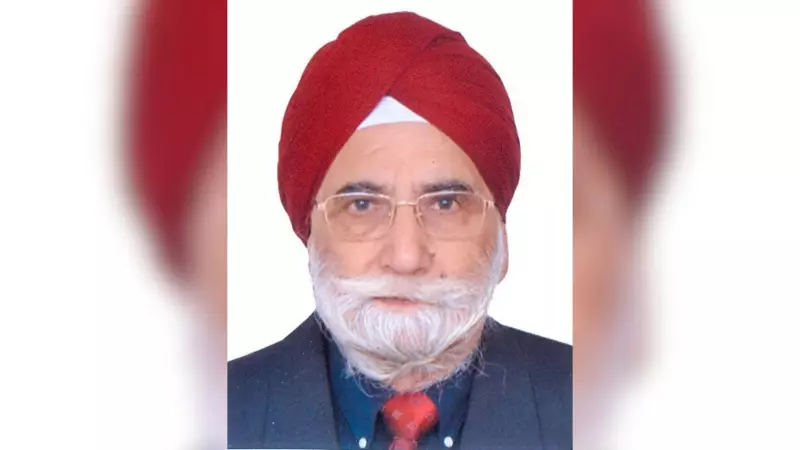
Veteran Diplomat and Foreign Policy Scholar A S Bhasin Passes Away in Delhi at 90
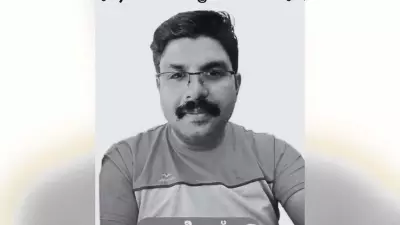
Avtar Singh Bhasin, the distinguished former Indian diplomat and a prolific chronicler of India's foreign policy, passed away in Delhi on Sunday at the age of 90. His demise marks the loss of a towering figure in the documentation and analysis of India's international relations over decades.
A Distinguished Career in Diplomacy and Archives
Born in June 1935, Bhasin began his professional journey with the National Archives of India and the Ministry of Defence before joining the Ministry of External Affairs in 1963. He served with distinction for three decades, retiring in June 1993 as Director of the Historical Division. During his diplomatic tenure, he was posted at Indian missions in Kathmandu, Bonn, Vienna, and Lagos, gaining extensive experience across continents.
His role involved extensive travel both within India and abroad, as he participated in numerous official, ministerial, and Prime Ministerial delegations for discussions with various countries. This hands-on experience provided him with deep insights that later enriched his scholarly work.
Post-Retirement Academic Pursuits and Contributions
After retiring in 1993, Bhasin embarked on a rigorous academic journey, becoming a familiar presence in libraries, particularly at the India International Centre, where he worked diligently until recently. He served as a Senior Fellow at the Indian Council of Historical Research from 1994 to 1996 and as an Honorary Fellow at the Institute of Contemporary Studies of the Nehru Memorial Museum and Library from 1996 to 2000.
He actively participated in seminars on South Asia, contributing research papers and engaging in dialogues that shaped regional understanding. His writings extended to newspapers and journals, including contributions to the popular 'Explained' section of The Indian Express, making complex foreign policy issues accessible to a broader audience.
Legacy as a Chronicler of India's Foreign Relations
Bhasin was widely recognized as an outstanding chronicler of the evolution of India's foreign relations. He undertook voluminous work in compiling documents related to key neighbors such as Pakistan, China, Nepal, Sri Lanka, and Bangladesh. His magisterial five-volume documentary study of India-China relations from 1947 to 2000 stands as an invaluable archival resource for scholars and laypersons alike.
Among his notable publications are compilations on India's relations with Pakistan, Nepal, and Bangladesh. His authored books include India in Sri Lanka: Between Lion and the Tigers (2004), Some Called It Partition, Some Freedom: Last 75 Days of the Raj (1998), India and Pakistan: Neighbours at Odds (2018), Nehru, Tibet and China (2021), and Negotiating India's Landmark Agreements (2024). These works reflect his deep expertise and commitment to preserving historical narratives.
Bhasin's passing leaves a void in the field of foreign policy scholarship, but his extensive contributions will continue to inform and inspire future generations of diplomats, historians, and policymakers.