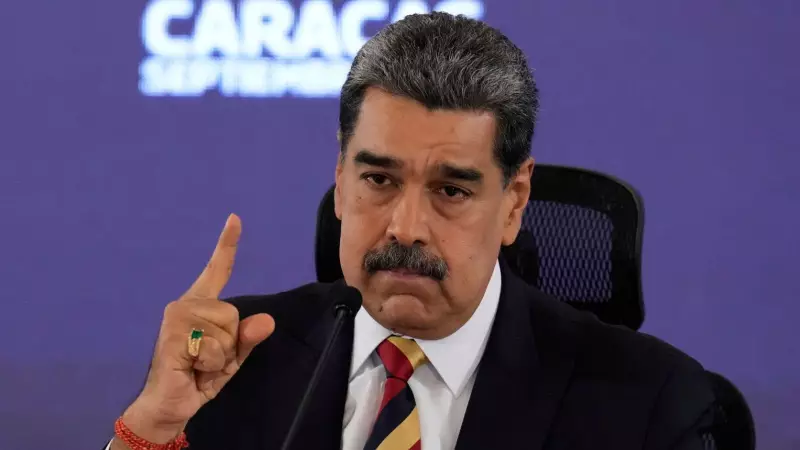
Venezuelan President Nicolas Maduro has signalled a potential opening for discussions with the United States concerning the critical issue of drug trafficking. However, he pointedly avoided addressing a recent report alleging a CIA-backed operation within his country's borders.
Maduro's Conditional Offer for Dialogue
During a televised address, President Maduro stated his administration is prepared to engage in talks with Washington. The focus of these proposed discussions would be cooperation on combating drug trafficking. This offer comes amidst a complex and strained relationship, heavily defined by stringent US sanctions imposed on Venezuela's oil sector and government.
Maduro framed the invitation within specific parameters. He emphasised that any dialogue must be conducted on a foundation of "absolute respect" and without what he termed "colonialist" attitudes from the United States. This condition underscores the long-standing tensions between Caracas and Washington, where US actions are frequently viewed as imperial overreach by the Venezuelan leadership.

The Unanswered Question on CIA Activities
Notably absent from Maduro's public comments was any reference to a report published by The Washington Post. The investigative piece claimed that the US Central Intelligence Agency (CIA) had orchestrated a secret operation in Venezuela. The alleged goal of this mission was to recruit and train individuals with the intent of destabilising the government of Nicolas Maduro.
When directly questioned by journalists about these serious allegations, the Venezuelan president chose not to respond. His silence on the matter is particularly striking given the gravity of the accusations, which, if true, would represent a significant escalation in covert actions against his regime. This omission leaves a key question hanging over the diplomatic landscape.
Context of Sanctions and Diplomatic Stalemate
The backdrop to this development is a relationship frozen in hostility. The United States, along with numerous other nations, does not recognise Maduro's 2018 re-election as legitimate. In response, it has implemented a sweeping sanctions regime designed to cripple Venezuela's primary economic engine: its oil industry.
These measures have had a devastating impact on the Venezuelan economy, contributing to hyperinflation and a severe humanitarian crisis. The US objective has been to pressure Maduro into leaving power, allowing for a democratic transition. Maduro's offer for talks on a specific issue like drug trafficking could be interpreted as a tentative probe to test the waters for a potential, limited thaw, even as the core political dispute remains unresolved.
Drug trafficking is a major point of contention between the two nations. US authorities have long accused high-ranking members of Maduro's government and the Venezuelan military of being complicit in facilitating the transit of cocaine from Colombia. Caracas has consistently denied these allegations, often countering that the US demand for drugs is the root cause of the problem.
Maduro's willingness to discuss this thorny subject suggests a possible avenue for pragmatic engagement, separate from the intractable political deadlock. However, his deliberate silence on the CIA report indicates that deep-seated mistrust and national security concerns continue to dominate the relationship, making any substantive breakthrough a distant prospect.