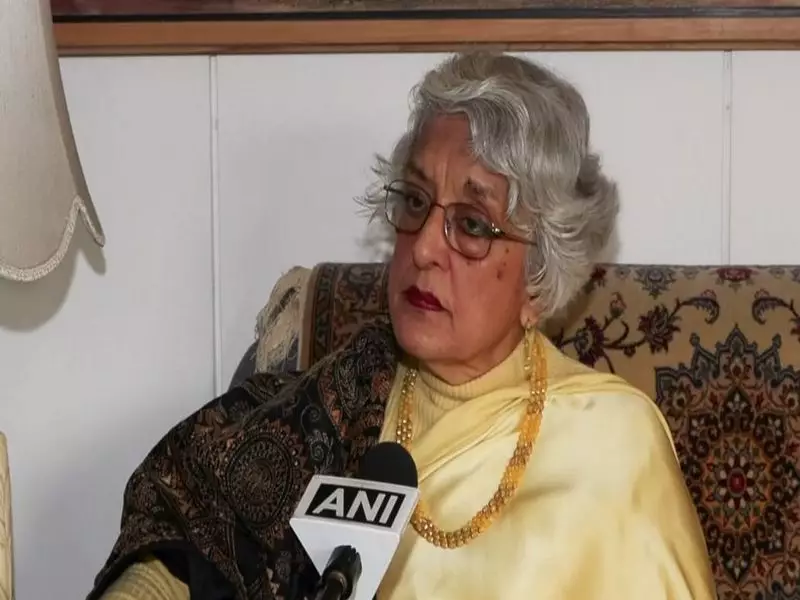
Former Indian diplomat Veena Sikri has made a serious allegation, claiming that the recent wave of anti-India protests in Bangladesh is being orchestrated by the Jamaat-e-Islami, acting on direct instructions from Pakistan. Sikri, who served as India's High Commissioner to Bangladesh, stated that the Islamist group's actions are a deliberate attempt to destabilize the historically strong relationship between India and Bangladesh.
The Core Allegation: A Foreign Hand in Dhaka's Streets
In a detailed assessment, Veena Sikri pointed to the specific protests that erupted following Indian Prime Minister Narendra Modi's visit to Bangladesh in March 2021. She emphasized that the violence and demonstrations were not spontaneous public outcry but a calculated political maneuver. The primary actors behind these protests, according to Sikri, are members and supporters of the Jamaat-e-Islami in Bangladesh.
Sikri elaborated that the group's leadership is taking orders from its ideological mentors in Pakistan. The objective, she claims, is twofold: to create internal chaos within Bangladesh and to damage its crucial bilateral ties with India. This strategy is seen as a continuation of Pakistan's long-standing efforts to exert influence in the region and counter India's presence.

Historical Context and Political Motivations
To understand the gravity of the allegation, one must consider the historical backdrop. The Jamaat-e-Islami in Bangladesh has a controversial past, having opposed the country's liberation war in 1971, during which it collaborated with the Pakistani army. Its political legitimacy has been a subject of intense debate within Bangladesh for decades.
Sikri's analysis suggests that the group remains ideologically aligned with its Pakistani counterparts. The timing of the protests is also critical. They coincided with significant national events in Bangladesh, such as the celebrations of the birth centenary of Bangabandhu Sheikh Mujibur Rahman and the 50th anniversary of the country's independence—occasions that underscore Bangladesh's sovereign identity and its 1971 liberation, which was supported by India.
"This is not about genuine political dissent in Bangladesh," Sikri implied, "but a proxy campaign driven by a foreign agenda aimed at sowing discord."
Implications for Regional Stability and India-Bangladesh Ties
The former diplomat's warning extends beyond immediate political friction. She highlighted the potential consequences of such externally guided activism. A destabilized Bangladesh could have ripple effects across the entire northeastern region of India, impacting security and economic connectivity projects.
The strong partnership between the current Bangladeshi government, led by Prime Minister Sheikh Hasina, and India is a particular target for forces seeking to alter the regional balance. Sikri commended the Hasina administration for its firm handling of the situation and its commitment to maintaining strong ties with India despite these provocations.
This episode brings several key issues to the fore:
- The persistent challenge of cross-border ideological influence in South Asian politics.
- The vulnerability of democratic processes to manipulation by external state and non-state actors.
- The enduring importance of the 1971 liberation war narrative in contemporary Bangladesh's political discourse.
In conclusion, Veena Sikri's remarks serve as a stark reminder of the complex geopolitical undercurrents in South Asia. They underscore the need for constant vigilance and robust diplomatic engagement to protect bilateral relationships from malicious external interference. The health of the India-Bangladesh partnership, she suggests, remains vital for the prosperity and stability of both nations.