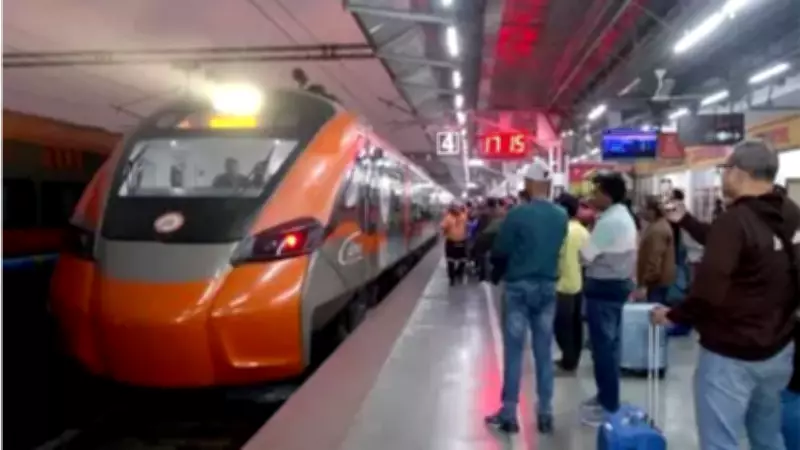
In a significant development following a heated political controversy, the Kamakhya-Howrah Vande Bharat sleeper train has introduced Bengali- and Assamese-style chicken curry to its onboard menu, effective from Sunday. This move comes just days after a "veg-only" menu sparked widespread debate and criticism across political circles in Eastern India.
Limited Non-Vegetarian Option Introduced
The newly introduced non-vegetarian menu, however, remains restricted to chicken dishes only, with no other meat or fish options currently available. For passengers preferring vegetarian meals, paneer masala will be served as the primary protein alternative. The complete meal spread continues to feature regional specialties including jeera corn pulao, tehtar paratha, a mixed arhar–moong dal preparation, Assamese-style beans, and the classic Bengali dessert rosogolla.
Official Announcement and Implementation
Railway Minister Ashwini Vaishnaw formally announced the introduction of non-vegetarian food options on this iconic train service on Sunday, with the railways promptly implementing the revised fare structure. Uday Shankar Jha, Principal Chief Commercial Manager of Eastern Railway, confirmed to media outlets that "non-vegetarian fare was available on the Kamakhya-Howrah Vande Bharat since Sunday."

An official IRCTC order dated January 31 detailed the specific changes: "Based on passenger feedback received in train 27575-76 dated January 29, 2026, it was decided that, for the non-vegetarian option, only a chicken dish (50-60 grams boneless and 70 grams gravy) shall be served in place of a vegetarian dish under sleeper VB with effect from February 1, 2026 from both ends, Kamakhya and Howrah."
Rationale Behind Menu Revision
The railway authorities emphasized that the menu revision was finalized to "ensure uniformity in meal service, better passenger convenience and streamlined operational implementation across the route." The IRCTC order further requested that the Railway Board update the ticket booking and meal preference options in the reservation system to clearly provide passengers with accurate choices during ticket purchase.
Political Controversy and Passenger Feedback
The train service, originally flagged off by Prime Minister Narendra Modi on January 17, commenced regular operations from Kamakhya station in Guwahati on January 22 and from Howrah the following day. However, a significant section of passengers quickly raised concerns about the "only vegetarian" food being served on board this six-day-a-week overnight train.
The political dimension intensified when Trinamool Congress (TMC) accused the BJP of "policing plates" and attempting to control food habits. While TMC and other opposition parties in West Bengal continued to criticize the government over the initial vegetarian-only menu, the Bengal BJP unit distanced itself from the controversy, stating that railway authorities independently decide train menus.
Regional Considerations and Cultural Sensitivity
Junior Union Minister Sukanta Majumdar reportedly spoke with Railway Minister Vaishnaw last week to advocate for non-vegetarian food options, specifically considering the predominant food habits of people in Bengal and Assam. This intervention appears to have contributed to the menu revision.
Earlier commitments from railway authorities had promised that food served aboard the Vande Bharat sleeper would reflect regional culinary traditions—Assamese cuisine for trains departing from Kamakhya and Bengali cuisine for those originating from Howrah. Both regional cuisines traditionally feature substantial non-vegetarian dishes, including various fish and meat preparations that form integral parts of local food culture.
The introduction of chicken curry represents a partial fulfillment of these regional culinary promises, though it falls short of including the full spectrum of non-vegetarian options typically associated with Bengali and Assamese cuisine. The development highlights the complex interplay between passenger preferences, regional food traditions, and political considerations in shaping public service offerings.