The recent US military operation in Venezuela, culminating in the capture of President Nicolás Maduro, has ignited a fierce global debate that cuts to the very heart of what democracy means. While the Trump administration framed its January 3 action as a mission to "restore order" and "return democracy," a critical examination reveals a profound contradiction: can genuine democracy ever be established through external force and abduction?
The Intervention and Its Democratic Contradictions
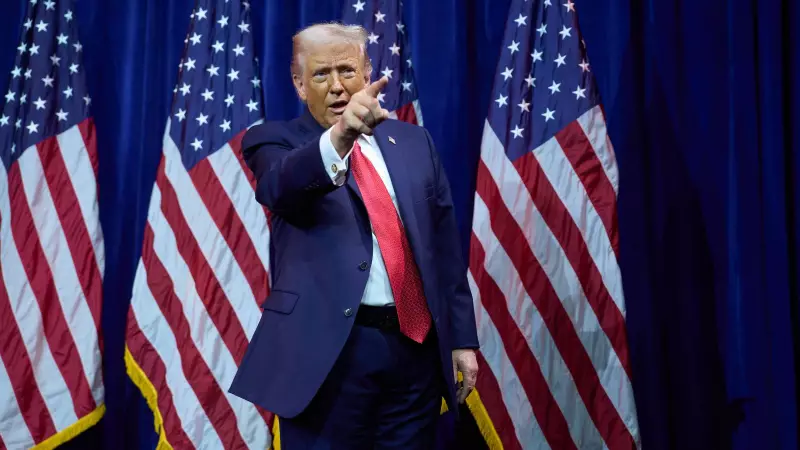
On January 3, 2026, former US President Donald Trump confirmed a military operation involving strikes and special forces, leading to the detention of Venezuelan leader Nicolás Maduro. The rationale cited state failure and drug charges. However, this unilateral move conspicuously bypassed international agreements and multilateral procedures. More strikingly, Trump's subsequent suggestion that the US might "run Venezuela" for a period stands in direct opposition to the democratic principle of self-determination.
This is not a defence of the Maduro regime, which has overseen a severe democratic backslide, economic collapse, and a humanitarian crisis forcing millions to flee. Elections have been widely criticised, opposition repressed, and institutions hollowed out. Yet, acknowledging this grim reality does not grant external actors a free pass to act in democracy's name while violating its core tenets.

Strategic Interests and the Shadow Over Democratic Intent
The US address also prominently highlighted Venezuela's vast energy infrastructure, linking oil stabilisation and economic recovery to American involvement. This entanglement of strategic resource calculations with democratic rhetoric severely complicates the moral clarity of the action. When promises of energy access and geopolitical leverage accompany democratic promises, democracy risks appearing conditional—a tool invoked selectively where strategic value exists, reinforcing long-standing scepticism in the Global South.
The marginalisation of domestically popular opposition figures within Venezuela, such as María Corina Machado, further undermines claims of a primary democratic purpose. It raises an essential question: where is the Venezuelan people's agency in this process? Democratic transformation requires internal political will, not its outsourcing to foreign military power.
Historical Precedents and the Peril of Force
History offers sobering lessons on using coercion to plant democracy. The cases of Iraq and Libya serve as stark warnings. While interventions removed dictators and led to elections, democratic consolidation proved elusive, and legitimacy remained perpetually contested. Force can compel compliance, but democracy requires authentic consent. A political order rooted in external power is inherently brittle and fuels nationalist backlash.
The implications for international law are equally troubling. The forcible removal of a sitting head of state without UN sanction undermines the foundational principles of sovereignty and non-intervention. It sets a dangerous precedent where powerful states create moral exceptions for themselves, making the rules-based international system optional. Nations like China and Russia are likely to cite this precedent to justify their own future actions, often with even less pretence towards democratic outcomes.
The greatest danger, therefore, extends beyond Venezuela's borders. It lies in the global signal that democracy can be reduced to a rhetorical device—conveniently deployed and easily suspended. For societies struggling against authoritarianism, such external interventions can backfire, allowing regimes to cloak repression in the narrative of nationalist resistance against foreign aggression.
Democracy, if it is to be more than the mere overthrow of a ruler, must be built on legitimacy, patience, and internal political agency. When it arrives via drone strikes rather than domestic deliberation, its foundations are compromised from the start. Removing a ruler is not synonymous with empowering citizens. If democracy cannot survive the manner of its arrival, one must question if it ever truly arrived at all.

Analysis contributed by perspectives from Neeraj Singh Manhas, Special Advisor for South Asia at the Parley Policy Initiative, Republic of Korea, and Jyot Shikhar Singh, PhD Candidate at Jindal School of International Affairs.