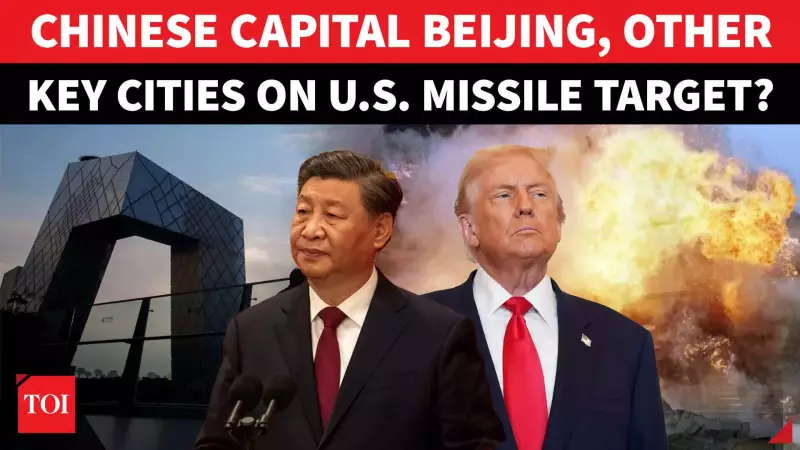
In a move set to dramatically heighten geopolitical friction, the United States has greenlit its most substantial weapons transfer to Taiwan to date. The landmark package, approved on December 21, 2025, includes the sale of more than 400 ATACMS (Army Tactical Missile System) ballistic missiles to the self-ruled island. This decision has instantly drawn fierce condemnation from Beijing, which views Taiwan as a breakaway province.
A Direct Challenge to Beijing's Red Line
Chinese authorities have reacted with severe alarm to the announced sale. Officials in Beijing have explicitly stated that this advanced weaponry places key mainland Chinese cities and critical strategic assets within potential striking distance. The ATACMS missiles, known for their long range and precision, represent a significant upgrade to Taiwan's deterrent capabilities. While Washington frames the sale as a necessary measure for deterrence and maintaining regional stability, critics, including China, label it a dangerous provocation that undermines the longstanding 'One-China' policy.
Logistical Hurdles and Regional Ramifications
The deal unfolds amidst a complex logistical and political landscape. Reports indicate that Taiwan is rapidly developing the necessary launch infrastructure to deploy these new systems. However, deliveries from the United States could face significant delays, exacerbated by soaring global demand for weapons due to concurrent conflicts worldwide. This arms sale has sent shockwaves across the Indo-Pacific region, where nations are now bracing for a potential high-stakes showdown. The move intensifies the already fraught military standoff in the Taiwan Strait, one of the world's most volatile flashpoints.

Beyond an Arms Sale: A Countdown to Conflict?
The unprecedented scale of this transaction forces a critical question: Is this merely another chapter in the long history of U.S. arms sales to Taipei, or does it mark the beginning of a perilous countdown to a wider confrontation? The sale fundamentally alters the military calculus in the region. It comes at a time of heightened global instability, testing the delicate balance of power. Analysts warn that such a significant enhancement of Taiwan's offensive strike capability could lead to more aggressive Chinese military posturing, including increased air and naval incursions, raising the risk of a miscalculation with catastrophic consequences.
The international community watches with apprehension as tensions between the U.S. and China reach a new peak. The fallout from this decision will likely influence diplomatic manoeuvres, trade relations, and security alliances across Asia for years to come. The coming months will be crucial in determining whether this act of bolstering Taiwan's defence transforms into a catalyst for an unintended and broader conflict.