A new assessment from the United States Department of War suggests that China is attempting to leverage the recent reduction of military tensions along the disputed Line of Actual Control (LAC) with India. The primary goals, according to the report, are to stabilize the strained bilateral relationship and, more strategically, to hinder any further deepening of the strategic partnership between New Delhi and Washington.
De-escalation as a Strategic Opportunity
The Pentagon's annual report to Congress, titled "Military and Security Developments Involving the People's Republic of China 2025", analyses that Beijing perceives the border de-escalation as a chance to reset ties with India. This recalibration effort comes amid intensifying geopolitical competition across the Indo-Pacific region.
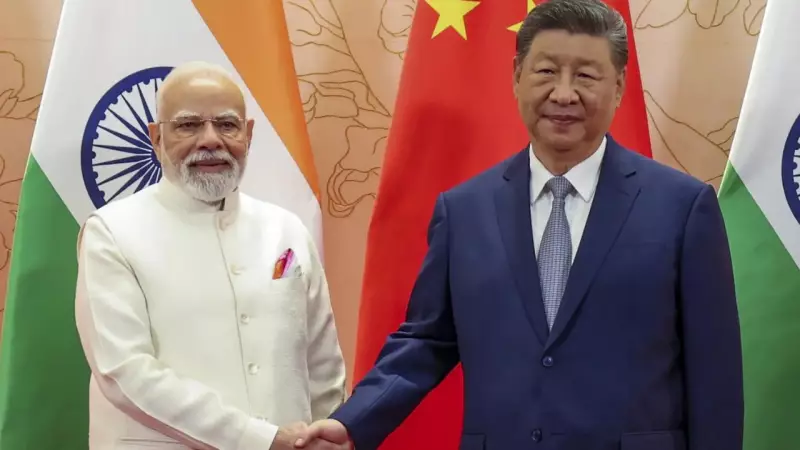
The document highlights a key sequence of events from late 2024. It notes that in October 2024, Indian leaders announced an agreement with China to disengage from the remaining standoff points along the LAC. This significant announcement came just two days before a scheduled meeting between Chinese President Xi Jinping and Indian Prime Minister Narendra Modi on the sidelines of the BRICS Summit.

According to the US assessment, this high-level interaction marked the beginning of monthly engagements between the two Asian giants. The discussions reportedly expanded beyond immediate border management to explore the "next steps" in the relationship. Proposals on the table included resuming direct flights, easing visa restrictions, and reviving exchanges for academics and journalists. These were seen as cautious steps to restore a degree of normalcy after four years of military standoff, which formally ended in October 2024.
Underlying Skepticism and Strategic Motives
Despite these diplomatic overtures, the Pentagon report underscores a deep-seated suspicion in New Delhi regarding Beijing's true intentions. The report explicitly states, "China probably seeks to capitalize on decreased tension along the LAC to stabilize bilateral relations and prevent the deepening of U.S.-India ties; however, India probably remains skeptical of China's actions and motives."
It concludes that continued mutual distrust and other persistent irritants will almost certainly limit the potential for a major breakthrough in relations. The report contextualizes China's moves within its overarching national strategy of achieving "the great rejuvenation of the Chinese nation" by 2049. This ambition includes building a world-class military. It reiterates that Beijing treats sovereignty issues, which it lists as Taiwan, the South China Sea, the Senkaku Islands, and Arunachal Pradesh, as non-negotiable "core interests."
Broader Indo-Pacific Power Dynamics
The Pentagon's analysis also touches upon the wider US-China relationship under President Donald Trump. It claims that US-China relations are "stronger than they have been in many years," with Washington pursuing stability through a position of strength rather than direct confrontation. The stated US policy in the Indo-Pacific is focused on deterring aggression and preserving a balance of power.
The Department of War asserts it will prioritize bolstering deterrence in the region through strength, not confrontation. It adds that President Trump aims for stable peace, fair trade, and respectful ties with China, and that the military would support these goals from a position of strength. The ultimate objective is to maintain a regional balance that allows for open trade, shared prosperity, and respect for the interests of all nations.
In the months following the Ladakh disengagement, India and China have implemented several confidence-building measures. These include India resuming tourist visas for Chinese nationals in July and both sides agreeing to restart the Kailash Manasarovar Yatra pilgrimage. Direct flights between the two countries resumed in October 2024, coinciding with the commemoration of the 75th anniversary of diplomatic relations.