US State Department Reiterates Strict Visa Policy: No Guaranteed Right for Foreign Visitors
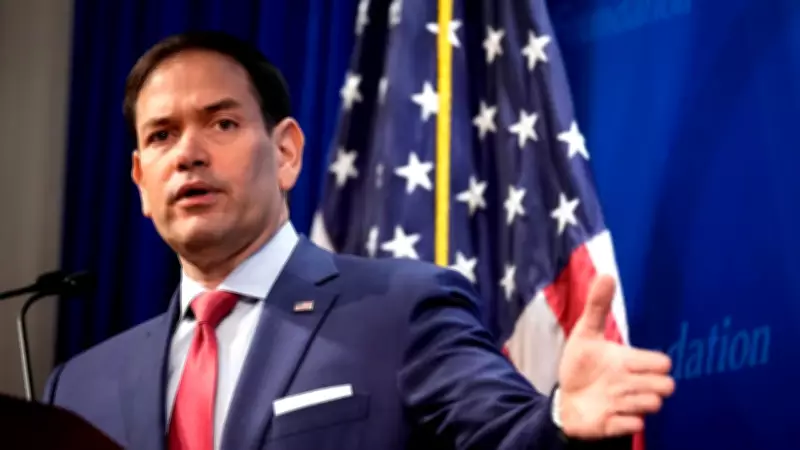
The United States Department of State has firmly reiterated its position that visas are not an automatic entitlement and can be revoked if foreign visitors engage in activities contrary to America's national interests. This stern warning was delivered by Secretary of State Marco Rubio during his official bilateral visit to Hungary, underscoring the conditional nature of US entry permissions.
Secretary Rubio's Clear Message in Budapest
During a joint press event with Hungarian Prime Minister Viktor Orbán in Budapest on Monday, Secretary Marco Rubio emphasized this critical point with unambiguous clarity. "I've said this repeatedly. I don't know why it's so hard for some to comprehend it," Rubio stated firmly. "No one is entitled to a visa."
Rubio elaborated that a visa represents permission to enter the United States as a visitor, whether for tourism, education, journalism, or other purposes. He warned that if individuals undertake actions that undermine US national security or interests after entry, their visas will be promptly revoked. "If you enter our country as a visitor and undertake activities against the national interests of the United States, we will take away your visa," Rubio declared.

Conditional Nature of US Visas Under Existing Law
The State Department's statement aligns with a broader governmental push to treat visas as conditional privileges subject to revocation under existing legal frameworks. Consular officers worldwide routinely deny visa applications for various reasons, including:
- Concerns about potential overstaying of visa durations
- Suspected criminal behavior or associations
- Perceived threats to national security interests
- Incomplete or fraudulent application documentation
Rubio further clarified that if US officials had prior knowledge of activities contrary to national interests, they would likely refuse visa issuance from the outset. This reinforces the preventive aspect of US immigration screening procedures.
Historical Context and Policy Consistency
Secretary Rubio has maintained this position consistently, previously telling lawmakers that visas constitute privileges rather than rights. His stance reflects a stringent approach to immigration, emphasizing that no constitutional entitlement to US visas exists for foreign nationals.
The State Department's video release of Rubio's remarks amplifies this message globally, ensuring clarity about US visa policies amid increasing international travel and diplomatic engagements. This reiteration serves as both a reminder to prospective visitors and a reaffirmation of America's sovereign right to control entry based on national security considerations.
The timing of this statement during Rubio's Hungary visit highlights its relevance to bilateral relations and broader international diplomacy, where visa policies often intersect with geopolitical dynamics and mutual security concerns.