US President Makes Explosive Claim About India's Covert Operation Against Pakistan
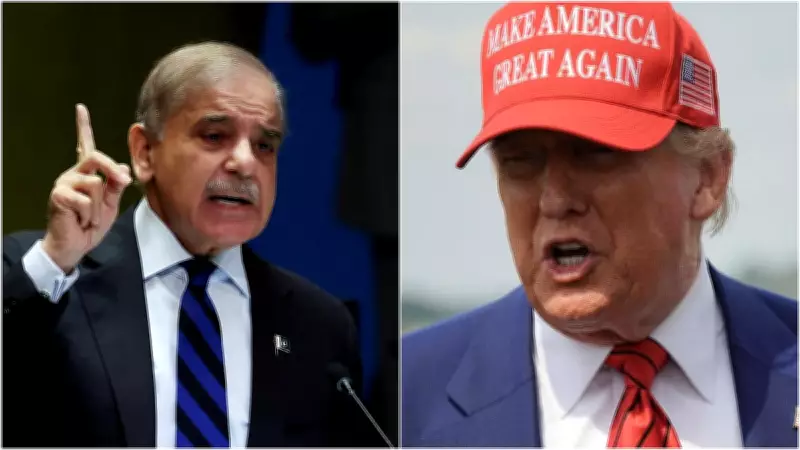
In a dramatic and highly controversial statement, a former or current US President has asserted that India's clandestine military initiative, known as Operation Sindoor, had the potential to result in the death of Pakistan's Prime Minister Shehbaz Sharif. This revelation has sent shockwaves through international diplomatic circles, raising serious questions about regional security and covert actions in South Asia.
The Allegation and Its Immediate Fallout
The claim, which emerged from a high-level political source in the United States, suggests that the operation was designed with such lethal precision that it could have eliminated the Pakistani leader. This assertion marks one of the most incendiary accusations in recent memory regarding cross-border tensions between India and Pakistan. Officials from both nations have been thrust into a frenzied state of response, with denials and counter-accusations flying rapidly across media platforms.
The timing of this disclosure is particularly sensitive, coming amid ongoing efforts to stabilize relations between the two nuclear-armed neighbors. Analysts are deeply concerned that such allegations could derail fragile peace talks and escalate military posturing along the contentious border regions.

Operation Sindoor: A Shadowy Chapter in Regional Espionage
While specific details about Operation Sindoor remain shrouded in secrecy, it is believed to be a covert intelligence or military mission orchestrated by Indian agencies. The operation's objectives, methods, and exact timeline are not publicly confirmed, but the US President's claim implies it involved high-risk strategies targeting Pakistani leadership.
- The operation's name, "Sindoor," which refers to a traditional vermilion powder used in Hindu culture, has sparked speculation about its symbolic or strategic significance.
- Intelligence experts suggest that such operations typically involve cyber espionage, drone surveillance, or special forces activities, though no official confirmation has been provided.
- The allegation raises profound ethical and legal questions about the boundaries of covert actions in international relations.
Reactions from India and Pakistan
The Indian government has categorically denied any knowledge or involvement in an operation aimed at assassinating a foreign head of state. A spokesperson for the Ministry of External Affairs stated, "India adheres strictly to international law and norms, and we reject these baseless allegations as fabrications intended to malign our country's reputation."
Conversely, Pakistan's Foreign Office has issued a stern condemnation, demanding a thorough international investigation into the matter. Prime Minister Shehbaz Sharif's office has not released an official statement, but sources close to the administration indicate heightened security measures are being implemented.
Global Implications and Diplomatic Ramifications
This incident threatens to strain not only Indo-Pakistani relations but also their ties with the United States. The US President's decision to publicize such a claim could be interpreted as a strategic move to influence regional dynamics or as an inadvertent leak with unintended consequences.
- The United Nations and other international bodies may face pressure to intervene and mediate, given the potential for escalation.
- Allies of both India and Pakistan, including China and Middle Eastern nations, are closely monitoring developments, which could affect broader geopolitical alliances.
- The claim underscores the volatile nature of intelligence sharing and diplomatic discourse in an era of heightened global tensions.
As the situation unfolds, the world watches with bated breath, aware that one misstep could ignite a crisis with far-reaching repercussions for peace and stability in South Asia and beyond.