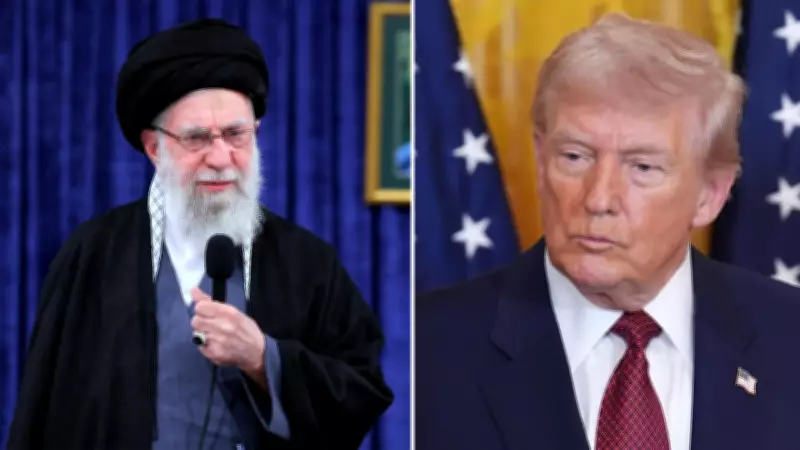
US Signals Openness to Direct Trump-Khamenei Talks Through Rubio's Remarks
In a significant diplomatic overture, US Secretary of State Marco Rubio stated on Saturday that President Donald Trump would be prepared to meet with Iran's Supreme Leader Ali Khamenei if such an opportunity presented itself. This declaration underscores Washington's readiness to engage in high-level negotiations with Tehran, even as military tensions between the two nations remain elevated.
Rubio Projects Trump's Preference for Dialogue Over Confrontation
During an interview with Bloomberg, Rubio portrayed Trump as a leader keen on resolving international conflicts through direct communication. "I'm pretty confident in saying that if the Ayatollah said tomorrow he wanted to meet with President Trump, the President would meet him," Rubio asserted. He elaborated that this willingness stems not from agreement with Khamenei's policies, but from Trump's belief that face-to-face meetings are instrumental in problem-solving on the global stage.
Rubio further clarified the administration's diplomatic philosophy, noting, "He doesn't view meeting someone as a concession." This approach aligns with Trump's stated preference for pursuing a comprehensive deal and sustained negotiations with Iran's leadership, which could potentially pave the way for an unprecedented direct summit between the American and Iranian heads of state.

Firm Stance on Iran's Nuclear Ambitions and Regional Security
Addressing Iran's nuclear program, Rubio was unequivocal in his remarks. "It's pretty clear that Iran will never be allowed to have a nuclear weapon," he stated, emphasizing that such a development would pose a grave threat not only to the United States but also to Europe, regional stability, and global security at large.
He defended the recent US decision to deploy an additional aircraft carrier near Iran, explaining that the military presence is necessary due to Iran's demonstrated capability and willingness to target American assets in the region. "We have to have sufficient firepower in the region to ensure that they don't make a mistake and come after us and trigger something larger," Rubio added, highlighting concerns over potential attacks on US bases stemming from regional alliances.
Contrasting Tone from Trump on Regime Change Prospects
Earlier on Saturday, however, President Trump struck a notably different tone during remarks to reporters at Fort Bragg in North Carolina. When questioned about the possibility of regime change in Iran, Trump suggested it could be beneficial, stating, "Seems like that would be the best thing that could happen." He expressed frustration with prolonged diplomatic efforts, remarking, "For 47 years, they've been talking and talking and talking. In the meantime, we've lost a lot of lives while they talk."
This juxtaposition of openness to dialogue with hints at desiring leadership change in Tehran illustrates the complex and often contradictory dynamics shaping US-Iran relations. The situation remains fluid, with Rubio's comments offering a pathway to de-escalation through negotiation, even as military posturing and political rhetoric continue to fuel uncertainties.