

US Map Validates India's Kashmir, Aksai Chin Claims in Strategic Shift
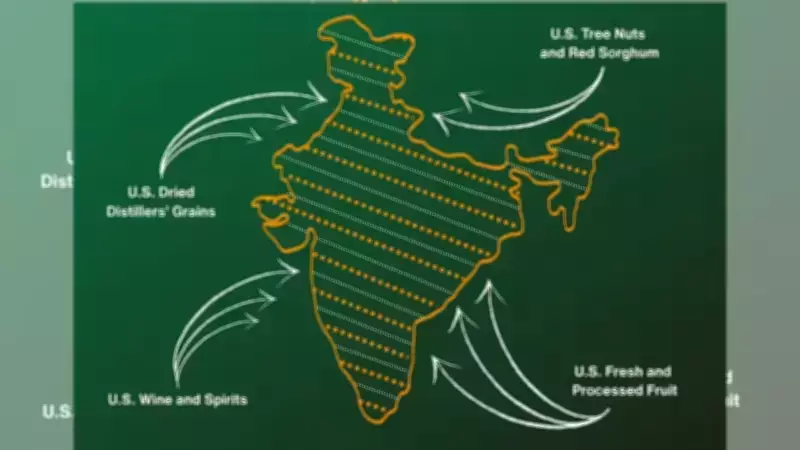
In a significant move that blends economic diplomacy with clear geopolitical signaling, the Trump administration on Friday released an official map of India that depicts the entire Jammu and Kashmir region, including Pakistan-occupied Kashmir (PoK) and Aksai Chin, as integral parts of Indian territory.
The graphic was shared by the United States Trade Representative (USTR) on social media platform X, accompanying the announcement of a framework for an interim trade agreement between the United States and India. This visual representation carries profound implications beyond mere cartography.
Departure from Historical US Practices
The map's significance lies in its stark departure from historical US practices, which have traditionally marked PoK and Aksai Chin as disputed territories. For decades, American maps and official documents maintained a position of neutrality regarding these contested regions, reflecting the complex geopolitical realities of South Asia.

Analysts view this updated cartographic representation as a deliberate geopolitical nod to India's territorial claims, a move that has predictably irked both Pakistan and China at a time when US relations with both nations remain sketchy and complicated.
Strategic Signaling in the Indo-Pacific
This cartographic shift signals the return of robust strategic support for India as a counterweight in the Indo-Pacific region – a policy that had briefly appeared to have been eclipsed by other geopolitical developments. The move comes particularly after recent Saudi-Pakistan security pacts and despite ongoing US geopolitical outreach toward Beijing on what some analysts term a "G-2 axis," even amidst a ferocious trade war between the world's two largest economies.
The release of this map, described by some foreign policy experts as "cartographic diplomacy," marks what appears to be a definitive end to decades of US "neutrality" regarding the region's volatile borders. By explicitly aligning the US government's official depiction with India's territorial claims, the Trump administration may have effectively signaled that India is no longer just a "partner," but rather the primary regional anchor for American interests across Asia.
Reciprocal Alignment and Strategic Bargains
By validating India's borders while simultaneously demanding a cessation of Russian oil imports, Washington appears to be demonstrating that its support is absolute—provided the alignment is reciprocal and meets American strategic objectives. This creates a framework of mutual expectations and responsibilities between the two democracies.
Analysts suggest the map was a key, albeit silent, component of what has been termed the "Grand Bargain" struck between President Donald Trump and Prime Minister Narendra Modi. While public attention remains focused on the reduction of tariffs from 50% to 18% and India's substantial $500 billion "Buy American" pledge, the territorial validation provides New Delhi with a significant diplomatic victory that transcends mere trade balances and economic considerations.
Reactions and Implications
"Full marks to the US for the map. Well done," noted defense analyst Major Gaurav Arya, celebrating the departure from previous US positions that often showed PoK as part of Pakistan. This sentiment reflects broader approval within Indian strategic circles.
In India, the hashtag #AkhandBharat trended briefly on social media as nationalist supporters hailed the move as global recognition of India's territorial integrity and historical claims. Conversely, Pakistani social media users expressed deep concern and disappointment, with many viewing the map as a betrayal of long-standing diplomatic protocols and established positions regarding Kashmir.
This cartographic declaration represents more than just lines on a map—it signifies a recalibration of American foreign policy in South Asia, with India positioned as the central pillar of US strategy in the region. The implications will likely reverberate through diplomatic channels for months to come, potentially reshaping regional alliances and strategic calculations across multiple capitals.






