

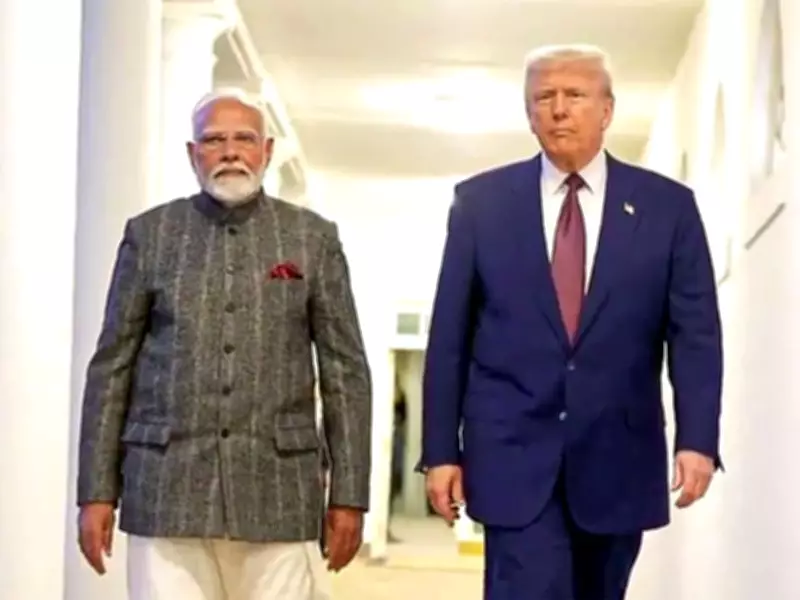
US-India Trade Deal Advances as White House Removes Tariffs Following Oil Import Commitment
The United States and India have unveiled a framework for an Interim Agreement on reciprocal trade, a significant move toward finalizing the broader US-India Bilateral Trade Agreement (BTA) initiated by President Donald J. Trump and Prime Minister Narendra Modi in February 2025. This development was confirmed in a joint statement released by the White House and India's Commerce Ministry, highlighting a historic milestone in the partnership between the two nations.
India's Pledge to Stop Russian Oil Imports
In a separate announcement, the White House confirmed the elimination of additional tariffs imposed on India for purchasing Russian oil, citing India's commitment to cease direct or indirect imports of Russian Federation oil. The White House stated, "India has committed to stop directly or indirectly importing Russian Federation oil, has represented that it will purchase United States energy products from the United States, and has recently committed to a framework with the United States to expand defense cooperation over the next 10 years."
Effective from February 7, 2026, at 12:01 a.m. Eastern Standard Time, products from India imported into the United States will no longer be subject to the additional 25 percent ad valorem duty imposed under Executive Order 14329. This tariff removal includes specific headings and subdivisions in the Harmonized Tariff Schedule of the United States, with provisions for duty refunds processed by U.S. Customs and Border Protection as per applicable laws.

Kremlin's Response and Trade Framework Details
Earlier, the Kremlin responded to the developments, with spokesperson Dmitry Peskov noting that India is free to procure oil from various sources. Peskov said, "We, along with all other international energy experts, are well aware that Russia is not the only supplier of oil and petroleum products to India. India has always purchased these products from other countries. Therefore, we see nothing new here."
As part of the trade framework, India will eliminate or reduce tariffs on a wide range of U.S. goods, including:
- Dried distillers' grains and red sorghum for animal feed
- Tree nuts, fresh and processed fruits, and soybean oil
- Wine and spirits
In return, the United States will apply a reciprocal tariff of 18 percent on Indian-origin goods under the relevant executive order, covering sectors such as textiles and apparel, leather and footwear, plastics and rubber, organic chemicals, home decor, artisanal products, and certain machinery. Upon successful conclusion of the Interim Agreement, the U.S. will remove these tariffs on additional goods, including generic pharmaceuticals, gems and diamonds, and aircraft parts.
Additional Provisions and Future Steps
The framework also includes the removal of U.S. tariffs on certain Indian aircraft and parts imposed under national security proclamations related to aluminium, steel, and copper. India will receive a preferential tariff rate quota for automotive parts, aligned with U.S. national security requirements. Depending on the outcome of a U.S. Section 232 investigation, India is set to gain negotiated outcomes for generic pharmaceuticals and pharmaceutical ingredients.
Both countries have committed to providing each other with preferential market access in sectors of mutual interest and establishing rules of origin to ensure the benefits of the agreement primarily accrue to the United States and India. They plan to promptly implement the framework and work toward finalizing the Interim Agreement, with the goal of concluding a comprehensive and mutually beneficial Bilateral Trade Agreement in line with the agreed roadmap.






